The Categories We Need

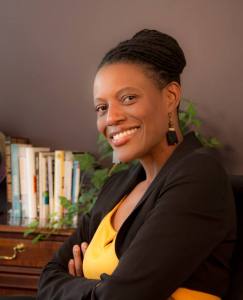
JyarlandDay 43 of our Lenten Journey beyond “Beyond Vietnam. A rich resource from Jyarland Daniels (photo right) of Harriet Speaks, who did the hard work of reading Dr. King and then compiling some of his key convictions.  Informative and inspiring.

After reading several works written by Martin Luther King, his comments seemed to fall into several categories. I’m not sure if they fell into those categories, or if I see those categories that I believe we need the words of MLK today.

Martin Luther King: On Ally-ship

“Young Negros had traditionally imitated whites in dress, conduct, and thought in a rigid, middle-class pattern… Now the ceased imitating and began initiating. Leadership passed into the hands of Negros, and their white allies began learning from them.” (“The Trumpet of Conscience”)

“I have almost reached the regrettable conclusion that the Negro’s great stumbling block in his stride toward freedom is not the White Citizen’s Councilor or the Ku Klux Klan, but the white moderate, who is more devoted to “order” than to justice.” (“Letter from Birmingham Jail”) Continue reading “The Categories We Need” →
Sermon: “Save Us!”

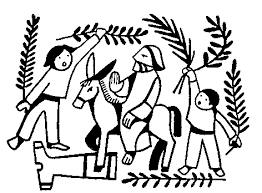
palm sunday.pngBy Joyce Hollyday, April 9, 2017, Palm Sunday: Circle of Mercy
Our text tonight is Luke 19:29-41. I’m reading from the New Revised American Version:

When he had come near Bethphage and Bethany, at the place called the Mount of Olives, he sent two of his billionaire cronies, saying, “Go into the town ahead of you, and as you enter it you will find tied there a stallion that has been ridden many times in war. Untie it and bring it here. If anyone asks you, ‘Why are you untying it?’ just say this, ‘The Lord wants it. And what the Lord wants, the Lord gets.’ If necessary, pay off its owners with a bribe. Close the deal with whatever it takes.” So those who were sent departed and found it as he had told them.  Continue reading “Sermon: “Save Us!”” →

More Spending, Of Course

Sharon KyleDay 42 in our Lenten Journey beyond “Beyond Vietnam.”  From Sharon Kyle, publisher of the LA Progressive and a professor of law at Peoples College of Law in L.A., excerpted from “Is Racism a Racket?” in the L.A. Progressive:

What struck me was that Dr. King almost laid bare the notion that racism is a racket. Not to say that racism doesn’t exist but that it’s continued existence serves an elite few.

In a similar assertion, Smedley Butler—a career military man who received 16 medals, five for heroism, and is one of 19 men to receive the Medal of Honor twice— wrote a book entitled, “War Is a Racket” because he felt that his years of experience showed him that American corporations and other imperialist motivations were behind our wars. He came to see through the PR campaigns that prime the public — that set the stage for war.  After retiring from service, he became a popular activist, speaking at meetings organized by veterans, pacifists, and church groups. Continue reading “More Spending, Of Course” →

What My Soul Sings

LenyDay 41 of our Lenten Journey beyond “Beyond Vietnam.”  From Leny Mendoza Strobel (photo right), Professor of American Multicultural Studies at Sonoma State University, in her Foreword to Ethnoautobiography: Stories and Practices for Unlearning Whiteness, Decolonization, Uncovering Ethnicities (2013):

A long-time colleague asked me, for the first time the other day: Why did you become interested in the Indigenous?  My answer was an academic one: When I started doing research on Filipino Indigenous Knowledge Systems and Practices.

What I really wanted to say was: I have always been interested in the Indigenous worldview; it’s what my bones know and what my soul sings. Continue reading “What My Soul Sings” →

You Either Are or You Are Not

AdichieDay 40 of our Lenten journey beyond “Beyond Vietnam.”  Excerpted from Chimamanda Ngozi Adichie’s recently released Dear Ijeawele, Or A Feminist Manifesto In Fifteen Suggestions (2017):

Beware the danger of what I call Feminism Lite; the idea of conditional female equality. Being a feminist is like being pregnant. You either are or you are not. You either believe in the full equality of men and women, or you do not.

Teach your daughter to question language. A friend of mine says she will never call her daughter “princess”. The word is loaded with assumptions, of a girl’s delicacy, of the prince who will come to save her. This friend prefers “angel” and “star”. So decide the things you will not say to your child. You know that Igbo joke, used to tease girls who are being childish – “What are you doing? Don’t you know you are old enough to find a husband?” I used to say that often. But now I choose not to. I say, “You are old enough to find a job.” Because I do not believe that marriage is something we should teach young girls to aspire to.  Continue reading “You Either Are or You Are Not” →

For The Long-Haul

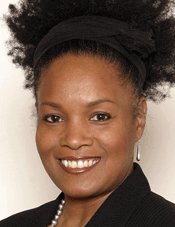
MonicaDay 39 of our Lenten Journey continues beyond “Beyond Vietnam.”  What now?  For nine more days, we listen to voices calling us onwards, to live out the legacy of Dr. King.  Today, we hear from Monica Lewis-Patrick (right), point guard of Detroit’s struggle for water affordability, excerpted from a conversation she had with a youth group visiting Detroit in July 2016:

People are driven by either two things: pleasure or pain. What has driven me over the past ten years living in this city is watching a lot of pain. That pain has sparked a passion. I’m 50 years old. I’ve done social justice work since I was 16 years old. In North Carolina, in Tennessee, the Deep South. I’ve been in Detroit for ten years and I can tell you there’s not a lot of difference.

What I do know is that people cannot come into the city with the attitude of being a missionary, that “I’m just going to do good in the hood,” and then go back to their community and live well or live in privilege. I think it’s only about immersing yourself in the community and culture and I think it’s only by allowing yourself to be courageous enough to interface with people that make you uncomfortable. I think sometimes it takes us out of our comfort zone—it’s not easy for us who are doing front line justice work to allow outsiders in because of distrust and co-opting and people taking advantage of our trust and the sanctity of these spaces.  So it has to be a commitment and willingness to be committed for the long-haul.

I think the other thing about social justice work is that everyone has to decide what amount of themselves they can give to this work. But I think you’ve got to be fully committed, that it’s got to be a life-long commitment because people know the difference. They know when you are coming in to extract from their community so you can feel better about yourself or when you come to give yourself to that community, to let the collective heal so that we can feel better about ourselves. That’s the difference and we know the difference.

White Supremacy Defined

aliciaDay 38 of our Lenten Journey continues beyond “Beyond Vietnam.”  What now?  For nine more days, we listen to voices calling us onwards, to live out the legacy of Dr. King.  Today, we ponder this “working definition of white supremacy” from Chicago-based community organizer Alicia Crosby:  
White supremacy establishes whiteness as superior to other racial identities through the elevation of the needs, wants, concerns, perspectives, feelings, and desires of white people over that of people of color. This includes the centering of the theological, rhetorical, aesthetic, and economic priorities and preferences rooted in whiteness as well as the appropriation and rebranding of cultural expressions sourced from people of color.

From Disposability to Essentiality

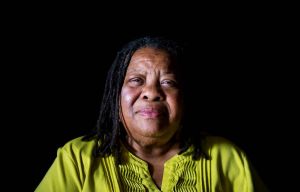
Ruby SalesDay 37 of our Lenten Journey beyond “Beyond Vietnam.  From Ruby Sales (photo right), Civil Rights veteran and long-distance runner for justice, in an interview with Krista Tippett:
I really think that one of the things that we’ve got to deal with is that how is it that we develop a theology or theologies in a 21st-century capitalist technocracy where only a few lives matter? How do we raise people up from disposability to essentiality? And this goes beyond the question of race. What is it that public theology can say to the white person in Massachusetts who’s heroin-addicted because they feel that their lives have no meaning, because of the trickle-down impact of whiteness in the world today? What do you say to someone who has been told that their whole essence is whiteness and power and domination? And when that no longer exists, then they feel as if they are dying or they get caught up in the throes of death, whether it’s heroin addiction. Continue reading “From Disposability to Essentiality” →

Wild Lectionary: Plastics as a Spiritual Crisis

IMG_3769 copy
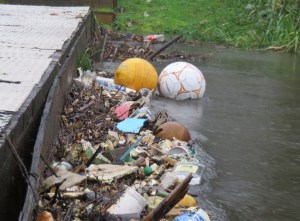
Plastics in Still Creek, salmon spawning stream, Fraser River watershed

Palm Sunday
Psalm 118:22

The stone that the builders rejected has become the chief cornerstone.

By Sasha Adkins

The ever-increasing abundance of plastic trash in land, sea and bodies is, fundamentally, a spiritual problem. Plastics habituate us to accept unhealthy relationships—and not only because our use of them is so typically fleeting. The foundation of a healthy relationship lies in a celebration of the Other’s unique and intrinsic value; disposable plastics, however, are by design both fungible and instrumental. Continue reading “Wild Lectionary: Plastics as a Spiritual Crisis” →

A Revolutionary Period

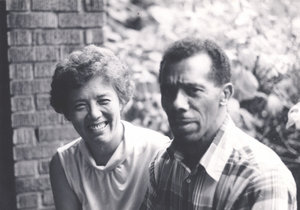
Grace LeeDay 36 of our Lenten Journey continues beyond “Beyond Vietnam.”  What now?  For our final dozen days, we will listen to voices calling us onwards, to live out the legacy of Dr. King.  

From the late Grace Lee Boggs (photo right, with husband Jimmy) in The Next American Revolution: Sustainable Activism for the 21st Century (2012)

…we need to see ourselves not as victims but as new men and women who, recognizing the sacredness in ourselves and in others, can view love and compassion, in the words of Martin Luther King, not as “some sentimental and weak response” but instead as “the key that unlocks the doors which leads to ultimate reality.” Continue reading “A Revolutionary Period” →