Other lives

pigeon.jpgBy Talitha Fraser

A pigeon and I shared morning tea,
Coconut rough and brine of the sea
Our feet rest on yellowed moss over stony cement
I think he talked, or perhaps I dreamt
“see these clouds, this sky, the fountain,
The roads, the houses and there a mountain
…these are connected but you cannot see
These must co-exist in harmony
You affect I and I affect you
In the ways that we go and the things that we do
Some have plenty and some not a lot,
It seems that we ought to share what we’ve got
It is as clear as the water, firm as the ground
Certain as sunrise, at least, I have found.””But pigeon,” I ask, “”What can we do?”
“Next time,” he answered, “You might buy two.”

Wild Lectionary: Holy Fools

holyfoolimagewquote32.jpg4th Sunday after Epiphany

1 Corinthians 1:18-31

by Tevyn East and Jay Beck, excerpted from Watershed Discipleship: Reinhabiting Bioregional Faith and Practice

The Catholic Feast of Fools was a day for liturgical dramas that dissolved church hierarchy, celebrated becoming a “Fool for Christ” (1 Cor) and enacted the Magnificat’s call to turn society upside down (Luke 1:52–53). This feast day was later suppressed by authorities lived on for centuries within medieval folk culture. Europeans eventually brought many such religious festivities to the New World under the common label “carnival.” Continue reading “Wild Lectionary: Holy Fools”

Stewing in Grace and Gratitude

hobo dinners.jpgBy Joyce Hollyday

My memories of childhood family camping trips swirl around discomfort and disaster: rocky ground and a leaky air mattress, a skunk ambling through our campsite at dinner time, the hurricane that pelted us with rain and blew over our tent in the middle of the night, a sneak attack by a swarm of black flies the size of blue jays. But in every summer misadventure, there was always one moment of grace. Amid the endless parade of canned-soup suppers heated to either lukewarm or scalding over the camp stove, there was always a night when we fixed “hobo stew.” Continue reading “Stewing in Grace and Gratitude”

Learning from Laughter and the Trees: Yogurt and Blueberries

kiddos-2By Lydia Wylie-Kellermann. Written on January 11, 2017.

11 years ago today, I was heading back to school, to community two weeks after my mom died.
9 years ago today, I was getting off a plane from France having just met the love of my life.
8 years ago today, I was in Washington DC protesting Guantanamo as Obama prepared to take office.
2 years ago today, I was working on a Word and World school in Detroit on Environmental Justice.
1 year ago today, after a labor that was cooped by the medical industry, I gave birth to Cedar.
And today?….

Today I lost the battle to get Isaac to school. I couldn’t get him out the door. Knowing that I couldn’t let him just stay home and have fun if I wanted him to go next week, I told him that I could not play or engage. That this was my working time. I set a timer for when school would end. Told him I loved him and I would talk to him when the timer went off (a mantra I would repeat a hundred times over the next two hours). I handed him a yogurt stick and a box of blueberries and left him alone. After some protesting, he got quiet…so I peaked in. There he was in the living room, using his yogurt stick to make twenty yogurt circles on the floor and carefully putting one blueberry on top of each pile. When his work was finished, he yelled “Mommy!” He was good at this game. He wasn’t going to let us not engage for two whole hours. He was ready to destroy the house if need be. I took a deep breath and told him I would talk to him after the timer. Continue reading “Learning from Laughter and the Trees: Yogurt and Blueberries”

Reclaiming Hope Through Remembering

meeksBy Catherine Meeks, originally published in the January 2017 edition of Hospitality, the newsletter of Atlanta’s Open Door Community

Without memory, our existence would be bar- ren and opaque, like a prison cell into which no light penetrates; like a tomb which rejects the living. … If anything can, it is memory that will save humanity. For me, hope without memory is like memory without hope.
Elie Wiesel, Nobel Lecture 1986

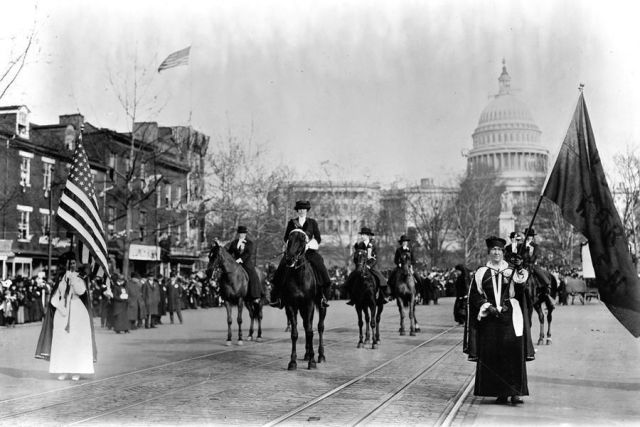
The Episcopal Diocese of Atlanta took a bold step forward on October 22, 2016, kicking off a three-year cycle of pilgrimages to Georgia martyrdom sites, more commonly known as lynching sites. These pilgrimages are being organized by the Beloved Com- munity: Commission for Dismantling Rac- ism, whose members believe that these sites need to be viewed as places where martyrs were made. And all of us, whites and people of color, who make up the generations of their descendants need to acknowledge these martyrs and mark the places where their lives were sacri ced so that we can make more progress in moving toward the day when this legacy of terror will be vanished forever and hope can have the opportunity to break fully into the dawn.  Click HERE to read the full piece (page 2 of Hospitality).

A Modest Proposal for Radical Disciples: Swearing Off

road
Photo: Michael Smith

By Tommy Airey

Many of us have been unpleasantly awakened to the fact that “national politics” does matter, as Princeton’s Jeffrey Stout concisely articulated in Blessed Are The Organized (2010), his aptly-titled Obama-era book on grassroots democracy:

Presidents, federal legislators, judges, bureaucrats, Wall Street bankers, insurance executives, media moguls and generals are making decisions every day that have a massive impact on our lives.

A couple of weeks ago, our flight to snow-driven Portland diverted, Lindsay and I found ourselves laid over and out for two nights in Seattle. There we were, deliriously sharing a falafel burger at a hotel bar with Fox News on surround sound. After compulsory knee-jerk lamentations, we grounded ourselves in the reality of the next four years of banality. We acknowledged the tension, though, of committing ourselves to “knowing what’s going on in the world” with being bombarded with a plethora of despairing headlines and sound-bites, news spin a no-win situation. What now with the need to protect ourselves emotionally and spiritually more important than ever? Continue reading “A Modest Proposal for Radical Disciples: Swearing Off”

Wild Lectionary: Under the Cover of His Tent

dsc02678-768x576
Great American Backyard Campout photo credit: Chattahoochee Nature Center

3rd Sunday after Epiphany

One thing I asked of the Lord, that I will seek after: to live in the house of the Lord all the days of my life, to behold the beauty of the Lord, and to inquire in his temple.
For he will hide me in his shelter in the day of trouble; he will conceal me under the cover of his tent: he will set me high on a rock.
Now my head is lifted up above my enemies all around me, and I will offer in his tent sacrifices with shouts of joy; I will sing and make melody to the Lord.  -Psalm 27:4-6

By Sarah Thompson and Na’Taki Osborne Jelks, excerpted from Watershed Discipleship: Reinhabiting Bioregional Faith and Practice

Sarah: Connecting people to land connects us with one another, enabling us to re-knit kinship ties that were broken by enslavement. In the Diaspora, Black folks have had a primarily extractive relationship with the land, and later in industrial factories. We were seen as people whose worth was in our productive capacity, but beyond that, as disposable. It is easy to understand, therefore, why we have had an extractive relationship with one another, and use a lot of disposable things. But this cycle is spiritually devastating. Continue reading “Wild Lectionary: Under the Cover of His Tent”

21 Running, Working, Experiential Definitions of Mysticism

meditationFrom Matthew Fox’s The Coming of the Cosmic Christ (1988):

By exposure to each of these “definitions” the reader will begin to feel and make connections with his or her own mysticism, for the purpose of defining mysticism here is to elicit the mystic within each person…

  1. Experience: a trust of the universe, a trust of what is and what occurs to us, yes, a trust of oneself
  2. Non dualism: the end of alienation and the beginning of communion, the end of either/or relationships and the beginning of unity
  3. Compassion: “the keen awareness of the interdependence of all living things which are all part of one another and involved in one another” (Thomas Merton)
  4. Connection Making:  by symbols, stories, myths, music and colors, form and ritual–we connect with one another’s deep and often unspoken experiences of life’s mysteries
  5. Radical Amazement: awe is the opposite of taking life for granted
  6. Affirmation of the World as a Whole:  neither neutral nor bitter or cynical
  7. Right-Brain: synthesis over analysis and verbalization

Continue reading “21 Running, Working, Experiential Definitions of Mysticism”

Sermon: Born to Be a Light

homrich-9
Trial for the Homrich 9. Activists blocked trucks from turning off Detroiters’ water.

By Bill Wylie-Kellermann, Saint Peter’s Episcopal Detroit, Epiphany 2, January 15, 2017

Isaiah 49:1-7
Psalm 40:1-11
1 Corinthians 1:1-9
John 1:29-42

Our readings for today echo those of last week. Again we have reference to John, to the baptism of Jesus, the dove alighting upon him, AND again beside it a Servant song from Isaiah.

There is a striking commonality of Second Isaiah and John: both have central figures whose identity is hard to pin down. In the gospel of John it is the “beloved disciple,” identified only by that name. Is this a cipher for John himself, for his beloved community? Is there an historical referent? Even another character in the story? Or is this a narrative figure with which we, as readers, may identify, a call to discipleship by another name? Continue reading “Sermon: Born to Be a Light”