Mennonite delegation shows solidarity at Standing Rock encampment

kat
Photo by Maria Thomas

Published on October 10, Indigenous People’s Day at themennonite.org.

Katerina Friesen is a recent graduate of Anabaptist Mennonite Biblical Seminary, Elkhart, Indiana. She is a writer and community builder, and currently serves as the interim pastor of Belmont Neighborhood Fellowship in Elkhart.

The largest gathering of Native American tribes in over a century is happening near Cannonball, North Dakota, about a mile from the Standing Rock Sioux Reservation. Tribes that were once divided are finding reconciliation and unity in a movement of nonviolent resistance to protect the sacred lands and waters of the Lakota Sioux.

From Sept. 16-23, I traveled there with a delegation of Mennonites from the Dismantling the Doctrine of Discovery Coalition to show support and solidarity with the thousands of people resisting the Dakota Access Pipeline (DAPL), slated to carry over 450,000 barrels of crude oil per day from the Bakken shale of North Dakota to refineries in Illinois, over 1,100 miles. Our delegation included Anita Amstutz, John Stoesz, Ken Gingerich, Maria Thomas, and I, stayed at the Sacred Stone Camp, the first of the three main camps where between 5,000–7,000 people were estimated to have camped during the week we visited. Continue reading “Mennonite delegation shows solidarity at Standing Rock encampment”

Never Give Up: Faith as Tenacious Agitation

By Ched Myers

Note: This post is part of a series of weekly comments on the Lukan gospel readings from the Revised Common Lectionary during Year C, 2016. [Image below: St. Louis Post-Dispatch, J.B. Forbes/Associated Press, found at http://www.thefeministwire.com/2014/10/fergusonfridays-black-freedom-fighters-men-interview-black-women-front-line-ferguson/.]

ferguson

This Sunday’s gospel lesson is the second of two key stories about “determined prayer” in Luke. As is so characteristic of the third evangelist, this vignette about a woman’s unflagging insistence on being heard corresponds to an earlier one about similar importunate behavior by a man (see Luke 11:5-13). That text came up in the middle of the summer (see Wes and Sue’s comments on “shameless audacity” and its relevance to the Black Lives Matter movement here). Each story has two “onstage” characters (a protagonist and antagonist), with the Divine “comparison” well offstage. But while the earlier object lesson took place in a village setting and concerned neighborly hospitality and mutual aid among social equals, our text for October 16 takes place in the city and pits social opposites; it pertains to the public vocation of tenacious advocacy for justice. These twinned stories together articulate how deeply connected the personal and political were for Luke, and should be for us. Continue reading “Never Give Up: Faith as Tenacious Agitation”

To Reconcile and Restore

mertonFrom Gordon Oyer’s paraphrase of how Thomas Merton would answer the question “What and where is this Word of God?:”

The word of God is a breakthrough into our real, human experience, and it speaks not just from the Bible but from deep within us, within each of our neighbors, within all of creation. It offers us the means to tear down the false identities we have constructed to fit in with a society rooted in ego-centric self-interest. If we choose to engage it, this word engages us with questions about who we really are, about what person it is who seeks dialogue with the word. If we continue to engage its questions, the word of God will ultimately reconcile and restore us to our true self, to the human community, and to the great and mysterious ground of all being from which our core essence originated.

Prayers of the People

prayersBy Heather Robertson-Ross, Salal and Cedar

The earth is yours, oh Divine Creator, and everything in it. You have made us stewards of your creation so that it may nourish us, clothe us, shelter us, and heal us. Your wisdom lives in it, and communicates to us if only our ears are open to hear, and are hearts are able to discern. Your wisdom and ever present spirit nourishes us, like the clear stream nourishes the trees at her banks, so that we might produce good fruits of the spirit to nourish other. Continue reading “Prayers of the People”

To Rekindle Our Indigenous Souls

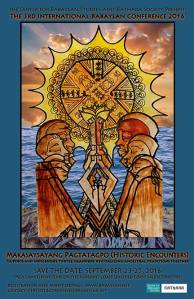
babExcerpt from Lily Mendoza’s keynote at the recently concluded Third International Babaylan Conference held in the Unceded Coast Salish Territories, Vancouver, Canada:

This is what we’re doing when we come together in this way, and in our respective local communities, when, in ritual and ceremony, we ask help from our Ancestors to joggle our memories so we can remember once more how to live on the earth in a good way, in order that we, as a people seeking to rekindle our Indigenous Souls can remember once more the Original Instructions that every natural people has lived by for hundreds of thousands of years. What we’re doing, often in fumbling, bumbling, and groping ways–in the process inevitably making many mistakes–is striving to create cultures capable of sprouting seeds of vitality worthy of feeding a time beyond our own, cultures that could not be designed by humans using the imperial mind. In other words, they could not be grown by us simply upping and leaving our cities and current places for a hoped for new life among our indigenous kin (Empire is there, too!).  Continue reading “To Rekindle Our Indigenous Souls”

It Will Be Waged in the Streets

russellFrom Russell Rickford is an associate professor of history at Cornell University, an excerpt from his article The Fallacies of Neoliberal Protest on the African American Intellectual History Society website: 

Truth is, we don’t need “diversity” training. We don’t need focus groups. We don’t need consultants and experts. We don’t need the apparatus of our oppression—racial capitalism itself—to rationalize and regulate our dissent. The logic and techniques of the corporate world won’t end the slaughter of black people, or the dispossession and degradation of indigenous people, or the transformation of the entire Global South into a charred landscape of corpses and refugees. Continue reading “It Will Be Waged in the Streets”

Some

bread.jpgBy Daniel Berrigan

Some stood up once, and sat down.
Some walked a mile, and walked away.

Some stood up twice, then sat down.
“It’s too much,” they said.
Some walked two miles, then walked away.
“I’ve had it,”they cried,

Someone stood and stood and stood.
They were taken for fools,
they were taken for being taken in

Some walked and walked and walked-
they walked the earth,
they walked the waters,
they walked the air.

“Why do you stand?” they said, and
“Why do you walk?”

“Because of the children,” they said, and
“Because of the heart, and
because of the bread.”

“Because the cause is
the heart’s beat, and
the children born, andthe risen bread.”


Have Mercy on Us!

lepersBy Wes Howard-Brook and Sue Ferguson Johnson
The final leg of the journey to Jerusalem begins with this week’s gospel (Lk 17.11-19). Alert readers, though, will note that Jesus and the disciples have not gotten very far. At the very beginning, Luke tells us that “they entered a village of the Samaritans to make ready for him” (9.52). Now, eight chapters later, Luke says, “On the way to Jerusalem Jesus was going through the midst (Gk, dia meson, misleadingly translated by NRSV as “between”) of Samaria and Galilee.” Like the Israelites in the wilderness, they seem to be going in circles in the land north of Judea. Perhaps this is a sly reference to the disciples, like their Israelite ancestors, lacking the faith that the journey they are on will lead to the place of God’s abundant provision. Indeed, as we heard last week, the disciples had just demanded of Jesus, “Increase our faith!” (17.5). Continue reading “Have Mercy on Us!”

Frank Talk with Ruby Sales

ruby-salesSome highlights from Krista Tippett’s recent interview with Ruby Sales: 

I think that one of the things that theologies must have is hindsight, insight, and foresight. That is complete sight.

—————-

I really think that one of the things that we’ve got to deal with is that how is it that we develop a theology or theologies in a 21st-century capitalist technocracy where only a few lives matter? How do we raise people up from disposability to essentiality? Continue reading “Frank Talk with Ruby Sales”