
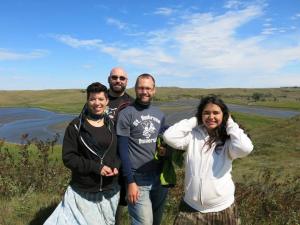
 During our current lectionary cycle, we’ve been downright spoiled with the scholarship that Ched Myers, Wes Howard-Brook (right) and Sue Ferguson Johnson bring every Thursday with their weekly comments on the Gospel passage. When Wes is not busy teaching at Seattle University, serving at the local soup kitchen, leading the weekly Bible Study in his home, participating in liturgical direct action, hiking up Tiger Mountain or making Sue a latte, he spends his free time researching church history for his next publication. Last week, his Empire Baptized: How The Church Embraced What Jesus Rejected (Orbis) was released for public consumption. We sat down for a long-distance dialogue about what to expect next.
RD.net: What were the circumstances in your own life that led to writing Empire Baptized?
WHB: Two major realities led to this book. First, in doing Come Out, My People!, the contrast between the New Testament’s clear message of embodied resistance to empire and historical Christianity’s embrace of empire jumped out at me. Second, in teaching undergrads who are often deeply and rightly suspicious of “Christianity” as well as older and often lifelong church people, I regularly experienced the shock people express when they discover that, for instance, Jesus not only wasn’t concerned with “how does my soul go to heaven,” but wouldn’t even have understood the question!
I had inherited the Yoderian narrative [Mennonite theologian John Howard Yoder] of “it was great for three centuries, but then along came Constantine,” but several things led me to question that story. For instance, that Constantine embraced “Christianity” did not explain such things as many churches’ obsessive focus on right “doctrine,” sexual ethics, and lack of regard for social injustice. I wanted to find out, at least for myself, what “really happened.”
 From Ta-Nehisi Coates (see full article from The Atlantic
  Our hearts are full; this an historic day for the Standing Rock Sioux Tribe and for tribes across the nation. Native peoples have suffered generations of broken promises and today the federal government said that national reform is needed to better ensure that tribes have a voice on infrastructure projects like this pipeline.
 By Nathan Holst
 By Wes Howard-Brook and Sue Ferguson Johnson
 By Lydia Wylie-Kellermann
 From Nelson Johnson, pastor of Faith Community Church in Greensboro, NC and co-founder of the Beloved Community Center and Greensboro Truth and Community Reconciliation Project (which concluded in 2006)–quoted from
 Communities are truly communities when they are open to others, when they remain vulnerable and humble; when the members are growing in love, in compassion and in humility. Communities cease to be such when members close in upon themselves with the certitude that they alone have wisdom and truth and expect everyone to be like them and learn from them. – Jean Vanier
