
A Pentecost Sermon: They become the storytellers

mimes_10By Lydia Wylie-Kellermann. A Pentcost sermon given on May 15, 2016 in celebration of her dad, Bill Wylie-Kellermann’s 10 years as pastor at St. Peter’s Episcopal Church in Detroit.

It may be a little known fact around here- but I was once in a mime troop. We did the whole thing- white face, bow tie, suspenders. We were invited to events around the area. Christmas was a particularly busy time for us. We put on shows with short skits and we also were able to just mingle in the crowds. I loved it- particularly the wandering aimlessly with no other job that to be subtly funny and of course not speak with our mouths. Continue reading “A Pentecost Sermon: They become the storytellers”

A New Poor People’s Campaign

PPCAn excerpt from an conversation curated by Tim Shenk, a co-organizer of The Poor People’s Campaign (a ten-day tour of the Midwest from May 17-26) who interviewed John Wessel-McCoy, a Poor People’s Campaign Program Organizer for the Kairos Center, and Willie Baptist, Poverty Initiative Scholar-in-Residence and Co-Coordinator of Poverty Scholarship and Leadership Development for the Kairos Center, about the strategic importance of the Midwest in building a movement to end poverty. Continue reading “A New Poor People’s Campaign”

Resisting Exotic Problems

barnard2An excerpt from Courtney Martin’s essay “Western do-gooders need to resist the allure of ‘exotic problems'” in The Guardian:

It’s intimidating to throw yourself into solving problems that you’ve grown up with and around. Most American kids, unless they’ve been raised in a highly sheltered environment, have some sense of how multifaceted problems like mass incarceration really are. Choosing to work on that issue (one that many countries in the global south handle far better than we do) means choosing to nurture a deep, motivating horror at what this country is doing through a long and humble journey of learning. It means studying sentencing reform. The privatisation of prisons. Cutting-edge approaches, like restorative justice and rehabilitation. And then synthesising, from all that studying, the direction a solution lies in and steadfastly moving toward it.

The activists, entrepreneurs, advocates, designers, and organisers that I admire most these days are up for that kind of investment. They seem to lean in to systemic complexity with a kind of idealistic sobriety. They are people working on the least “sexy” issues imaginable: ending homelessnessgiving more people access to creditmaking governments work better.

UNDRIP, Christians, and Climate Justice

book 2.jpgBy Laurel Dykstra. This piece is part of a new anthology- Wrongs to Rights: How Churches can Engage the United Nations Declaration on the Rights of Indigenous Peoples

I am the priest of Salal and Cedar a community in the lower Fraser/Salish Sea watershed whose mission is to grow Christian’s capacity to work for environmental justice. In the language of the global Anglican communion, what we do is “strive to safeguard the integrity of creation and sustain and renew the life of the earth.” Continue reading “UNDRIP, Christians, and Climate Justice”

I Will Pour Out my Spirit on All Flesh!

CarnivalBy Wes Howard-Brook and Sue Ferguson Johnson

What transformed Simon Peter, last seen denying his discipleship, into a bold, courageous public speaker and soon-to-be Jesus jailbird? Luke’s exciting, even outrageous, story of the Pentecost outpouring of the Holy Spirit is always at risk of being domesticated as “the birthday of the church.” But heard in the context both of Luke’s two-part narrative and the wider scriptural “religion of creation” story, the Pentecost experience can and must be reclaimed as one of the opening salvos in the confrontation between the Good News of Jesus and the religion of empire. Continue reading “I Will Pour Out my Spirit on All Flesh!”

Re-Animating Justification, Re-Patterning Our Lives

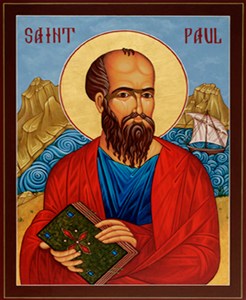
Paul

By Tommy Airey

But if Christ is in you, though the body is dead because of sin, the spirit is alive because of δικαιοσύνην. If the spirit of him who raised Jesus from the dead dwells in you, he who raised Christ from the dead will give life to your mortal bodies also through his spirit that dwells in you.
Romans 8:10-11

The Apostle Paul wrote his Romans epistle to a network of house churches pledging allegiance to Jesus in the Empire’s capital city sometime in the 50s, two decades after the death and resurrection of their Leader. The eighth chapter is embedded right in the middle of the lengthy letter that has been cherished by Protestant Christians for the past 500 years. For all of us who first came to view Jesus through a conservative Evangelical lens, Romans has been interpreted through a magnifying glass, focusing on sinners becoming “justified,” neatly explained as “just if I never sinned” so that we can go to heaven when we die. At least, this was how the sincere leaders at Campus Crusade for Christ broke it all down to me using their 4 Spiritual Laws two decades ago. Continue reading “Re-Animating Justification, Re-Patterning Our Lives”

How Residential School has affected me: a reflection by Sui-Taa-Kii (Danielle Black)

danielle black.jpgRe-posted from Kairos Canada

Sui-Taa-Kii (Danielle Black) is from the Siksika First Nations, which is a part of the Blackfoot Confederacy, Plains people, Treaty 7, and delivered this speech at a recent gathering “Abiding in Right Relations: Laying the Foundations”, a cross border conversation following the Truth and Reconciliation Commission of Canada. Continue reading “How Residential School has affected me: a reflection by Sui-Taa-Kii (Danielle Black)”

Evicted

EvictedFrom Matthew Desmond, Harvard sociology professor and author of the best-selling Evicted: Poverty and Profit in the American City (2016):

Those of us who don’t live in trailer parks or inner cities might think low-income families typically benefit from public housing or some other kind of government assistance. But the opposite is true. Three-quarters of families who qualify for housing assistance don’t get it because there simply isn’t enough to go around. This arrangement would be unthinkable with other social services that cover basic needs. What if food stamps only covered one in four families? Continue reading “Evicted”