
The ‘Liturgy of the Palms’ as Political Street Theater
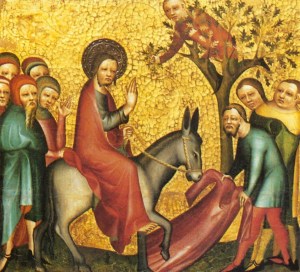 By Ched Myers, for Palm Sunday
Note: This is part of a series of Ched’s occasional comments on the Lukan gospel readings from the Revised Common Lectionary during year C, 2016.
Luke’s Jerusalem narrative commences with the so-called “Triumphal Entry,” a misnomer for several reasons. For one, Luke’s version of the story omits the Hosannas and the palms—indicating that these are not the most important parts of the “Palm Sunday” parade (even though that’s all most First World Christians focus on). For another, this carefully choreographed political street theatre is designed to repudiate Messianic triumphalism.
Let’s take a careful look. Continue reading “The ‘Liturgy of the Palms’ as Political Street Theater”
The earth we are leaving for our children…The children we are leaving for our earth…
 By Solveig Nilsen-Goodin
Just a few weeks ago, the Wilderness Way Children’s School (read: Sunday School…Wilderness Way style) opened its doors to invite children whose parents are not regularly participating in the life of the community. Why?
Imagine this…
Imagine a “Sunday School” program happening mostly outside.
Imagine a Sunday School program led by two well-paid (for the few hours a week they prepare for and work with our children), highly skilled and experienced teachers of children, who view their work with children as a calling. Continue reading “The earth we are leaving for our children…The children we are leaving for our earth…”
Learning from Laughter and the Trees: Power, Pain, and Extraction
 By Lydia Wylie-Kellermann
I don’t like pregnancy. I am not one of those people that walks around glowing, rubbing my tummy, and delighting in the attention. I am not proud of this. In the midst of pregnancy, I feel like I am losing my body, my strength, my sleep, my social abilities, and even my mind, all for something that I cannot yet touch or know. But birth on the other hand, I was ready for! I had learned the first time round that I could trust my body and the wisdom it held. My body was made to deliver these children. All I had to do was let my body work and to breathe.
I back labored with Isaac for multiple days and nights. We did most of the work at home arriving at the hospital already 9 cm. He was born with no medical or pain interventions. As Isaac leapt from me on that final push, he was caught by the same hands that caught me three decades earlier. We probably would not have been in a hospital setting, if it were not for choosing those hands. She is the doctor who holds the history of my own body and pain. She carries with her a deep sense of calm and sharp attention. You know she will fight like hell to advocate on your behalf. Continue reading “Learning from Laughter and the Trees: Power, Pain, and Extraction”
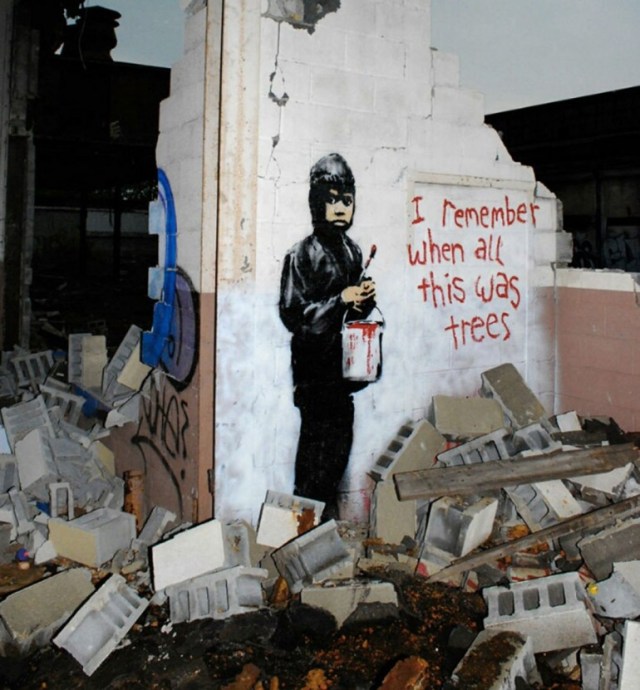
Trees
Artist unknown.
The Living Christ
 From Thich Nhat Hanh’s Living Buddha, Living Christ (1995):
If you do not really look at Jesus’ life, you cannot see the way. If you only satisfy yourself with praising a name, even the name of Jesus, it is not practicing the life of Jesus. We must practice living deeply, loving, and acting with charity if we wish to truly honor Jesus…The living Christ is the Christ of Love who is always generating love, moment after moment. When the church manifests understanding, tolerance, and loving-kindness, Jesus is there. Christians have to help Jesus Christ be manifested by their way of life, showing those around them that love, understanding, and tolerance are possible.
This Lent
This Lent, which we observe amid blood and sorrow, ought to presage a transfiguration of our people, a resurrection of our nation. The church invites us to a modern form of penance, of fasting and prayer – perennial Christian practices, but adapted to the circumstances of each people
Lenten fasting is not the same thing in those lands where people eat well as is a Lent among our third-world peoples, undernourished as they are, living in a perpetual Lent, always fasting. For those who eat well, Lent is a call to austerity, a call to give away in order to share with those in need. But in poor lands, in homes where there is hunger, Lent should be observed in order to give to the sacrifice that is everyday life the meaning of the cross.
But it should not be out of a mistaken sense of resignation. God does not want that. Rather, feeling in one’s flesh the consequences of sin and injustice, one is stimulated to work for social justice and a
genuine love for the poor. Our Lent should awaken a sense of social justice.
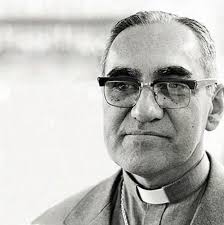
- Archbishop Oscar Romero
She is Breathing: Listening for Another World and an End to Empire
 By Lydia Wylie-Kellermann. Printed in Geez Magazine.
“Our strategy should be not only to confront empire, but to lay siege to it. To deprive it of oxygen. To shame it. To mock it. With our art, our music, our literature, our stubbornness, our joy, our brilliance, our sheer relentlessness – and our ability to tell our own stories. Stories that are different from the ones we’re being brainwashed to believe… Another world is not only possible, she is on her way. On a quiet day, I can hear her breathing.”
― Arundhati Roy, War Talk
I think of myself as a generally hopeful person. I’ve always believed in Martin Luther King’s long arc bending towards justice. But being in Detroit, the city where I was born and raised, over the last 5 years has crushed me. In a blink of an eye, a place filled with community leadership and creativity was steam rolled by an illegitimate government and the banks. We’ve gone from a city facing transformation by thousands of gardens to facing gentrification by tens of thousands of water shut offs. Black and poor folks are being pushed out fast. The stories are too painful. The work too big. The struggle for survival too real. The powers and principalities seemingly unstoppable. It’s all too much. Continue reading “She is Breathing: Listening for Another World and an End to Empire”
A Lenten Letter to Tom Fox on the 10th anniversary of his death
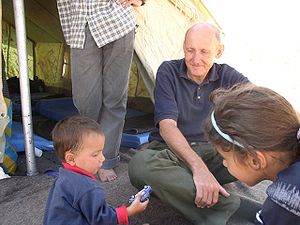 By Tim Nafziger, a reservist with Christian Peacemaker Teams (CPT) living in London at the time of the kidnapping of four CPTers: Harmeet Singh Sooden, Norman Kember, Jim Loney and Tom Fox. For more background on Tom Fox’s story and his work with CPT see Pearl Hoover’s excellent essay The Sermon on the Mount in the Life and Death of Tom Fox.
———————
Dear Tom,
On Christmas Day, 2004,
weeks after Margaret was kidnapped and killed
you wrote about an image that came to you: Continue reading “A Lenten Letter to Tom Fox on the 10th anniversary of his death”
Outrageous Anointing
 By Wes Howard-Brook and Sue Ferguson Johnson, commentary on the Gospel for Sunday, March 13, 2016
Of all the shocking aspects of Mary’s anointing of Jesus, Judas objects to the supposed waste of money. Why not first, though, object to her apparently shameless unveiling of her hair and intimate engagement with Jesus’ feet? As Lent comes to its climax, we enter into this wildly outrageous story. Continue reading “Outrageous Anointing”
 Radical Discipleship