
Empire Cracking: Reflection from Jonathan Wilson-Hartgrove
 This interview was taken by Lydia Wylie-Kellermann as part of a writing project for Geez Magazine entitled “She is Breathing: Listening for Another World and an End to Empire.” It was published in the Winter Issue.
Lydia Wylie-Kellermann: Where are the moments for you where you are beginning to see a crack in the empire? Where is resurrection alive and being practiced? What is the story that lingers on your heart and keeps you moving forward? Is this the moment we’ve been waiting for? Is another world being birthed before our eyes?
Jonathan Wilson-Hartgrove– One of the young people who’s led the Black Lives Matter movement here is running for City Council. I see hope every time I talk to him. Continue reading “Empire Cracking: Reflection from Jonathan Wilson-Hartgrove”
Unless we turn around from Empire, the victimization will continue
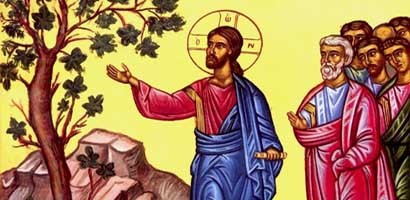 By Ched Myers, for the 3rd Sunday of Lent
Note: This is part of a series of Ched’s occasional comments on the Lukan gospel readings from the Revised Common Lectionary during year C, 2016.
Somewhat strangely, the RCL reading this week moves backwards, from the end of Luke 13 on Second Lent to its beginning this Sunday, leapfrogging the poignant story of the “Bent Over Woman” in the middle of that chapters (which we’ll look at on the 14th Sunday after Pentecost, Aug 21st). Continue reading “Unless we turn around from Empire, the victimization will continue”
Alone
 By Tommy Airey
Born
on the edge of reservation
genocide, son of an old working,
smoking, drinking, distancing
immigrant. You were robbed of
intimacy, emotion, left with
nothing but the counterfeit world of
patriarchy–hiding, achieving,
planning, controlling. You were trained to
not take up too much space, to
stay out of conflict, to
play your role, dad hiding,
mom never confiding, neither
ever fighting. Continue reading “Alone”
Lent with Howard Thurman
 By Will O’Brien, Alternative Seminary, Philadelphia, PA
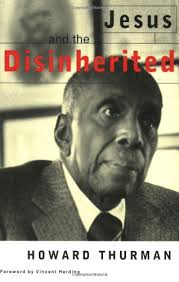
This Lent, I have using as a meditation guide Howard Thurman’s classic Jesus and the Disinherited. This book and other writings of Thurman, an African American scholar, theologian, and activist whom Vincent Harding called our “Black prophet-mystic,” were a spiritual taproot of the civil rights movement and continue to animate many people of faith who hunger and thirst for justice. Just in the first pages, his writing has revealed itself to be an unsettlingly relevant text for this season of repentance and metanoia.
Early in the book, Thurman recounts a visit to India in 1935 – a delegation of American students on a “pilgrimage of friendship.” One day, the principle of a Law College in Ceylon personally asked Thurman to have coffee. He posed a pointed question, addressing Thurman as an African American Christian: “What are you doing here?” Continue reading “Lent with Howard Thurman”
Justice For Peace

By Ric Hudgens
[My remarks at the opening of the art exhibit “Justice for Peace” curated by Fran Joy at the Noyes Cultural Arts Center, Evanston, Sunday, January 31]
I’m grateful to Fran Joy (right: “Black Angel”) for the invitation to speak at the opening of this exhibit “Justice for Peace”. Please consider this my little square to the freedom quilt we are sewing this afternoon.
Everything I write and speak about when I’m given the freedom to do so is what I describe as “creating spaces for God’s freedom dreams.” The God I believe in is a God who dreams dreams. These are dreams for the fulfillment, liberation, and freedom of humanity and indeed of all God’s creation. They are God’s freedom dreams.
Our calling as inhabitants of this planet, as creatures in the midst of this wondrous creation, is to create spaces where God’s freedom dreams can come forth and unfold to their fullest. Too much of human society and civilization is given to frustrating and upsetting these dreams. However (and this is a statement of faith on my part) God’s dreams are more persistent, relentless, and even inscrutable than any force that can be brought against them. As the Christian New Testament reminds us “the light shines in the darkness and the darkness cannot overcome it.” The fulfillment of God’s freedom dreams is envisioned by the Hebrew poet in Psalm 85 as a time when “justice and peace will embrace.” It is that image that I want to work with a little in what follows. One of the first things I had to learn entering a Black Baptist Church was the importance of hugging. Everyone hugs! I wasn’t used to it and I soon learned to love it. Hugging is not only good for feeling welcome but scientists tell us that it has innumerable benefits. Hugging has an impact upon our neurology increasing our production of oxytocin, dopamine, and serotonin. Well-hugged babies are less stressed than adults. Hugging lowers our heart rate, improves our immune system, and balances out the nervous system.
The Word
 From William Stringfellow:
In the face of death, live humanly. In the middle of chaos, celebrate the Word. Amidst Babel, speak the truth. Confront the noise and verbiage and falsehood of death with the truth and potency and efficacy of the Word of God.
Empire Cracking: Reflection from Sarah Thompson
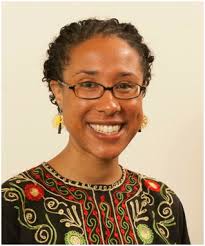 This interview was taken by Lydia Wylie-Kellermann as part of a writing project for Geez Magazine entitled “She is Breathing: Listening for Another World and an End to Empire.” It was published in the Winter Issue.
Lydia Wylie-Kellermann: Where are the moments for you where you are beginning to see a crack in the empire? Where is resurrection alive and being practiced? What is the story that lingers on your heart and keeps you moving forward? Is this the moment we’ve been waiting for? Is another world being birthed before our eyes?
Sarah Thompson: Two words: Compost toilets!
I love food justice, and I think I’m called to work on the “backside” of it. What I mean is, think it is the epitome of western hubris to crap in our most precious resource, potable water. Finding ways to help people deal with their own shit (both literally and metaphorically) is a liberating process. A lot can come up when we are faced with the “mess” we create daily. What we have learned to call “waste” can actually be returned to the ecosystem where the nutrients came from. Through a process it can become humanure and nourish the area where the local food came from.
The Prophetic Script
 By Ched Myers, for the 2nd Sunday of Lent (Luke 13: 31-35
Note: This is part of a series of Ched’s occasional comments on the Lukan gospel readings from the Revised Common Lectionary during year C, 2016.
More than any other gospel writer, Luke portrays Jesus as using Israel’s prophets for his own interpretive lens. This theme stretches across the whole arc of Luke’s story, from its beginning where the coming promise of redemption comes “through the mouth of God’s holy prophets from of old” (1:70) to the Emmaus road epilogue, which stresses this traditions as a hermeneutic key to the problem of suffering: “Then beginning with Moses and all the prophets he interpreted to them the scriptures” (24:25-7; 44f). Continue reading “The Prophetic Script”
 Radical Discipleship