
 From Dr. James Perkinson, Professor of Ethics and Systematic Theology at Ecumenical Theological Seminary, Detroit, MI:
I am very close to arguing — as a kind of hermeneutic strategy of trying to occasion conversion by way of “shock” — that I don’t think it is possible to live in the suburbs (or their commuter-friendly equivalent of gentrified and gated “enclosures” inside the city itself) and be Christian. At least, not to live “peacefully” in the suburbs and try to make sense of being a disciple only on its own terms. If one lives there and regularly raises issue with who is being excluded from there, that is a different story. If one advocates for low-income housing, or homeless shelters, or HIV-treatment centers, and tries to make apparent the way a “suburb” constitutes a kind of simultaneous realization of economic appropriation (of resources from elsewhere) and social exclusion (of people whose class position and racial affiliation make them “suspect”), then that is a serious form of witness. But simply to live in a suburb “neutrally” is merely to participate in — and perpetuate — a quintessential American fiction of innocence. The suburb is not, and has not ever been, a neutral entity. Neither is it innocent.
 From Wen Stephenson’s What We’re Fighting For Now Is Each Other (2015):
 By Frida Berrigan. Reprinted from
 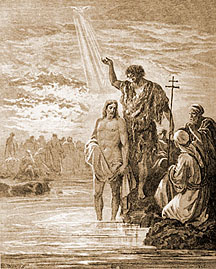 By Wes Howard-Brook and Sue Ferguson Johnson, Commentary on Readings for Jan 10, Baptism of the Lord
 Meg Arlyn was raised Evangelical, educated Quaker, and spends her Sundays with the Mennonites. She lives in Oakland.



 Radical Discipleship