

Cultural Appropriation: Of Dreadlocks, Cell Blocks, and Stolen Rocks (like Plymouth)
 By James W. Perkinson, September 29, 2015
Invited by a friend to respond to the recent blog of philosophy professor, Crispin Sartwell, “Should Miley Cyrus Wear Dreadlocks?” I would throw this into the mix. Yes, it is cultural appropriation “all the way down,” but as with ingesting spoiled food, some things come back up. The culture wars rage on, as globalization’s surface sign that something deeper is afoot. The question of taking someone else’s style cannot really be judged except in consideration of the entire regime of planetary “taking” writ large.
Continue reading “Cultural Appropriation: Of Dreadlocks, Cell Blocks, and Stolen Rocks (like Plymouth)”
Towards a Spirituality of Activism
 By Tommy Airey
God, help me to refuse ever to accept evil; by your Spirit empower me to work for change precisely where and how you call me; and free me from thinking I have to do everything.
Walter Wink, Engaging the Powers (1992)
On the day we met Bill Wylie-Kellermann back in the summer of ’13, we naively asked him how many times he’d been arrested for acts of civil disobedience: “I stopped counting at 50,” he muttered matter-of-factly. Between sermons and sacraments, Pastor Bill is committed to hitting the streets, participating in what he calls “liturgical direct action.”
Continue reading “Towards a Spirituality of Activism”
An Alternative Kindergarten Education
 Kate Foran, Hartford, CT, begins a series on education throughout her daughter’s “kindergarten year.”
The Hundred Languages
No way. The hundred is there.
The child
is made of one hundred.
The child has
a hundred languages
a hundred hands
a hundred thoughts
a hundred ways of thinking
of playing, of speaking.
Continue reading “An Alternative Kindergarten Education”
Imagine
 By Tim Vivian, Professor of Philosophy & Religious Studies,
California State University Bakersfield
In Honor of William Stringfellow (1928-1985), Prophet to a Land of Unlikeness, Near the Thirtieth Anniversary of His Death. With thanks to Bill Wylie-Kellerman.
In the midst of babel, speak the truth. . . .
And more than that, in the Word of God,
expose death and all death’s works and
wiles, rebuke lies, cast out demons,
exorcise, cleanse the possessed, raise
those who are dead in mind or conscience.
William Stringfellow, An Ethic for Christians and other Aliens in a Strange Land (1973), 42-43
Imagine someone (you can), in 1856,
inviting you to a slave auction, not as
an observer, certainly not as slaver, Continue reading “Imagine”
The Losers & the Down and Out
 From James Cone in The Cross & The Lynching Tree (2011)
The real scandal of the gospel is this: humanity’s salvation is revealed in the cross of the condemned criminal Jesus, and humanity’s salvation is available only through our solidarity with the crucified people in our midst. Faith that emerged out of the scandal of the cross is not a faith of intellectuals or elites of any sort. This is the faith of abused and scandalized people—the losers and the down and out.
*Click here for a free PDF of the Introduction and Chapter 1 of The Cross & The Lynching Tree.
Care for our Common Home
Beginning in the middle of the last century and overcoming many difficulties, there has been a growing conviction that our planet is a homeland and that humanity is one people living in a common home. An interdependent world not only makes us more conscious of the negative effects of certain lifestyles and models of production and consumption which affect us all; more importantly, it motivates us to ensure that solutions are proposed from a global perspective, and not simply to defend the interests of a few countries. Interdependence obliges us to think of one world with a common plan. Yet the same ingenuity which has brought about enormous technological progress has so far proved incapable of finding effective ways of dealing with grave environmental and social problems worldwide. A global consensus is essential for confronting the deeper problems, which cannot be resolved by unilateral actions on the part of individual countries. Such a consensus could lead, for example, to planning a sustainable and diversified agriculture, developing renewable and less polluting forms of energy, encouraging a more efficient use of energy, promoting a better management of marine and forest resources, and ensuring universal access to drinking water. – Laudate Si!, POPE FRANCIS’ ENCYCLICAL ON THE CARE FOR OUR COMMON HOME

When Bees Talk…We Listen
 By Solveig Nilsen-Goodin, Wilderness Way Community, Portland, OR
“I heard something…” she said.
I had just spoken the final, “Amen,” closing the prayers at our weekly gathering as the Wilderness Way Community on a sunny Sunday afternoon in early June. But she had heard something. And she needed us to hear it too.
It was a message from the bees.
Continue reading “When Bees Talk…We Listen”
Reflections on the road with NAACP
 Reflections on the road with NAACP from Selma to Washington, DC by Phil Dage, life-long Detroiter, works to integrate music, social activism, historical studies, and faith in the pursuit of peace.
August 4, 2015:
My involvement with the NAACP began in Rosebud, MO. Driving my car in Detroit, last December, I heard an interview with the president and CEO of the NAACP, Cornell William Brooks. While marching to the capitol, Jefferson City, Mr. Brooks gave a phone interview broadcast on NPR shedding light on the murder of Michael Brown and encouraging all sympathizers to join in the march from Ferguson to the Capitol. Like a strike of lightning, the words of the NAACP leader hit me. His words reverberated down into my soul and reinvigorated my passion for justice. And so I gathered a few of my friends and drove down to Missouri. We met the march in Rosebud (a story which deserves its own telling) and needless to say, the experience was profoundly impactful. After witnessing the NAACP’s firm commitment to nonviolent action firsthand, I became a strong supporter of the organization. Continue reading “Reflections on the road with NAACP”
Composting as Spiritual Discipline
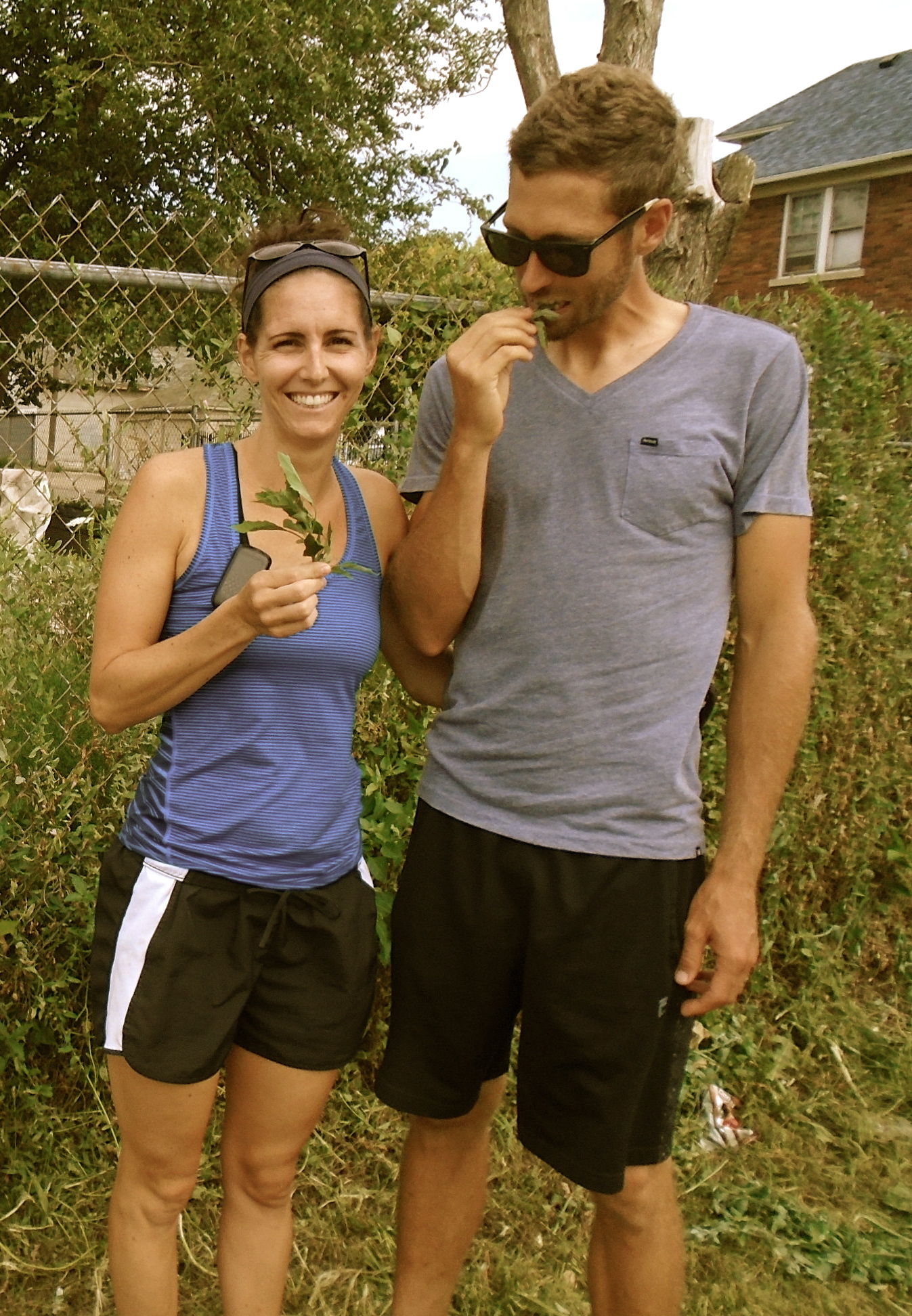 By Kyle Mitchell
Kyle lives with his wife Lynea on the 3rd floor of an old house in Cleveland. They have a couple egg-laying hens in the backyard and tons of red wiggler worms. Kyle spends his days working alongside folks with developmental disabilities on a 2-acre urban farm down the street from his house. In his spare time, he works alongside Lynea in the 2 youth gardens she started in the neighborhood. They are both passionate about growing food, spreading that knowledge, and figuring out ways to get healthy food to folks that don’t have access to it.
————————
A few years ago I was reading a book on permaculture and I came across a quote about soil that captured my imagination: “The soil is miraculous. It is where the dead are brought back to life.” This launched me into the slow process of being re-wired – seeing with new eyes, altering my actions, converting myself to the truth that the soil is not dead, but alive! I could no longer waste what I once thought was waste. I had to get in touch with the death-brings-life cycles of creation, and I had to do this through a tradition called composting. Continue reading “Composting as Spiritual Discipline”
 Radical Discipleship