
“History is not the past. It is the stories we tell about the past. How we tell these stories – triumphantly or self-critically, metaphysically or dialectally – has a lot to do with whether we cut short or advance our evolution as human beings.”
– Grace Boggs

Prophecy, Pedagogy and Permaculture
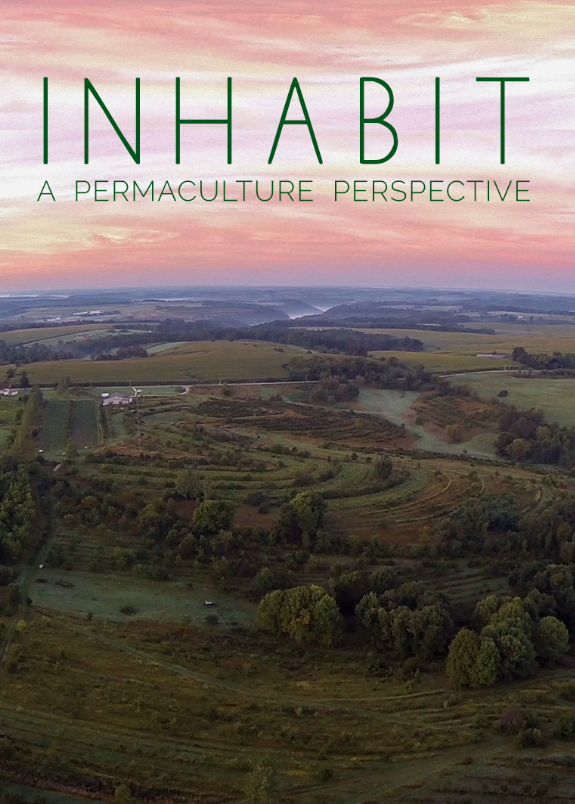 By Tim Nafziger, co-founder of Young Anabaptist Radicals residing in Southern California’s Ventura River Watershed
8 years ago, I showed “What a Way to Go” to my family. I hope they would, as the movie tag line says, come to grips “with Peak Oil, Climate Change, Mass Extinction, Population Overshoot and the demise of the American lifestyle.”
Halfway through the movie my sister walked out. It wasn’t so much that she was opposed to the message of the movie. She just couldn’t take how relentlessly depressing it was. Continue reading “Prophecy, Pedagogy and Permaculture”
Sowing Hope
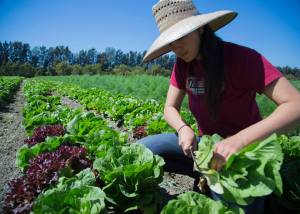
By Ched Myers, for the 3rd Sunday after Pentecost (Mark 4:26-34)
Note: This is an ongoing series of Ched’s brief comments on the Markan gospel readings from the Revised Common Lectionary during year B, 2015.
This week the lectionary gives us the last third of Jesus’ parables sermon (hopping over the famous parable of the Sower and its allegorical interpretation, Mk 4:2-23). This section begins with a sober warning:
And he said to them, “Take heed what you hear: ‘The measure you give will be the measure you get, and still more will be given you. For to him who has will more be given; and from him who has not, even what he has will be taken away’.” (Mk 4:24-25)
Continue reading “Sowing Hope”
A Post Evangelical Pilgrimage, Part III
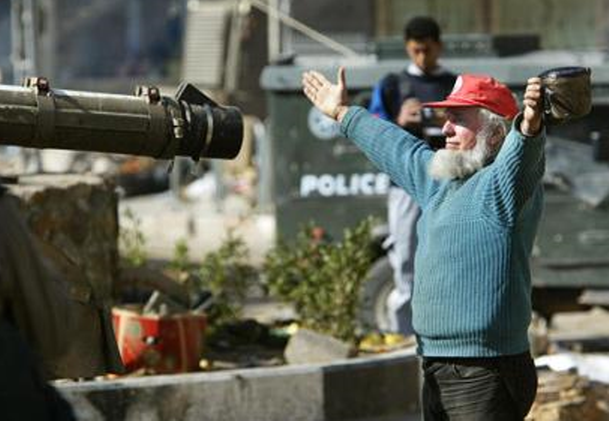
John Main
*This is the final post in a three-part series exploring more compelling ways to follow Jesus.
During the summer of 2013, Lindsay and I took a 75-day, 12,000-mile road trip. We simply wanted to meet people whose lives of faith were compelling. We wanted to get a taste test of what some might call “Movement Christianity” or “Radical Discipleship” (radical in Latin means “roots”), a particular strand of faith and action that goes all the way back to the roots of Judeo-Christian faith: Moses’ contemplative meeting with the Divine at the burning bush and his ensuing confrontation with the beastly bastards of Egyptian Empire, calling the underdogs out of enslavement and into a whole new Way of being.
Continue reading “A Post Evangelical Pilgrimage, Part III”
Kansas City Here We Come: The Pink Mennos Dis-Cover Diversity
 To achieve healing and hope for the Mennonite Church through the inclusion and welcome of lesbian, gay, bisexual, transgender and queer (LGBTQ) individuals and their supporters.
Pink Menno Vision Statement
Originally posted on the Pink Menno website:
At the Mennonite Church USA (MCUSA) bi-annual convention (in Kansas City, MO), Pink Menno will convene a symposium focused on intersectionality. “On the Way: Dis-Covering Diversity” will be held in Pink Menno’s hospitality space in Room 2504B of the convention center, right around the corner from the Grand Ballroom on Level 2.
Continue reading “Kansas City Here We Come: The Pink Mennos Dis-Cover Diversity”
Shell No! Kayaktivism in Seattle

John Sellers, co-founder of The Ruckus Society
This is a cross post from Kate Aronoff at Waging Nonviolence.
————-
Seattle has become a hub of anti-extraction activism. Protests began on May 14, when Royal Dutch Shell — bucking city residents and officials — docked its Polar Pioneer off the Emerald City coast. The towering 400-by-355-foot oil rig is en route to the Arctic, where it is scheduled to begin drilling operations this summer. The largest demonstration yet happened May 16, as hundreds of “kayak-tivists” swarmed Seattle’s Terminal 5, where the Polar Pioneer is docked. Since then, protests against the rig have been ongoing, and show few signs of letting up.
Continue reading “Shell No! Kayaktivism in Seattle”
When Nonviolence Is Preached
 From TA-NEHISI COATES:
When nonviolence is preached as an attempt to evade the repercussions of political brutality, it betrays itself. When nonviolence begins halfway through the war with the aggressor calling time out, it exposes itself as a ruse. When nonviolence is preached by the representatives of the state, while the state doles out heaps of violence to its citizens, it reveals itself to be a con. And none of this can mean that rioting or violence is “correct” or “wise,” any more than a forest fire can be “correct” or “wise.” Wisdom isn’t the point tonight. Disrespect is. In this case, disrespect for the hollow law and failed order that so regularly disrespects the community.
Milk, 1933
 By Michael Lauchlan, printed in Trumbull Ave, WSU Press
When the gas man came for your meter,
your oldest let him in. You jumped
from your chair and handed him the baby—
“Take her, too! How will I feed her
if I can’t warm the milk?” After he fled,
you were ashamed. You were nursing,
of course, and had never lied to a soul.
Five decades later you could still see him,
nearly as hungry as you, his wrench
in one hand and, from the other,
your quiet Ellie gaping up.
Canada Guilty of Cultural Genocide Against Indigenous Peoples
 By: Chris Sabas. Chris identifies as a Follower of The Way, Anglican, but also Catholic Worker, mystic, former attorney (owned own law firm in U.S., with almost 10 years of living in a courtroom before the Gospel awakening). Now a reservist with Christian Peacemaker Teams (“CPT”) and an At-Large Member of CPT’s Steering Committee.
Today is truly a historic…but somber day in and for Canada.
The Truth and Reconciliation Commission (“TRC”) released its long anticipated report today, finding Canada guilty of cultural genocide against Indigenous Peoples by way of the state sponsored, and church run Indian Residential Schools. Continue reading “Canada Guilty of Cultural Genocide Against Indigenous Peoples”
“BINDING THE STRONG MAN”: Jesus’ Master Metaphor
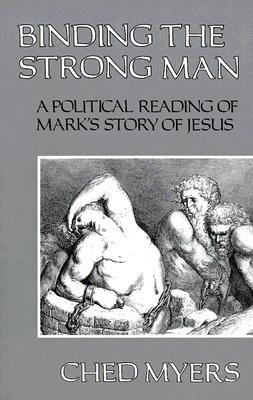 By Ched Myers, for the 2nd Sunday of Pentecost (Mk 3:20-35)
Note: This is an ongoing series of Ched’s brief comments on the Markan gospel readings from the Revised Common Lectionary during year B, 2015.
The first major narrative cycle in Mark’s gospel (1:16-3:6) ends with Jesus’ rejection by the authorities in a Capernaum synagogue. The following episodes serve to regenerate the story by a withdrawal and summary scene (3:7-12) and then by a reconsolidation moment (3:13-19a). The latter mountaintop scene boldly re-contextualizes two of the most revered traditions of Israel: God’s covenant with Moses on Sinai, and Moses’ founding of the free tribal confederacy in the wilderness. Jesus, who has taken the torch from the prophets, prepares to pass it on to twelve disciples he has called, named, and commissioned to proclaim, heal and exorcize (3:14f). Shortly they will be sent out to practice this charge – a second regenerative episode that follows upon another synagogue rejection (6:1-13). Continue reading ““BINDING THE STRONG MAN”: Jesus’ Master Metaphor”
 Radical Discipleship