A re-post from Palestinian author and clinical psychologist Hala Alyan.
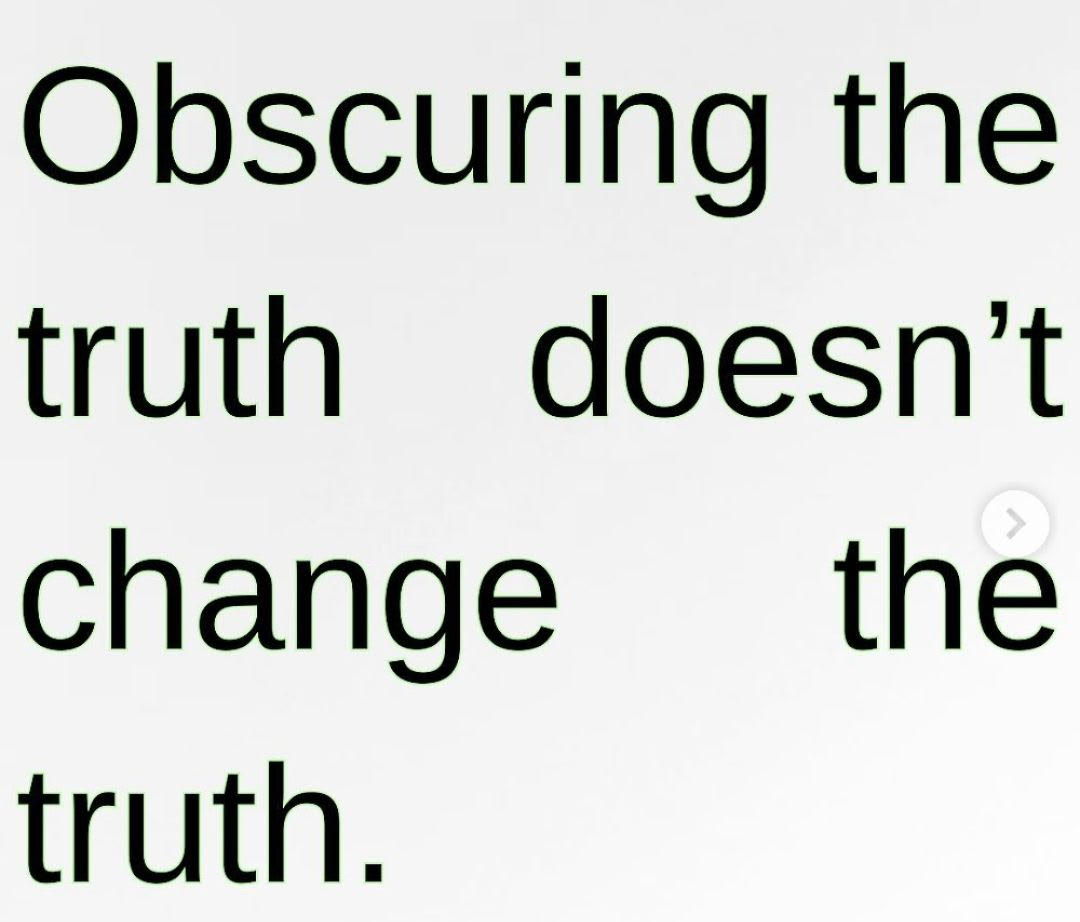

A re-post from Palestinian author and clinical psychologist Hala Alyan.
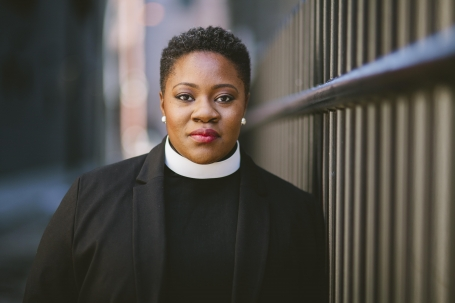
Another compelling offering from Alternative Seminary.
Whose Liturgy Is It Anyway? Reclaiming Christian Liturgy as the People’s Work
A Three-Part Series Led by Rev. Naomi Washington-Leapheart (above)
Saturdays, March 9, 16, 23. 10:00 am- 12:00 noon EST. $100
Familiar and traditional liturgy in Christian worship can be a source of comfort. But liturgies left unexamined can do harm. In this series, we’ll explore various liturgical forms and ask – whose liturgy is this and what “work” is this liturgy doing?
Continue reading “Whose Liturgy Is It Anyway?”
By Caitlin Johnstone, an Australian independent journalist. Re-posted from her Feb 26 newsletter
I watched the uncensored video of US airman Aaron Bushnell self-immolating in front of the Israeli embassy in Washington while screaming “Free Palestine”. I hesitated to watch it because I knew once I put it into my mind it’s there for the rest of my life, but I figured I owe him that much.
I feel like I’ve been picked up and shaken, which I suppose was pretty much what Bushnell was going for. Something to shake the world awake to the reality of what’s happening. Something to snap us out of the brainwashed and distracted stupor of western dystopia and turn our gaze to Gaza.
The sounds stay with you more than the sights. The sound of his gentle, youthful, Michael Cera-like voice as he walked toward the embassy. The sound of the round metal container he stored the accelerant in getting louder as it rolls toward the camera. The sound of Bushnell saying “Free Palestine”, then screaming it, then switching to wordless screams when the pain became too overwhelming, then forcing out one more “Free Palestine” before losing his words for good. The sound of the cop screaming at him to get on the ground over and over again. The sound of a first responder telling police to stop pointing guns at Bushnell’s burning body and go get fire extinguishers.
Continue reading “What Would I Do If I Was Alive During Slavery?”
Excerpts from Kwame Ture’s “The Pitfalls of Liberalism” (1969). It’s more relevant than ever.
“The final confrontation, when it does come about, will of course include the liberal on the side of the oppressor.”
Whenever one writes about a problem in the United States, especially concerning the racial atmosphere, the problem written about is usually black people, that they are either extremist, irresponsible, or ideologically naive.
What we want to do here is to talk about white society, and the liberal segment of white society, because we want to prove the pitfalls of liberalism, that is, the pitfalls of liberals in their political thinking…
Many people want to know why, out of the entire white segment of society, we want to criticize the liberals. We have to criticize them because they represent the liaison between both groups, between the oppressed and the oppressor. The liberal tries to become an arbitrator, but he is incapable of solving the problems. He promises the oppressor that he can keep the oppressed under control; that he will stop them from becoming illegal (in this case illegal means violent). At the same time, he promises the oppressed that he will be able to alleviate their suffering — in due time. Historically, of course, we know this is impossible, and our era will not escape history.
Continue reading “The Pitfalls of Liberalism” By Ched Myers, For the Second Sunday in Lent (Mk 8:31-38), re-posted from Lent 2015
Note: An ongoing series of Ched’s brief comments on the Markan gospel readings from the Revised Common Lectionary.
————–
The midpoint of Mark’s narrative poses two questions, aimed both at the disciples in, and the readers of, the story:
“Do you not yet understand?” (Mk 8:21).
“Who do you say that I am?” (8:29a).
The latter provokes what I call the “confessional crisis” (8:30-33), which this Sunday’s reading inexplicably jumps into the middle of (we get the whole text on the 16th Sunday after Pentecost, Sept 13th). This is followed by Jesus’ second call to discipleship (8:34ff), deepening the journey begun in 1:16-20. Continue reading “Jesus’ “Second Call” to Discipleship”

By Lydia Wylie-Kellermann
Sometimes the most miraculous moments of parenting happen in those late night hours when you wish your kids were asleep, but you are snuggled up beside them and they begin to speak.
A few months ago, as the leaves were just beginning to fall, I was lying with Isaac rubbing his back. The lights were off, but the moonlight was streaming through his window. Isaac is now ten years old. I don’t know if you remember fifth grade social studies, but this is the year when the curriculum teaches about “the founding of America.” And Isaac has been struggling. He is learning it in a very different context from our beloved Detroit to our new home in the mountains of eastern Pennsylvania.
We had been quiet for quite some time and I wondered if he had fallen asleep, when suddenly he said, “I miss Detroit.”
Continue reading “Learning from Laughter and the Trees: Sometimes I Feel like it’s the End of the World”
The Council of Bishops of the African Methodist Episcopal Church calls for the immediate withdrawal of all financial support from the US government to Israel.
Today as we celebrate the birth of Richard Allen, the apostle of freedom, Israel has trapped 1.6 million desperate Palestinians in the southern Gaza city called Rafah. Most of them are women and children. They have denied them access to food, water, shelter, and health care. After this torture, they plan to murder them. The United States of America will have likely paid for the weapons they use. This must not be allowed to happen.
The Council of Bishops of the African Methodist Episcopal Church calls on the United States Government to immediately withdraw all funding and other support from Israel. Since 1954, Israel has shown a willful disregard for the human dignity of Palestinians. Since October 7, 2023, in retaliation for the brutal murder of 1139 Israeli citizens by Hamas, Israel has murdered over 28,000 Palestinians, mostly women and children. The United States is supporting this mass genocide. This must not be allowed to continue.
Continue reading “Until Freedom Reigns for All”
It’s Ash Wednesday. A day for personal recommitment to collective liberation. A day marked by scrutiny, accountability, confession. A day to rediscover our identity and worth in the well-being of others. A day to remind ourselves of our baptism into the struggle for Something Else, from the ghetto to the Gaza Strip. A day to double-down on rebuilding what supremacy has burned down. A day to start giving up what weighs us down and holds us back. A day to embrace the beautiful, ancient tension of what the sacred text says in 2 Corinthians 6:4-10:
…but as servants of God we have commended ourselves in every way: through great endurance, in afflictions, hardships, calamities, beatings, imprisonments, riots, labors, sleepless nights, hunger; by purity, knowledge, patience, kindness, holiness of spirit, genuine love, truthful speech, and the power of God; with the weapons of righteousness for the right hand and for the left; in honor and dishonor, in ill repute and good repute. We are treated as impostors, and yet are true; as unknown, and yet are well known; as dying, and see—we are alive; as punished, and yet not killed; as sorrowful, yet always rejoicing; as poor, yet making many rich; as having nothing, and yet possessing everything.

Join Christians across the United States for a mass call this Thursday, February 15th, from 8-9:30pm EST (5-6:30pm PST) to learn about our plan for direct action against the US-funded genocide in Palestine, and the manipulation of Christianity by Christian Zionists.
Our goal is to get 1000 Christians on this call! Sign up today. Register HERE.
We will gather together for a time of lamentation, learning, prayer, and action. We’ll hear from powerful speakers including Palestinian and American Christians, a representative from the Jewish Voice for Peace Rabbinic Council, and leaders of Christians for a Free Palestine.
Together, they’ll speak to the crisis in Gaza and the West Bank, and call for Christians across the U.S. to join the worldwide interfaith movement that is taking public, nonviolent action to stop the genocide and speak out against Christian Zionism, antisemitism, and Islamophobia.
We’ll share specific and concrete ways that you and your community can take public action for a free Palestine, and we’ll announce future trainings and mass organizing calls.


 Radical Discipleship