A Provisional Understanding of Justice

CAN

From the website of Church of All Nations in Minneapolis:

1. We confess the Church’s complicity in much of current and historic injustice. We do not detach ourselves from the past, but in grace and humility take responsibility for it.

2. We confess our sin both individually and collectively, including structural and systemic injustice, for unless we take collective responsibility, the ministry of reconciliation simply cannot be advanced.
Continue reading “A Provisional Understanding of Justice”

Apostolic Work

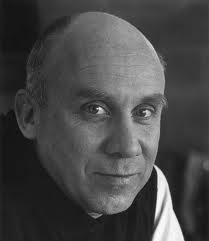
thomas mertonDo not depend on the hope of results. When you are doing the sort of work you have taken on, essentially an apostolic work, you may have to face the fact that your work will be apparently worthless and even achieve no result at all,if not perhaps results opposite to what you expect. As you get used to this idea, you start more and more to concentrate not on the results but on the value, the rightness, the truth of the work itself. And there too a great deal has to be gone through, as gradually you struggle less and less for an idea and more and more for specific people. The range tends to narrow down, but it get much more real. In the end, it is the reality of personal relationships that save everything.

– Thomas Merton

Hope Spills Into 2015

RichmondThose who have never despaired have neither lived nor loved. Hope is inseparable from despair. Those of us who truly hope make despair a constant companion whom we out-wrestle every day owing to our commitment to justice, love, and hope.
Cornel West

From Laurel Dykstra in Vancouver:

In March the Interfaith Institute for Justice Peace and Social Movements, a small collective of anti-racist people of faith, in Vancouver BC, launched Anishinaabe filmmaker Lisa Jackson’s short film Hidden Legacies. The film tells about the resistance and resilience of young adults who are the children and grandchildren of Indian Residential School survivors. The event included a territorial welcome, prayers, tears, hip-hop, cello, and hard questions from children. In collaboration with First Nations teachers, the film is being prepared for use in high schools. In the fall the film was premiered in Surrey, BC with a mostly South Asian audience and panel who drew connections between very different colonial legacies.

Continue reading “Hope Spills Into 2015”

Doing Justice 52 Weeks of the Year

julia 2I wrote this list of practices for the calendar Wretch. You can see more details or purchase the calendar here.

By Lydia Wylie-Kellermann

My own calendar fills so quickly with fast paced, endless commitments and lists, while I long for a different kind of schedule- one with reminders to slow down, pay attention, listen, learn, remember, bake, plant, resist, and build the Beloved Community. Continue reading “Doing Justice 52 Weeks of the Year”

Yield

kate foranWritten by Kate Foran. Kate Foran appreciates her three season CSA share and thinks it’s worth noting how the liturgical calendar builds in a lean time during the last weeks of winter and first weeks of spring.

That Wilderness should turn a mart”
quoted in  Changes in the Land by William Cronon

In this troubled area of the world known as
my shoulders, my roving fingers dig for what
must be buried there—gold doubloons
or taut and humming harpsichord strings
and I wonder about all that stored energy,
the tension I’m saving, always vigilant
for some fight or flight that never comes, Continue reading “Yield”

I Speak From Experience

adichieFrom Chimamanda Ngozi Adichie in Americanah (2014):

The only reason you say that race was not an issue is because you wish it was not. We all wish it was not. But it’s a lie. I came from a country where race was not an issue; I did not think of myself as black and I only became black when I came to America. When you are black in America and you fall in love with a white person, race doesn’t matter when you’re alone together because it’s just you and your love. But the minute you step outside, race matters. But we don’t talk about it. We don’t even tell our white partners the small things that piss us off and the things we wish they understood better, because we’re worried they will say we’re overreacting, or we’re being too sensitive. And we don’t want them to say, Look how far we’ve come, just forty years ago it would have been illegal for us to even be a couple blah blah blah, because you know what we’re thinking when they say that? We’re thinking why the fuck should it ever have been illegal anyway? But we don’t say any of this stuff. We let it pile up inside our heads and when we come to nice liberal dinners like this, we say that race doesn’t matter because that’s what we’re supposed to say, to keep our nice liberal friends comfortable. It’s true. I speak from experience.