This is a call to action to our Christian community—a call to use our public voice and our collective power to advocate for peace and demand an immediate ceasefire.
In the face of Christian Zionism, using our faith to cheer on this genocide, Christians have a responsibility to use our voices as powerfully as possible for the cause of peace and justice. We are taking public action as Christians.
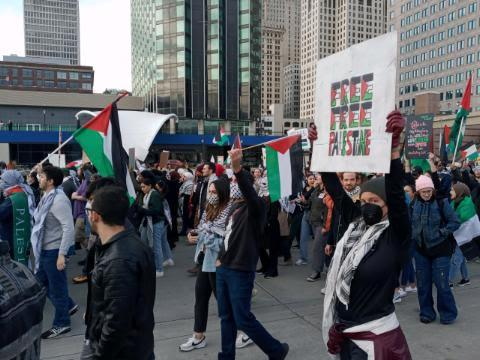
With your help, we will mobilize over 1000 Christians from across the US to grieve the ongoing violence, call for a ceasefire and an end to Israeli Apartheid, challenge Christian Zionism, and prepare to take action together. Now is the time to get involved.Register for the Feb 15 call HERE.
With a long, storied activist history (Dan and Phillip Berrigan had a favorite room and frequently led retreats and organized actions there) and an 80-year history of supporting LGBTQI Christians, it’s the kind of place radical disciples should know about. We have a number of retreats coming up that your communities might be interested in attending:
Birthing and Earthing Love: A Lenten Journey with the Gospel of Johnwith Sue Ferguson Johnson & Wes Howard-Brook Tuesday, February 20 – Thursday, February 22 In this Lenten retreat rooted in the gospel of John, we’ll hear the gospel call to be born anew as “inspired earth” with our identities rooted in God rather than…something else. Join us as we remember what it means when “Love becomes flesh.”
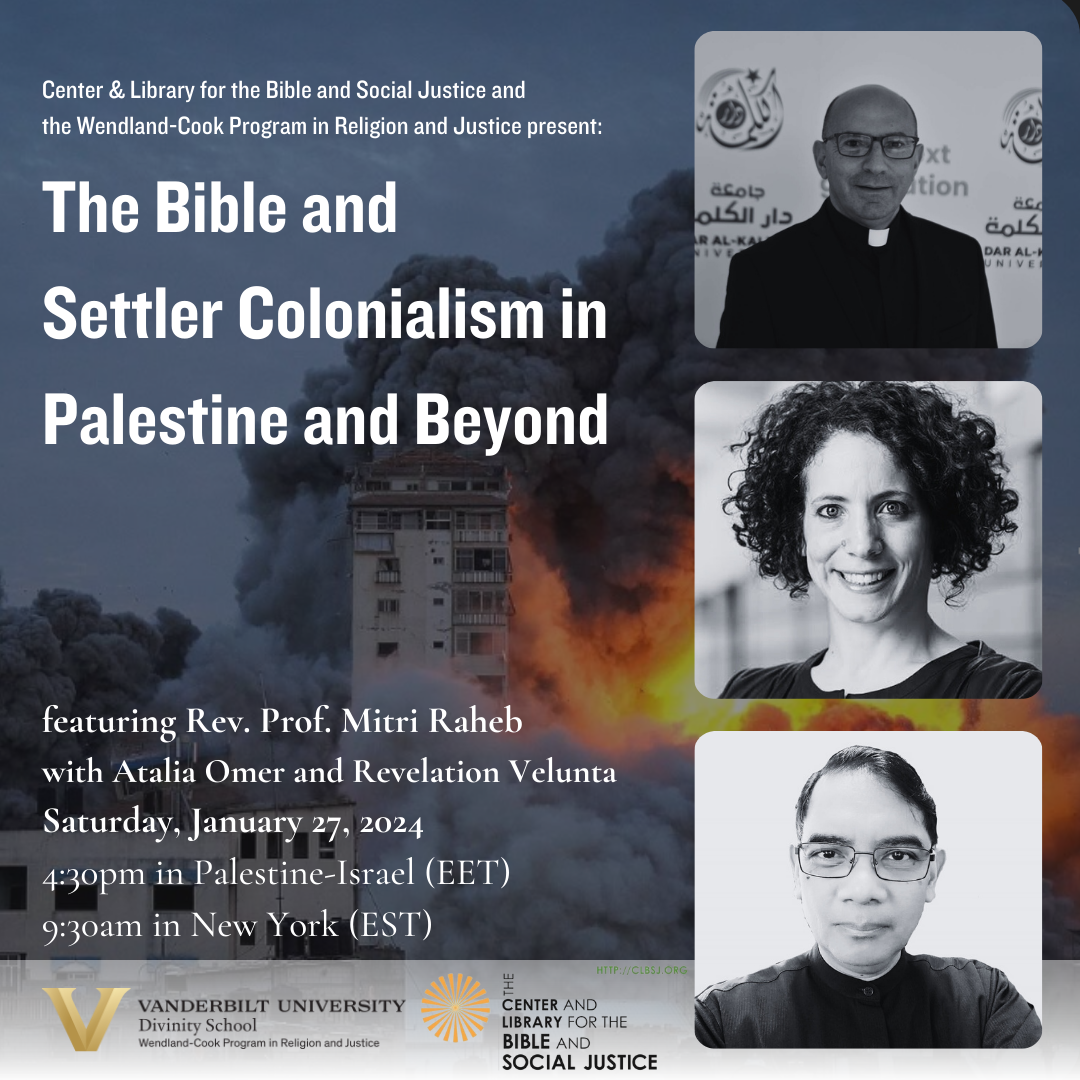
Drawing on Yoruba indigenous insights, Dr. Báyò Akómoláfé imagines emancipation through the topography of failure. By treating failure, disability, and the destabilizing syncopations visited upon white stability as a form of generative incapacitation, Dr. Akómoláfé invites us to convene at the sites of our greatest vulnerabilities – for it is there that we might take on new shapes.
By Lindsay Lamont-Airey, LMFT (above), some initial musings on how people malformed by white culture can start to get free from our repressive relationship with anger (reflecting on a series of slides below, posted by Rev. Dante Stewart on IG)
Whiteness trains us to be emotionally controlled and repressed. Not whole and free. Do not let the spiritual bypassers shame you for anger at injustice. They are legion, and they dominate the spiritual/cultural/therapeutic waters. It is a reflection of a white western therapeutic culture that has focused far more on what to do with anxiety (the response one has to violation and threats to safety) than on what to do with abuse of power (what causes violation and threat to safety in the first place).
As a trained therapist, I can tell you: anger is a primary adaptable response to active violation – of the self, and also when witnessing violation being actively committed against others. If you struggle to feel, express and metabolize it freely, and in a way that assists you in acting meaningfully in response to violation (I.e.. holding violators accountable vs. shrinking, collapsing, staying silent), then please know you are not alone. It takes a lot of healing and liberating work to get free from the forces of domination that have shaped us, early and often, in the belly of this beast of U.S. empire.
In early November 2023, author Ta-Nehisi Coates came on Democracy Now to talk about the mass murder of Palestinian civilians in Gaza – and to share his own experiences in the Occupied Territories earlier that year. He was asked to comment on remarks made by White House Press Secretary Karine Jean-Pierre who compared pro-Palestinian protesters to the white supremacists who took part in the deadly Unite the Right rally in Charlottesville, VA in 2017. This is how Coates responded.
I’m sure she’s a very, you know, nice person and a very, very kind person. But, you see, all of us stand on the shoulders of Martin Luther King. All of us stand on the shoulders of the nonviolent struggle. And on King’s birthday, the White House, like it’s done for years, stands up, and, you know, it praises Dr. King, and it talks about Dr. King as our modern-day prophet. I don’t know how these people do that and sleep at night. I don’t know how you compare people who are trying to stop a war, who are very much in the tradition of nonviolence, who are trying to stop bombs being dropped, literally, on refugee camps, to neo-Nazi protesters. It’s disgraceful, to use her own words. It’s disgraceful. It’s reprehensible. It is offensive, as far as I am concerned, to the shoulders on those whom we stand right now. I just — I don’t understand it.
I would extend this further. I mean, I think hearing President Biden himself — and here I will personalize it — downplay the number of Palestinian deaths, to say that he doesn’t believe the Palestinians, I just — when his own State Department was citing those figures only months ago, you know? At some point, you know, there’s that saying: When people show you who they are, you have to believe them. And so, I’ve spent a lot of time trying to do the political calculus on this. And I think at a certain point we have to just stop and say, “They believe it.” They believe it. They believe bombs should be dropped on children. They just think it’s OK. They think it’s OK, or at the very least they think it’s the price of doing business.
Another compelling offering from Kirkridge Retreat Center.
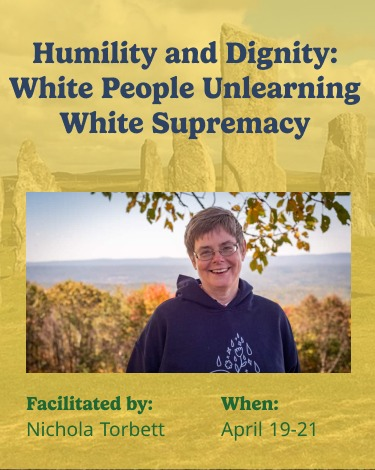
Are shame, fear, and anxiety limiting your participation in efforts to dismantle white supremacy as a white person? Do you feel insecure in your relationships with Black, Indigenous, and People of Color and unsure how to show up well in BIPOC-led movements? Do you sometimes find yourself stumbling over your words or remaining quiet when you feel called to speak up about racism? You are not alone! Join other like-minded white people who long for an end to white supremacy as we practice showing up with both humility and dignity. We’ll explore embodied practices, ancestral lineage healing, and spiritual tools that will help you work effectively in a multiracial coalition toward a world of equitable, collective flourishing.
On this site, we are committed to celebrating the life and teaching of Rev. Dr. Martin Luther King, Jr. 366 days a year. King represents what a radical, biblical Christian witness looks like in the context of empire. Dr. King broke rank with bogus Christianity. But he did not cast off the bible. He composted it. Dr. King knew secrets because he was inextricably tied to the long tradition of a biblical Black folk religion rooted in the spirit of the land, in the liberation struggle and in a love supreme. King was bound to a faith in Jesus that, in the words of Howard Thurman, redeemed a religion that white Christians profaned in their midst.
From the time they arrived on Turtle Island, enslaved Africans creatively counter-quoted the scriptures to call out white male preachers quoting the bible to support their destructive hierarchy of value. They transformed the sacred text into a liberation manifesto scripting hope in the midst of political, economic and social struggle. The bible proclaimed that Black people were beloved and that they belong – no matter what white folks said or did. They subverted supremacy and scripted Something Else.
In his book Conjuring Freedom, Johari Jabir, a cherished contributor to this site, wrote that enslaved Africans used the bible “to turn the toxic into the tonic.” In the same way that they salvaged remnants of cloth from garbage dumps and transformed them into quilts that kept their families warm – and in the same way that they kept hunger at bay by taking the intestines of pigs that plantation owners refused to eat and turning them into cooked chitlins. They made a way out of no way – and that way was abundant and beautiful.
By Lydia Wylie-Kellermann, editor of Geez Magazine, director of Kirkridge Retreat Center and author of The Sandbox Revolution: Raising Kids for a Just World
I was a bit undone by the story of the three wise astrologers this year.
“He sent them to Bethlehem and said, “Go and search carefully for the child. As soon as you find him, report to me, so that I too may go and worship him.” (Matthew 2:8)
How easy it is to be tricked. How easy it is to believe fully that we are doing good while the powers are using us in horrible ways. How easy it is to become distracted by something else while the rulers make plans for power grabs and murder.
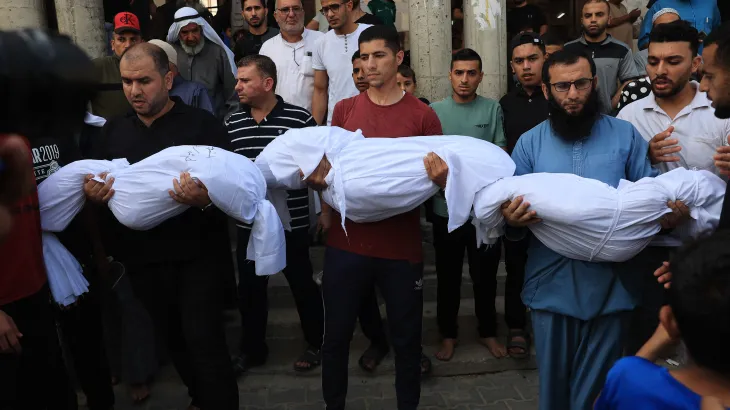
As the world is witnessing the slaughter of children in Gaza, a slaughter of innocence, I fear for the ways I am unknowingly being tricked. I know, without fully understanding, that I am constantly being manipulated by the empire that is sending the bombs and blessing the genocide.
Yet, it is in a dream that these three find the truth and figure out a different way. They awake with knowledge in their bellies and truth on the tips of their tongues quickly disappearing as dreams tend to do. They share their dreams with one another, trust the deeper knowing, and move together.






 Radical Discipleship