The Accent on Economics

By Walter Brueggemann, re-posted from Labor Day 2020

Covenantal faith in the Bible refuses all dualisms and holds together matters of spirituality and economics. It is always a both/and, never an either/or. In the practice of the church, however, an accent on things spiritual has largely muted the accent on economics that is so prominent in the Bible. In more affluent churches, it is predictable that at times economics will be muted and spirituality made larger. In less affluent churches there is a temptation at times to disregard the heavy burden of economics in the Bible and present instead an extravagant vision of another world to the neglect of this one.

Given that recurring tilt that distorts the Bible, it is my estimate that church leadership now must redress this distortion by paying acute attention to economics in the Bible and in our society.

For many church leaders this will entail not only close, attentive study, but the learning of new interpretive categories and skills as well. Such a redress of energy and attention is not only evoked by our present social circumstance but required by the biblical testimony itself.

Continue reading “The Accent on Economics”

A Way of Perception

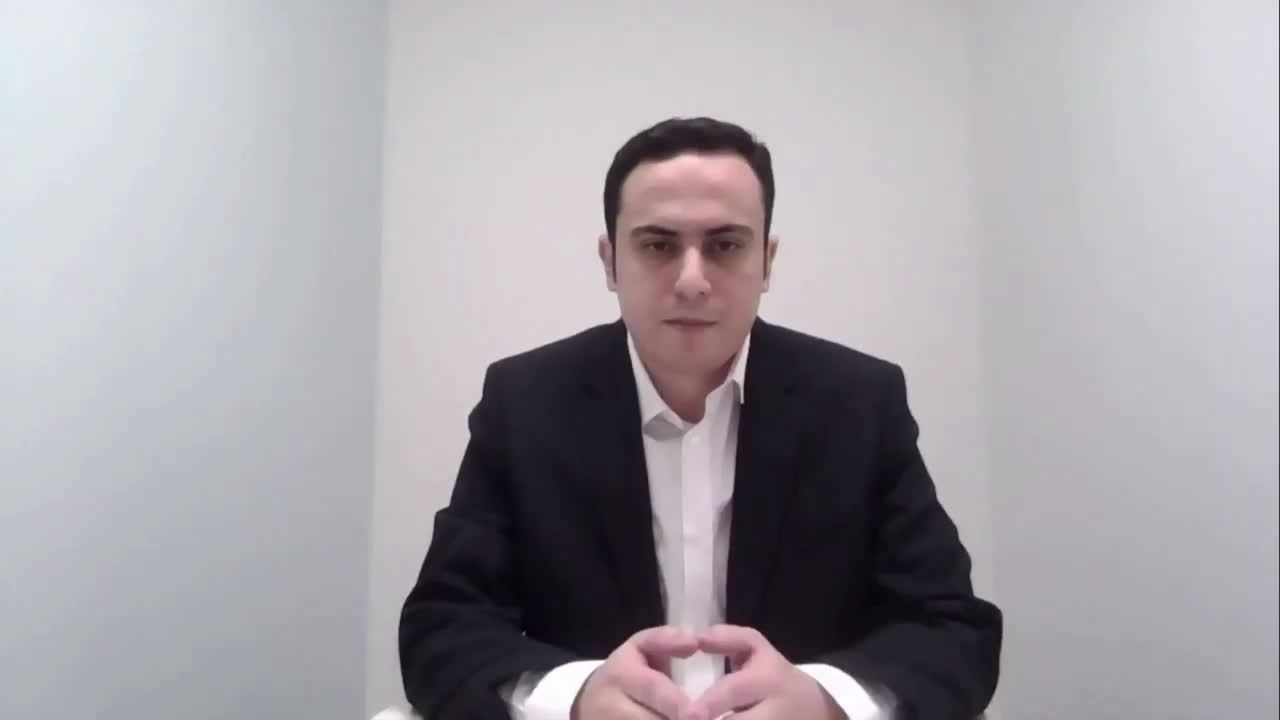
From Dr. Willie Jennings, professor of theology at Yale. This is from an interview he did with The Christian Century in 2021. He was asked what race has to do with theology (photo above from Mara Lavitt for Yale Divinity School).

The modern vision of race would not be possible without Christianity. This is a complicated statement, but I want people to think about this.

Inside the modern racial consciousness there is a Christian architecture, and also there is a racial architecture inside of modern Christian existence. There are three things we have to put on the table in order to understand how deeply race is tied to Chris­tianity. The first brings us back to the very heart of Christianity, the very heart of the story that makes Christian life intelligible.

That story is simply this: through a particular people called Israel, God brought the redemption of the world. That people’s story becomes the means through which we understand who God is and what God has done. Christianity is inside Israel’s story. At a certain point in time, the people who began to believe that story were more than just the people of Israel, more than just Jews. And at some point in time, those new believers, the gentiles, got tired of being told that they were strangers brought into someone else’s story—that this was not their story. They began—very early and very clearly—to push Israel out from its own story. They narrated their Christian existence as if Israel were not crucial to it.

Continue reading “A Way of Perception”

A Reading List for Repentance

By Tommy Airey

I’ve been working on a book project over the past few years. It has evolved into a series of shorter reflections focused on reconstructing a biblical spirituality committed to collective liberation for those of us who have been in a process of deconstructing fundamentalist, evangelical, conservative Catholic or denominational expressions of Christian Supremacy. This reconstruction project pivots on the Power of love, the only force that can fuel us to live for Something Else. 

I believe that this Something Else is rooted in the radical act of repenting from the American Dream, the corporate-sponsored conventional wisdom that comes at the awful expense of this agonizing statistic: the US and Canada comprise 5% of the world’s population – and consume over 30% of the world’s resources. I am calling the North American context the 5/30 Window, a play on what my white Evangelical pastors referred to as “the 10/40 Window,” the African, Asian and Middle Eastern regions of “unreached” people who live between ten and forty degrees north latitude. I am flipping the script and saying that the souls of dark-skinned Buddhists, Hindus and Muslims who live on the other side of the world do not need to get saved. We do. 

Continue reading “A Reading List for Repentance”

Gospel Healing in a World of Suffering

A new offering from the Alternative Seminary.

A FIVE-WEEK ONLINE COURSE
September 13 – October 11, 2023
Wednesday evenings, 7:00 – 9:00 pm

We have come through a global virus, but our world is still in desperate need of healing.

Severe poverty and deepening divides of income, war and violence, racism and other forms of hatred and systemic discrimination, a ravaged creation: All of these cry out for healing – but what is the healing we need? As we emerge from the global pandemic, how does this moment of deep societal vulnerability force us to ask deeper questions about who we are and what kind of world we need? And how do we engage in self-healing practices?

For five weeks, we will explore together several Gospel accounts of Jesus’ healings, reflecting on how these stories speak to our society and world. We will reflect on ways we are all in need of healing and how we can be empowered to be faithful disciples and healers in this time of manifold crises.

Continue reading “Gospel Healing in a World of Suffering”

This Fall at Kirkridge

A message from our comrades at Kirkridge Retreat and Study Center.

Do you know about Kirkridge Retreat and Study Center

With a long, storied activist history (Dan and Phillip Berrigan had a favorite room and frequently led retreats and organized actions there) and an 80-year history of supporting LGBTQI Christians, it’s the kind of place radical disciples should know about. And there are a number of retreats coming up that you might be interested in attending:

Laurel Dykstra on Wilderness Prophets and the Climate Crisis

September 29-October 1

Come explore how the wilderness prophets are relevant to spiritual care and action in a time of climate crisis and discern your own prophetic call for this time. We’ll read scripture, engage scripture  and spend time in contemplation in the more-than-human world

Continue reading “This Fall at Kirkridge”

Disrupt the Culture Wars

By Caitlin Johnstone, an author writing about the end of all illusions, re-posted from substack

One of the great challenges faced by westerners who oppose the political status quo today is the way the narrative managers of both mainstream factions continuously divert all political energy away from issues which threaten the interests of the powerful like economic injustice, war, militarism, authoritarianism, corruption, capitalism and ecocide and toward issues which don’t threaten the powerful at all like abortion, racism, sexism, homophobia and transphobia.

This method of social control serves the powerful in some very obvious ways, and is being used very effectively. As long as it remains effective, it will continue to be used. The worse things get the more urgent the need to fight the class war will become, anf the more urgent the need to fight the class war becomes the more vitriolic and intense the artificial culture war will become in order to prevent political changes which inconvenience the powerful. This is 100 percent guaranteed. And what’s tricky is that all the vitriolic intensity will create the illusion that the culture war has gotten more important, when in reality the class war has.

Continue reading “Disrupt the Culture Wars”

Priests – The Village Vanguard

By Johari Jabir

Honoring the nine martyred priests of Mexico

When I was just a boy in the king’s court, I overheard the king say to the merchants of death: “Kill the priests first. They are the village vanguard.” The fact that our king would betray his own came of no surprise to us, little boys in his harem whose small bodies he touched night after night. Yet, it was the priests who made sure our infinity remained untouchable.

Every evening ‘round midnight, in slow solemn procession, shamans, sages, and priests circled the edges of the village  sprinkling water crystals, wafting sweet incense, tossing kisses at the moon, and touching the tree leaves with their fingers, turning them into green lanterns. Out of all the sacred specialists, it was the priests who translated our collective moans and counted, one-by-one, the tears in god’s face.

Continue reading “Priests – The Village Vanguard”

Mossback

This is an excerpt of an interview Orion Magazine does with Dave Pritchett, the author of Mossback: Ecology, Emancipation, and Foraging for Hope in Painful Places. Here, Pritchett responds to a question about the meaning of his title and his key inspirations to reclaim the word.

Well I love the word. I first heard the term used, I think, in high school when I lived in Arkansas by fishers to describe big old fish or turtles that had algae growing on their backs. In research for the book, I came across the term describing Confederates who evaded the draft by hiding out. The word was really evocative and multilayered, and when I dug further into its use and etymology, I found that it seemed to be a derogatory term sort of like the more modern “redneck,” and there is some suggestion that it came from the Carolina swamps and used in that same disparaging way to describe poor folks who were so slow moving that they had moss growing on their backs. I was really taken when I found a report during the Reconstruction period after the Civil War recounting a gun fight between the Ku Klux Klan and a group called the “Mossy-backs.” So for me, the word conjures a complex meaning with allusions of ecological connection, but also perhaps an unwillingness to fight wealthy people’s wars or to tolerate explicitly white supremacist institutions. That’s the sort of backwardness I can get behind. I found “mossback,” with its multivalent meaning really helpful, since I’ve been looking for metaphors that contribute to the somewhat odd admixture of ecological well being with racial and economic analysis that the word connotes. Of course, I’m doing some fanciful reading, as it’s highly unlikely that the Mossy-backs had a robust racial analysis, or that Confederate deserters were thinking much beyond themselves and their families. But I want to reclaim the word and use it insofar as it moves us toward the kind of environmental and racial solidarity that I believe our times require. 

Read the entire interview here. It’s really really good.

David Pritchett is author of Mossback: Ecology, Emancipation, and Foraging for Hope in Painful Places. He works in emergency medicine, and he holds a diploma in mountain medicine and is certified in track and sign.