Easter Faith and Empire

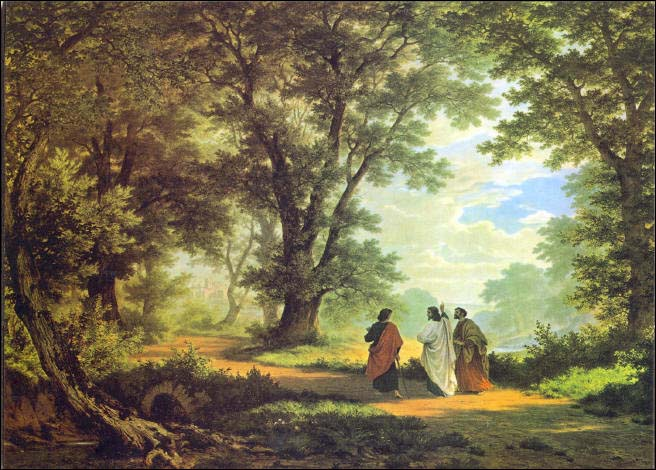
By Ched Myers, a brilliant Bush-era article on Luke’s Road to Emmaus story (this weekend’s Gospel text). It is more relevant than ever.

In the first-century Pax Romana, Christians had the difficult and demanding task of discerning how to cling to a radical ethos of life – symbolized preeminently by their stubborn belief in the Resurrection of Jesus – while living under the chilling shadow of an imperial culture of domination and death. Today, in the twenty-first-century Pax Americana, U.S. Christians are faced with the same challenge: to celebrate Easter faith in the teeth of empire and its discontents.

“The words empire and imperialism enjoy no easy hospitality in the minds and hearts of most contemporary Americans,” wrote the great historian William Appleman Williams a quarter century ago in his brilliant rereading of U.S. history. Yet today, because of the ascendancy of the New Right’s ideological project (whose intellectual architecture is typified by the Project for a New American Century), the words are increasingly used approvingly in regard to U.S. policy. We are indeed well down the road of imperial unilateralism, and are seeing clearly that this means a world held hostage to wars and rumors of war. The conquest and occupation of Afghanistan and Iraq have had an enormous human and political cost. Meanwhile, the Unites States has military bases on every continent and some form of military presence in almost two-thirds of the 189 member states in the United Nations.

Read the full article here.
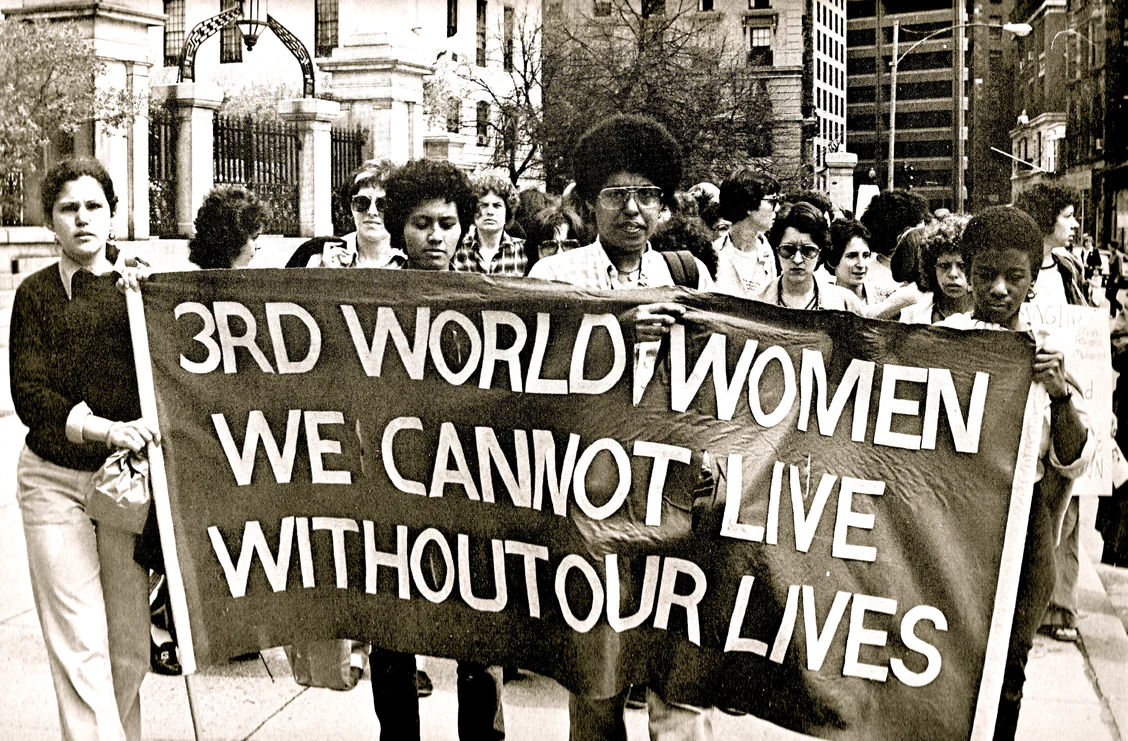
The Liberation of All Oppressed People

An excerpt from the Combahee River Collective (1977).

Above all else, Our politics initially sprang from the shared belief that Black women are inherently valuable, that our liberation is a necessity not as an adjunct to somebody else’s may because of our need as human persons for autonomy. This may seem so obvious as to sound simplistic, but it is apparent that no other ostensibly progressive movement has ever considered our specific oppression as a priority or worked seriously for the ending of that oppression. Merely naming the pejorative stereotypes attributed to Black women (e.g. mammy, matriarch, Sapphire, whore, bulldagger), let alone cataloguing the cruel, often murderous, treatment we receive, indicates how little value has been placed upon our lives during four centuries of bondage in the Western hemisphere. We realize that the only people who care enough about us to work consistently for our liberation are us. Our politics evolve from a healthy love for ourselves, our sisters and our community which allows us to continue our struggle and work.

This focusing upon our own oppression is embodied in the concept of identity politics. We believe that the most profound and potentially most radical politics come directly out of our own identity, as opposed to working to end somebody else’s oppression. In the case of Black women this is a particularly repugnant, dangerous, threatening, and therefore revolutionary concept because it is obvious from looking at all the political movements that have preceded us that anyone is more worthy of liberation than ourselves. We reject pedestals, queenhood, and walking ten paces behind. To be recognized as human, levelly human, is enough.

Continue reading “The Liberation of All Oppressed People”

Working for a Different Way to Live

lilyBy Lily Mendoza, from “Healing Historical Trauma: Ethnoautobiography as Decolonizing Practice,” a talk delivered at the Graduate Center, University of Pretoria, August 16, 2016:

Indeed, there is hope in remembering that for the majority of our time on the planet, we have lived very differently than we do today. We did not make war a way of life; we did not treat the Earth as mere resource to do with as we please; we did not deem ourselves the most important creatures on the planet; we did not always enslave; we did not take more than we needed and without giving back; we did not build businesses out of imprisoning huge numbers of our population, or out of producing weapons of mass destruction or psychotropic drugs meant to numb our pain and boredom; we did not take over every square inch of land driving every other species out their habitat and into extinction, etc. In other words, if, for the majority of our life on the planet, we did not do any of these things—i.e., we did not rape, pillage, and plunder—surely we can stop doing so again and start desiring and working for a different way to live on our shared planet?  Continue reading “Working for a Different Way to Live”

The Healing Potential of Hatred

By Tommy Airey

Four years ago this month, Lindsay and I found ourselves, for a short time, living in Bend, a rapidly developing whitopia in Central Oregon where the Great Basin Desert meets the Cascade Mountains. While we waited for the birth of our nephew Milo Brooks, my brother-in-law and I spent several nights bonding over the Portland Trailblazers, who boasted a backcourt of Damian Lillard and C.J. McCollum, two smaller guards who played at obscure division one colleges. Lillard, who reps the number 0 to honor Oakland – his hometown – was and is the face of the franchise. His signature celebration is what fans affectionately refer to as “Dame Time.” After a big shot, he lifts up his left hand to the crowd and taps the invisible watch on his wrist. It’s not just game time. It’s Dame time.

In the first round of the 2019 playoffs, Dame and the Blazers were pitted against the Oklahoma City Thunder and Russell Westbrook, the all-star point guard from L.A. who also wears 0. When Russ does something spectacular, he brings his hands together and rocks back and forth, like he is cradling an invisible baby. When smaller opponents (like Dame) try to guard him, Russ treats them like little babies. Lillard carries himself with a quiet confidence energized by who he is for (the team, the city, his family, his hometown). Russ stays locked in on who is out to get him (real or imagined). While Dame Time taps into self-love, Westbrook’s trademark gesture is a taunt. His staring, glaring brand of bully ball is dead-set on diminishing others. Russ was (and is) so easy to root against.

Continue reading “The Healing Potential of Hatred”

The Resurrection is Against the Law

BillAn excerpt from Bill Wylie-Kellermann’s classic Seasons of Faith and Conscience (1991).

The sealing of the tomb is, I believe, notoriously misunderstood. I grew up with a Sunday School notion that to seal the tomb was a matter of hefting the big stone and cementing it tight. The seal, in my mind’s eye, was something like first-century caulking–puttying up the cracks to keep the stink in. Not so. This is a legal seal. Cords would be strung across the rock and anchored at each end with clay. To move the stone would break the seal and indicate tampering. Continue reading “The Resurrection is Against the Law”

The Donkey-Human Rides Again

By Jim Perkinson, a Palm Sunday sermon for St. Peter’s Episcopal Church in Detroit, MI (04.02.2023)

And when they drew near to Jerusalem and came to Beth′phage, to the Mount of Olives, then Jesus sent two disciples, saying to them, “Go into the village opposite you, and immediately you will find an ass tied, and a colt with her; untie them and bring them to me. If any one says anything to you, you shall say, ‘The Lord has need of them,’ and he will send them immediately.” This took place to fulfil what was spoken by the prophet, saying,

“Tell the daughter of Zion,
Behold, your king is coming to you,
humble, and mounted on an ass,
and on a colt, the foal of an ass.”

The disciples went and did as Jesus had directed them; they brought the ass and the colt, and put their garments on them, and he sat thereon. Most of the crowd spread their garments on the road, and others cut branches from the trees and spread them on the road. And the crowds that went before him and that followed him shouted, “Hosanna to the Son of David! Blessed is he who comes in the name of the Lord! Hosanna in the highest!” 10 And when he entered Jerusalem, all the city was stirred, saying, “Who is this?” 11 And the crowds said, “This is the prophet Jesus from Nazareth of Galilee.”

So, begins the most profound communication in the public career of Jesus of Nazareth.  At the apex of his popularity, bringing his own movement “posse” from their home turf in the outback of Galilee to the central city in Occupied Palestine for an ultimate showdown in the Temple-State shrine, he confesses “lack.”  He “needs.”  And what he needs is a burro. Or ass.  Or donkey—they are all words for the same animal (but not a mule, as we shall see, and not a horse). 

Continue reading “The Donkey-Human Rides Again”

In Memphis. On the Mountaintop.

An excerpt from Dr. King’s final speech, in Memphis, on April 3, 1968. Exactly 55 years ago.

It’s all right to talk about “long white robes over yonder,” in all of its symbolism. But ultimately people want some suits and dresses and shoes to wear down here! It’s all right to talk about “streets flowing with milk and honey,” but God has commanded us to be concerned about the slums down here, and his children who can’t eat three square meals a day. It’s all right to talk about the new Jerusalem, but one day, God’s preacher must talk about the new New York, the new Atlanta, the new Philadelphia, the new Los Angeles, the new Memphis, Tennessee. This is what we have to do.

Now the other thing we’ll have to do is this: Always anchor our external direct action with the power of economic withdrawal. Now, we are poor people. Individually, we are poor when you compare us with white society in America. We are poor. Never stop and forget that collectively — that means all of us together — collectively we are richer than all the nations in the world, with the exception of nine. Did you ever think about that? After you leave the United States, Soviet Russia, Great Britain, West Germany, France, and I could name the others, the American Negro collectively is richer than most nations of the world. We have an annual income of more than thirty billion dollars a year, which is more than all of the exports of the United States, and more than the national budget of Canada. Did you know that? That’s power right there, if we know how to pool it.

Continue reading “In Memphis. On the Mountaintop.”

Wild Lectionary: No Peace in Heaven, No Peace on Earth

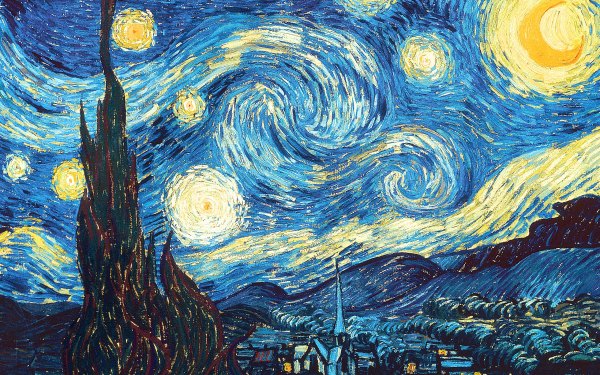
van-gogh-the-starry-night-1889
Vincent VanGogh’s Starry Night

By Wes Howard-Brook and Sue Ferguson Johnson, a re-post from April 2019

In the fifteenth year of the reign of Emperor Tiberius, when Pontius Pilate was governor of Judea, and Herod was ruler of Galilee, and his brother Philip ruler of the region of Ituraea and Trachonitis, and Lysanias ruler of Abilene, during the high priesthood of Annas and Caiaphas, the word of God came to John son of Zechariah in the wilderness. (Luke 3.1-2)

Do you think that I have come to bring peace to the earth? No, I tell you, but rather division! (Luke 12.51)

As he was now approaching the path down from the Mount of Olives, the whole multitude of the disciples began to praise God joyfully with a loud voice for all the deeds of power that they had seen, 38 saying,
“Blessed is the king

who comes in the name of the Lord!
Peace in heaven,
and glory in the highest heaven!
(Luke 19.37-38)

In imagining ways to hear Scripture from the lens of “wild lectionary,” we tend to jump to details of life on earth: water, trees, animals, mountains. This focus on earth is challenged by this week’s passage from Luke, as Jesus and his disciples enter Jerusalem for what we’ve come to call “Holy Week.” For Luke tells us that “the whole multitude of disciples” proclaimed as Jesus came down the Mount of Olives, not “peace on earth,” but “peace in heaven.” What can they be thinking? What is the relationship between heaven and earth when it comes to making peace? Continue reading “Wild Lectionary: No Peace in Heaven, No Peace on Earth”

A Lexicon of Stringfellow’s Theology

By Bill Wylie-Kellermann, the author of William Stringfellow: Essential Writings (2013)

*See below for a chronological list of Stringfellow’s works (corresponding to initials & page numbers at the end of each entry).

Babel…means the means the inversion of language, verbal inflation, libel, rumor, euphemism and coded phrases, rhetorical wantonness, redundancy, hyperbole, such profusion in speech and sound that comprehension is impaired, nonsense, sophistry, jargon, noise, incoherence, a chaos of voices and tongues, falsehood, blasphemy. And, in all of this, babel means violence…By the 1970s in America, successive regimes had been so captivated by babel that babel had become the means of ruling the nation, the principal form of coercion employed by the governing authorities against human beings. EC, p.106-7.

Baptism …is often profoundly misunderstood. It is widely thought to be the sacrament of the unity of the Church. But that is not what baptism is; just as it is not mere membership or initiation ritual. Baptism is the assurance – accepted, enacted, verified, and represented by Christians – of the unity of all humanity in Christ… The oneness of the Church is the example and guarantee of the reconciliation of all humankind to God and of the unity of all humanity and all creation in the life of God. The Church, the baptized society is asked to be the image of all humanity, the one and intimate community of God. ID, p.111.

Blasphemy. In Revelation it denotes wanton and contemptuous usurpation of the very vocation of God, vilification of the Word of God and persecution of life as life originates in the Word of God, preemptive attempt against the sovereignty of the Word of God in this world, brute aggression against human life which confesses or appeals to the Word of God. CO, p. 69.

Continue reading “A Lexicon of Stringfellow’s Theology”