Move Beyond the Symbolism

From Mohammed El-Kurd, a Palestinian author, re-posted from his Substack feed.

If you felt that the Javier Bardem/Hannah Einbinder’s statements last night [at the Emmy Awards] were refreshing, and unlike the usual red carpet lip-service, it is because they weren’t vague or preemptively defensive, nor did they reduce the genocide to a faceless “humanitarian crisis.” They denounced the culprit unequivocally and named what justice demanded: sanctions.

I’m rarely impressed with celebrity displays of solidarity, not only due to suspicions of opportunism or whatnot, but mostly because, so often, they’re painfully timid and hesitant, defanging their political stances with euphemisms, disclaimers and bothsidesism, or refusing to name the perpetrators—these silly linguistic tricks meant to appease all sides end up rendering well-intentioned gestures hollow and perfunctory. Such reticence does nothing to raise the ceiling and is a complete waste of social capital.

In the case of Bardem and Einbinder, however, it wasn’t the keffiyeh or the ceasefire pin that were impressive, it was Bardem’s full-throated call for “commercial and diplomatic blockade, and also sanctions on Israel.” It was Einbinder’s saying “Free Palestine” in a room full of powerful Zionists, instead of opting to use the classic (and very feeble) talking point of “women, children, etc.” Meaning, instead of taking the easy route of talking about Gaza as if it’s an unfortunate natural disaster, she explicitly adopted the slogan of our movement, a slogan rooted in anti-Zionist, anti-colonial struggle for land and liberation, coupling it with the local struggle against ICE, and later renouncing Israel, not just “Netanyahu’s government,” as an “ethnonationalist state” that must be exiled outside of American mainstream Jewry.

One only gets a few minutes on stage or talking to the press, and they chose to use that time to move beyond the symbolism of the pin and the scarf and into tangible action, however limited it may be: vowing to cut ties with those complicit in genocide and demanding they be sanctioned.

Our Radical Desire for Common Good

By Kiese Laymon, re-posted from social media.

Flags lowered for the death of the worst of white folks is pretty on-brand for this great again place. We are not in the midst of a coup, or a dictatorship. This has always been an offering under the guise of decorum. Peep the supposed left today genuflecting to a man who preached, “Black women do not have the brain processing power to otherwise be taken really seriously.”

I wish that man was not killed. “Killing’s some wack shit.” But, more than that, I wish that man considered a public and private love for the most vulnerable parts of himself and his nation before he died. I wish the same for all of us. Please do not offer your good to great gobblers of grace. They eat suffering. They eat grace. They eat good. They bust us in the heads, gleefully dismantling the few protections the vulnerable have left.

But they got heads too.

Do not let them take our radical desire for common good. Please.

We Shall Return

By Salman Abu Sitta, a Nakba survivor and the founder and president of Palestine Land Society, re-posted from Facebook on 9/3/25.

A MESSAGE TO AN AMERICAN JEWISH PROFESSOR

Dear Prof xxx
For many years you wrote scholarly “moderate” articles on Zionism and Israel.
Yesterday you wrote that “Israel has a right to exist” is not in question.

As a Palestinian who was born in Al Ma’in Abu Sitta, I ask a simple personal non academic question: will this state exist on my land?
If yes, I do not agree, never did, never will.

My family was attacked by Zionist militia on 14 May 1948 and our landscape was destroyed. We became refugees ever since. Four kibbutzim were built on my land.

Continue reading “We Shall Return”

Anarchist Christianity: The Sermon on the Mount in Action

Another compelling offering from the Alternative Seminary.

AN ONLINE GATHERING: Saturday morning, September 6, 2025 from 10:30 am – 12:30 pm EST

What fellowship has anarchy with christianity?

Empowering small communities of people to take care of their own needs at the local level. Rejecting rulership and making decisions by consensus through face-to-face deliberation. Constructing societies in which people are placed above profit and systems are built on solidarity and mutual aid.

It is no coincidence that this describes both the historical movement of anarchism and the early church as described in the Acts of the Apostles.

In this gathering, we will explore the history, philosophy, and practice of anarcho-communism and how they cohere with the teachings of Jesus and the practices of the early christian communities. We will dive into how theologies touching on God, humanity, divine-human interaction, the Bible, and more can be illuminated and faithfully reformulated through an anarchist lens. And we will chart a christian praxis based on voluntary cooperation, the goodness of all people, and faith in God. We can build an ethical world – one built on structures of care – and anarchy might just be the unlikely key.

The Rev. Terry J. Stokes (he/they) is an anarchist theologian who seeks to foster political and spiritual radicalization through his writing and speaking. He holds degrees from Yale University and Princeton Theological Seminary and was ordained as a minister of word and sacrament by Park Avenue Baptist Church. He is a youth worker and associate minister in Trenton, NJ, and a group facilitator at The Wooden Shoe anarchist infoshop in Philadelphia. Their latest book is Jesus and the Abolitionists: How Anarchist Christianity Empowers the People. 

Registration is required. Click HERE to register.

The cost is $10 (or whatever you can afford).

The deadline for registration is September 2.

The Facebook page is HERE.

If you have any questions, please contact Will O’Brien at willobrien59@gmail.com or 267-339-8989.

The Alternative Seminary is a program of biblical and theological study and reflection designed to foster an authentic biblical witness in the modern world.  

A Sophisticated Art Form

An excerpt from Ched Myers’ commentary on this week’s Gospel text in Luke. The entire post is well worth reading, as it is every week. Check out Ched’s blog for his weekly comments and subscribe to his emails here. Also, check out his recent release (above) Healing Affluenza and Resisting Plutocracy.

There are three main problems with how church folk have been socialized to encounter scripture:

  • We handle texts as fragments, rarely grasping the narrative whole and flow;
  • Our habits of “fast food Bible study” allow only limited time and attention to “get to the point,” which fosters either overdependence upon an authority figure to tell us what the text means, and/or a settling for vast simplifications;
  • The focus of interpretation is almost always “personal application,” quite apart from social and historical context (ours and the text’s)—treating the Bible as an “answer book” or doctrinal rulebook.

The problem is, ancient storytelling was not simplistic, but a sophisticated art form using a variety of techniques to educate, preserve culture, and explore the human experience.

Click here to read the rest!

Free Leqaa Kordia

From the Free Leqaa Kordia IG Page

On March 13th, on the 523rd day since the start of the genocide in Gaza, Leqaa was kidnapped and sent to Texas.

Today is day 678 of the genocide that has taken almost 200 of Leqaa’s family members lives and day 155 since Leqaa has been confined at Prairieland Detention Center for speaking out against the genocide.

This page was created by Leqaa’s loved ones to ensure that her story and the reason why she was confined — for protesting the ongoing genocide of her family and people in Gaza — does not fall through the cracks. We must stand up for Gaza and for Leqaa.

Leqaa is currently represented by Texas Civil Rights Project (@txcivilrights), CUNY CLEAR(@cuny_clear), Muslim Advocates (@muslimadvocates), Waters Kraus Paul & Siegel, and Boston University School of Law Immigrants’ Rights Clinic. 

Leqaa’s Official page: @freeleqaakordia

Artwork by: @shirien.creates

The First Step Toward a Healthy World

By Caitlin Johnstone, re-posted from her newsletter

Nicole on Facebook writes, “I would love to hear you explain how Palestine is the moral question of our time. Why it’s so important. How it’s related to every movement and should be a concern to everyone.”

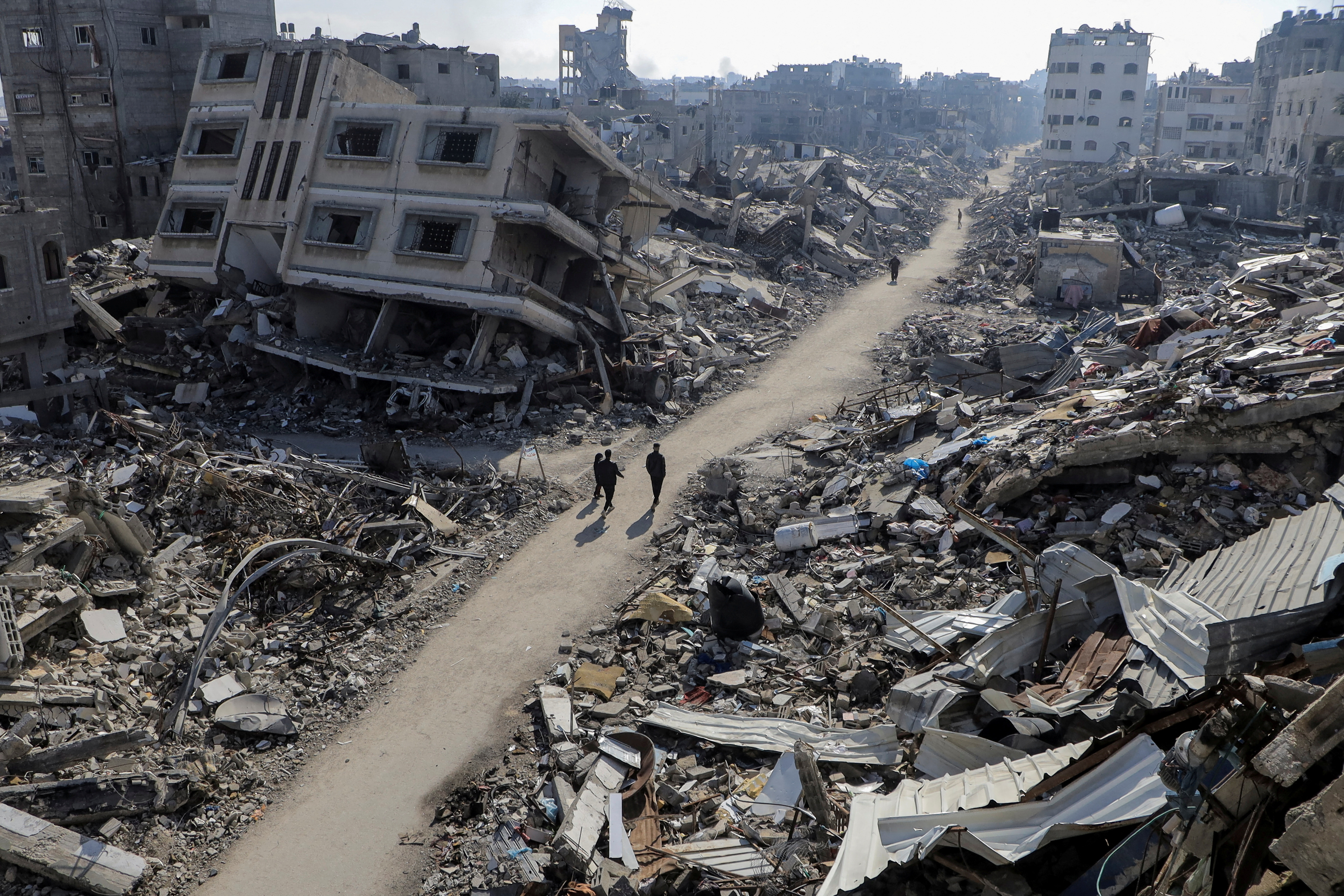
Palestine is the moral question of our time because the abuse of the Palestinians is the most glaring, in-your-face symptom of the imperial disease. You can see the effects of so many of the empire’s abusive dynamics in how this thing is playing out, from racism to colonialism to militarism to war profiteering to mass media propaganda to empire-building to government corruption to suppression of free speech to ecocide to the heartless, mindless, soul-eating nature of the capitalist system under which we all live.

But there’s more to it than that. The primary reason to place Palestine front and center as the moral issue of our time is because if we can’t sort out the morality of an active genocide backed by our own western governments, we’re not going to be able to sort out anything else. Stopping the Gaza holocaust and bringing justice to the Palestinians is the very first step toward a healthy civilization.

Continue reading “The First Step Toward a Healthy World”

The Heartbeat of Every Free Person

By Anas Al-Sharif, who was assassinated by Israeli missiles yesterday

This is my will and my final message. If these words reach you, know that Israel has succeeded in killing me and silencing my voice. First, peace be upon you and Allah’s mercy and blessings.

Allah knows I gave every effort and all my strength to be a support and a voice for my people, ever since I opened my eyes to life in the alleys and streets of the Jabalia refugee camp. My hope was that Allah would extend my life so I could return with my family and loved ones to our original town of occupied Asqalan (Al-Majdal). But Allah’s will came first, and His decree is final. I have lived through pain in all its details, tasted suffering and loss many times, yet I never once hesitated to convey the truth as it is, without distortion or falsification—so that Allah may bear witness against those who stayed silent, those who accepted our killing, those who choked our breath, and whose hearts were unmoved by the scattered remains of our children and women, doing nothing to stop the massacre that our people have faced for more than a year and a half.

I entrust you with Palestine—the jewel in the crown of the Muslim world, the heartbeat of every free person in this world. I entrust you with its people, with its wronged and innocent children who never had the time to dream or live in safety and peace. Their pure bodies were crushed under thousands of tons of Israeli bombs and missiles, torn apart and scattered across the walls.

Continue reading “The Heartbeat of Every Free Person”

Loaves, Fishes and Forced Starvation

By Rev. Margaret Ernst, on behalf of Christians for a Free Palestine

This past Sunday, I guest preached at a church in Pennsylvania and one of the songs we sang was “Rain Down,” by Jaime Cortez. I swayed to the music, but my breath caught in my chest when we reached the end of the second verse. “God will protect us from darkness and death,” the line goes, “God will not leave us to starve.”

God will not leave us to starve.

Images of Palestinians starving — children, elders, people of all ages — flashed in my mind.

I felt a physical pain in my heart. We sing these proclamations of faith in a God who provides and does not let God’s children starve, I thought silently. Yet Palestinians are starving, right now.

The Bible is full of stories about food. Manna in the desert. Loaves and fishes. Like his Palestinian kin who are known for their hospitality, Jesus is always feeding people. Teaching, yes, but feeding people too.

Continue reading “Loaves, Fishes and Forced Starvation”