Memory and Mandate: A Meditation on Maundy Thursday

By Ken Sehested

Under the sway of Easter bunnies, chocolate binges, and spring fashion sales, Holy Week and Resurrection Morning observances have shed almost all connections to the volatile political events in Jerusalem leading up to Jesus’ “triumphal entry” into the city.

The season of Jesus’ final visit to Jerusalem was the fevered occasion of Passover. Passover was the story of the Hebrews’ miraculous escape from Egyptian bondage. Passover’s observance in first century Palestine was like President’s Day, Armed Forces Day, Memorial Day, Flag Day, and Independence Day all rolled up into one. Judea was again in bondage, this time subjugated by Roman occupation. Jews from around the countryside streamed into Jerusalem for reasons of piety mixed with nationalist fervor. Rome ramped up its troop level every year at this time.

Continue reading “Memory and Mandate: A Meditation on Maundy Thursday”

Challenging Power and Privilege: Is Good News for the poor Bad News for many of us in North America?

By Will O’Brien, coordinator of The Alternative Seminary

Our Western scholarship and church teaching have communicated to us the notion that the four Gospels convey “objective truth,” and we read them to discern their objective and universal meaning. But such an approach to Scripture, bred in the Western / European church, has functioned to uphold social power systems of domination. What is “objective” and what is “universal” have been adjudicated conveniently by church hierarchy and monarchs to serve the needs of Empire, muting the prophetic and liberating voices of scripture.

In recent decades, the Western church has had its safe objectivity subverted by the powerful and insistent voices from the global south, who have forced us to reckon with the social contexts of scripture – both in its historical origins and in our contemporary world. They have exposed the lie behind the phony neutrality of Western biblical scholarship and challenged our concepts of universal meaning by reading the gospels in contexts of real-life suffering, oppression, and unjust social systems.

Continue reading “Challenging Power and Privilege: Is Good News for the poor Bad News for many of us in North America?”

if the donkey could talk (Matthew 21: 1-11)

For over 20 years, Jim Perkinson has been riffing on lectionary selections in spoken word mode and often presenting the same at worship services of St. Peter’s Episcopal Church just outside downtown Detroit. This is the first in a series of collaborations between Jim and Tim Nafziger putting this poetry in video form and adding commentary and footnotes flowing from their conversations.

if the donkey could talk (matt. 21: 1-11)

jim perkinson
original: 3/27/99
updated: 3/30/22

so what do you think
mister flop-eared ferry-back
carting the precious cargo across
palm-covered dust and
peasant boys shouting
messianic manifestos
in the ears of pilate’s guard
shouting terror in the tone-deaf ears

of old-men-arrogance
the priestly pomposity
the scribal-orthodox heresy of

Continue reading “if the donkey could talk (Matthew 21: 1-11)”

The Time is Very Urgent – We Must Slow Down

By Bayo Akomolafe and Marta Benavides , a letter to deepen the conversation, re-posted from BayoAkomolafe.net

Recently, we were privileged to be part of a Global Summit organized by DEEEP (Developing Europeans’ Engagement for the Eradication of Poverty) and a coalition of activist organizations that includes CIVICUS, CONCORD and GCAP (Global Call to Action Against Poverty). We gathered in the city of Johannesburg to consider what a different world might look like and, much more importantly, how we could collectively work together to bring about this world. We celebrate the amazing efforts of the organizers that made this possible.

Bayo Akomolafe (one of us) delivered the keynote address, in which he espoused a new politics of engagement, a new sort of activism for the times. On the heels of his passionate plea, we now write. We, members of the so- called Global South, now offer to you the gifts of our spaces – gifts we think are crucial to this beautiful conversation about a world our hearts believe is possible today.

Continue reading “The Time is Very Urgent – We Must Slow Down”

A Monarch Migration in March

By Tommy Airey, re-posted from Easy Yolk

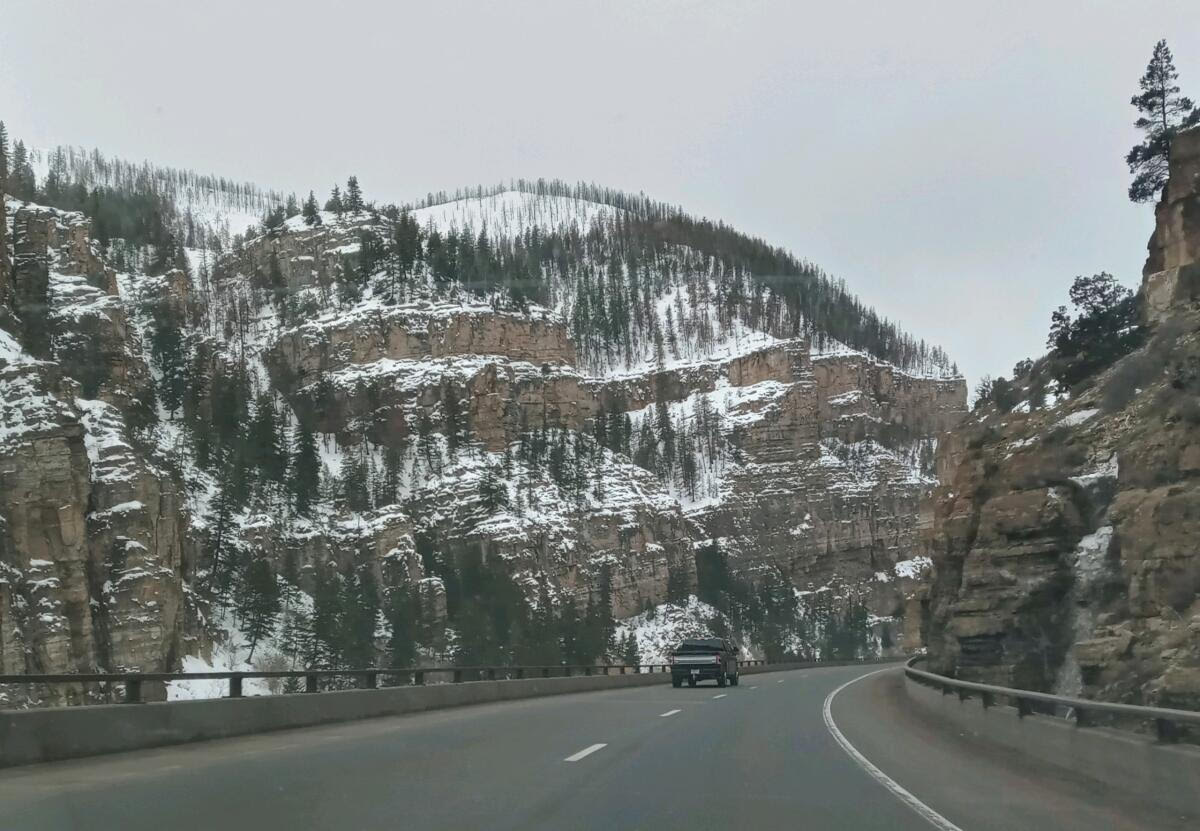
On Fat Tuesday, six days into the Russian invasion of Ukraine, I drove out of Detroit while it was still dark. For the first two hours, the slipped disk in my upper back was screaming. This thorn in my flesh, this messenger from Satan, was signaling a lack of emotional support in a world collapsing with the 4 C’s: capitalism, climate, covid and conflict. I drove through all four time zones as gas prices sky-rocketed and the stealth BA. 2 variant spread. On the road, in this mess, I was trusting in Something greater than myself, a divine Presence percolating the world with steadfast love and solidarity. This Force does not sit on a throne. It hovers low like a nurturing mother bird and runs fast like an open-hearted, emotionally expressive father figure.

Continue reading “A Monarch Migration in March”

Of Mountain Watches and Dread Help

By Jim Perkinson, a sermon on Transfiguration, St. Peter’s Episcopal Church, Detroit, MI, February 27, 2022

I have developed a late life habit.  When the snow falls around our house, these days, the bird seed comes out.  I am a bit loath to invite too much wild dependence on human provision, so I normally don’t lay out food that way. But given our urban Detroit encampment on the habitat of so many wild creatures, I figure snow may interrupt some of the other foraging possibilities and so sprinkle some seed. The local sparrows and chickadees are quick to spy out the offer and just as quick to spread the word, sparrow style.  But it is especially the cardinal pair whose territory we occupy that I delight in.  For two winters now, when my gift-giving begins, they are adept at the uptake and 2-3 times per day, beginning around noon, will summon me by cavorting in the front bushes outside my second-story study-window.  Once I see, I get up, go down to the front door while they vigil in a front-row, top-of-the-bush seat.  I give a little throw onto the sidewalk from the open door; they hop down and feast.

Continue reading “Of Mountain Watches and Dread Help”

A Society Designed to Meet People’s Human Needs

An excerpt from Alex Vitale’s The End of Policing.

Modern policing is largely a war on the poor that does little to make people safer or communities stronger, and even when it does, this is accomplished through the most coercive forms of state power that destroy the lives of millions. Instead of asking the police to solve our problems we must organize for real justice. We need to produce a society designed to meet people’s human needs, rather than wallow in the pursuit of wealth at the expense of all else.

What’s in a Name?

The opening paragraphs of Dina Gilio-Whitaker’s recent piece in Sierra Magazine “What’s in a Name? What It Means to Decolonize a Natural Feature.”

There are hundreds upon hundreds of them—by one count, more than 800. They are mountains, valleys, creeks, lakes, and other physical landmarks with one thing in common: They all have the word squaw in their name.

The exact derivation of squaw is unclear. Some etymologists say that it’s an Algonquin word for “woman”; others say that it’s a mistranslation of the Mohawk term for “vagina.” In any case, it’s inarguable that over the centuries the word became a misogynistic and racist slur directed at Indigenous women—a means of using language to demean. Yet the word is etched across the American landscape. There are at least 1,400 places across the United States whose official names contain a racial slur of some sort. By far the most common epithet is squaw (hereafter, I will use sq***).

Continue reading “What’s in a Name?”

THE CROSS OF CHRIST:  A Justification for Redemptive Violence Or a Call to Gospel Nonviolence?

Another compelling online offer from the Alternative Seminary in Philly. See details below for tomorrow’s gathering.

The cross can heal and hurt; it can be empowering and liberating but also enslaving and oppressive … I believe that the cross placed alongside the lynching tree can help us to see Jesus in America in a new light, and thereby empower people who claim to follow him to take a stand against white supremacy and every kind of injustice.” ― James H. Cone, The Cross and the Lynching Tree

We are witnessing how the Christian faith has been contorted to almost unrecognizable shape and put at the service of empire – even though the founder of the faith was executed by empire. The cross of Christ, perhaps the central image of Christian life and thought, has been frequently been used to promote the idea of “redemptive violence,” and has been directly or indirectly used to vindicate and even bless human violence.

Continue reading “THE CROSS OF CHRIST:  A Justification for Redemptive Violence Or a Call to Gospel Nonviolence?”