In the past six weeks, our community has lost bell hooks (December 15) and Jim Forest (Jan 13). Then earlier this week, on January 22, the great teacher of engaged Buddhism, Thich Nhat Hanh, passed. All three were linked. bell hooks wrote a foreword to The Raft Is Not the Shore, which are the transcribed dialogues between Thich Nhat Hanh and Daniel Berrigan. The final book that Jim Forest published was entitledEyes of Compassion: Living with Thich Nhat Hanh.
Thich Nhat Hanh also had a connection with Dr. Martin Luther King and Thomas Merton. This places him as a surprisingly central figure in the history of our community. Because I already was finding these intersections fascinating, I was and was not surprised to discover an encounter between Thich Nhat Hanh and the writings of Dietrich Bonhoeffer.
May you take full and gulping the deepest breath you’ve ever drawn
And hold it in your belly, full, a stretch that slows the heart and mind, Slackens fibres now recalling How to loosen, how to lessen, how there’s nourishment in surrender. Begin the softening, slump and slumber, slow the spinning, the wanting, the needs Except for this one, the one called rest. She has stood outside at the door, Not banished, but told to wait With “Until I . . . ”, and “until it . . . ”, until she turned to slumber. May you wake her now, draw her in, lead her by the hand. She’s surprised and exultant, but moving sweet and slow.
Now Abel was a keeper of sheep, and Cain a tiller of the ground.—Genesis 4:2b
Cain said to his brother Abel, ‘Let us go out to the field. And when they were in the field, Cain rose up against his brother Abel and killed him. Then the Lord said to Cain, ‘Where is your brother Abel?’ He said, ‘I do not know; am I my brother’s keeper?’ And the Lord said, ‘What have you done? Listen; your brother’s blood is crying out to me from the ground!—Genesis 4:8-10
As he went ashore, he saw a great crowd; and he had compassion for them, because they were like sheep without a shepherd; and he began to teach them many things.—Mark 6:34
“I’m more than ever of the opinion that a decent human existence is possible today only on the fringes of society, where one then runs the risk of starving or being stoned to death. In these circumstances, a sense of humor is a great help.”—Hannah Arendt
——————————————
In the ancient world, shepherds tended their flocks on the edge of civilization, on the borderlands, straddling two cultures with the side-eyed and sidelined. Shepherds resisted mass migration to cities, built with resources extracted from somewhere else. What we called “civilization” was sculpted by strong men exploiting the masses. Shepherds were not part of this program. They stayed nomadic, foraging for food, going wherever the grass was growing. Shepherds were dirty people. Outcasts. Their testimony was not trusted in court.
Recently I forwarded the social media link to an article detailing the ways religious piety was intertwined with the violent uprising at our nation’s capitol on 6 January 2021. My ever-thoughtful friend Susan responded with this question: “Scary. How is the best way to counter this descent into the same horrors as German Christians did following Hitler?”
I composed a couple sentences of response. But then a new door opened in my mind; then another, then another. And I ended up writing, over a few days time, the following:
At least at this point, I know of no singular strategy. We are each given opportunities to apply the slight weight of our convictions regarding the Beloved Community in countless small acts.
We’d love to hear your background. How did you get involved in prison abolition work?
Hannah Bowman: I’m an adult convert to Christianity. I was baptized when I was in college and soon after I got involved with a Bible study through the college chaplaincy that took us out to a girl’s juvenile detention centre. It became an essential part of my practice and experience of Christianity.
We would go Thursday evenings, and there would be maybe three of us from the college and three girls from the detention centre who would come together for a little Bible study and church service. I think that’s one of those experiences that you can’t back away from. Once you see these are children who are incarcerated, who are some of the best theologians I’ve ever met. And we were just having these profound experiences of community in this tiny little meeting room in this facility in the middle of nowhere.
A few words from Angela Davis, from a recent Democracy Now interview.
…as a consequence of the developments over the last two years, we think it is even more important to insist that abolitionist strategies also be feminist strategies, that we assume as broad a perspective as possible. I mean, we’re not simply talking about myopically examining what is happening in jails and prisons. And, of course, that’s a huge issue, so I probably should not have even used that word, “myopic.” But we’re thinking about the interconnectedness, the interrelationality between the predicament in jails and prisons and detention facilities, the violence of the police, the intimate violence that happens to so many women and gender-nonconforming people all over the world. That is, as a matter of fact, the most pervasive form of violence in the world. And we want to be able to imagine a different world. We want to be able to imagine a world in which that violence has been reduced and eventually eradicated. And we think that abolition feminism is the perspective that allows us to move in that direction.
By Ched Myers, for the 3rd Sunday of Epiphany, reposted from Jan 24, 2016 (Luke 4:14-21)
The setting of this famous story is significant. The obscure village of Nazareth has already been well established in Luke’s narrative as the home place of Jesus’ childhood, from Gabriel’s annunciation (1:26) to the Holy Family’s comings and goings (2:4; 39; 51), to the phrase in this week’s lection “where Jesus had been brought up…” (4:16a). Continue reading “The Nazareth Sermon as Jubilee Manifesto”→
An excerpt from Tommy Orange’s There There. Thank you Rev. Wes Smedley for a timely reminder of a brilliant book.
This is the thing: If you have the option to not think about or even consider history, whether you learned it right or not, or whether it even deserves consideration, that’s how you know you’re on board the ship that serves hors d’oeuvres and fluffs your pillows, while others are out at sea, swimming or drowning, or clinging to little inflatable rafts that they have to take turns keeping inflated, people short of breath, who’ve never even heard of the words hors d’oeuvres or fluff. Then someone from up on the yacht says, “It’s too bad those people down there are lazy, and not as smart and able as we are up here, we who have built these strong, large, stylish boats ourselves, we who float the seven seas like kings.” And then someone else on board says something like, “But your father gave you this yacht, and these are his servants who brought the hors d’oeuvres.” At which point that person gets tossed overboard by a group of hired thugs who’d been hired by the father who owned the yacht, hired for the express purpose of removing any and all agitators on the yacht to keep them from making unnecessary waves, or even referencing the father or the yacht itself. Meanwhile, the man thrown overboard begs for his life, and the people on the small inflatable rafts can’t get to him soon enough, or they don’t even try, and the yacht’s speed and weight cause an undertow. Then in whispers, while the agitator gets sucked under the yacht, private agreements are made, precautions are measured out, and everyone quietly agrees to keep on quietly agreeing to the implied rule of law and to not think about what just happened. Soon, the father, who put these things in place, is only spoken of in the form of lore, stories told to children at night, under the stars, at which point there are suddenly several fathers, noble, wise forefathers. And the boat sails on unfettered.
By Wes Howard-Brook and Sue Ferguson Johnson, commentary on John 2:1-11, re-posted from January 2016
“On the third day there was a wedding in Cana of Galilee…”
The rich beauty of this week’s gospel sets the stage for the journey into God and discipleship which follows. In his first public act in John’s gospel, Jesus transforms a wedding which has run out of wine into an overflowing, abundant celebration of the best wine. Every detail of this packed scene is worth pondering deeply. Continue reading “Abundant Joy”→
By Michael Boucher, re-posted with permission from his Facebook page
About half of the people who consult me in my clinical work are under the age of 35 and their experiences resonate with what I hear from my own connections and relationships with a similar cohort.
Many report acute symptoms of anxiety and depression. Many feel a real sense of concern about the future. A lot express challenges in relationships, in part, because of the mental health issues that they and/or their partners face. Many say that they feel like they experience a crisis of meaning because so many institutions around them do not serve us well. Quite a few experience job dissatisfaction, in part, because they’re asking serious questions about what it all means…And this is all in a context of COVID – with all of those implications related to social isolation, fear of getting sick, attending to loved ones who are sick, etc.









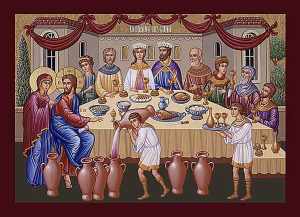 By Wes Howard-Brook and Sue Ferguson Johnson, commentary on John 2:1-11, re-posted from January 2016
 Radical Discipleship