Behind the Scenes

By Tommy Airey, re-posted from his Substack newsletter. Audio version available here.

Two weeks before Donald Trump bombed Iran under false pretenses to protect an apartheid state’s right to commit genocide on Palestinians and then (true to form) tweeted “now is the time for peace,” the Waymos were burning up in Los Angeles.

Watching that scene from 2,000 miles away brought me back to a Saturday in early Spring, when my friend Sheldon and I drove to downtown LA to march with staff and faculty from UCLA demanding the protection of their international students who have publicly demanded that the university divest from occupation and genocide.

We parked and walked a dozen blocks to the corner of Broadway and Temple. On our way, we were stunned to see our first Waymo, the uber that runs on a Silicon Valley algorithm, now operating in a handful of cities. We struggled to come up with adjectives as we watched this moving car, in the middle of downtown, with no one at the wheel. 

After we drove back to Orange County and had dinner, I was cleaning the kitchen when I heard a horrible crash in front of my mom’s house. Sheldon and I ran outside to find a car up in the bushes of the front yard right across the street.

There was a human driving this car. While we were trying to figure out how he got up there in the bushes, he was revving the engine to the limit, trying to get out. We could see that he hit a parked car next door and then demolished the electric box.

Continue reading “Behind the Scenes”

no kings, all bricks

By Kyle “Guante” Tran Myhre, a poet and activist cultivating a deeper engagement with social justice issues, one based in both empathy and agency. Re-posted from his website here

I don’t have time/energy right now to share very much commentary; hopefully people are aware of the news here in Minnesota. Our No Kings rally went forward, and even with authorities telling people not to gather, thousands of people showed up. I shared a poem.

Actually wrote and memorized it last week, but because it ended up being about grief, how we carry it, and what we might do with it, it felt appropriate to share today too. Full text below, for the folks who have been asking for it.

ALSO: please check out the latest post in my FREE email newsletter: What’s next? Things to do after a big march

———————-

The ancestor on my shoulder doesn’t tell me to put the brick down, or that the weight isn’t worth it. I’m sure many of you are familiar with that… heaviness, whether guilt, or grief, or just the daily shipwreck of the news, all this information we already know:

How things are bad. How they’ve always been bad for some of us, and how shining a light on the bad thing doesn’t change it… but can be a first step. How a big march like this can be a first step, but is never a destination. How going “back to normal” is going backwards. And how desperately the cowards in power want you going backwards, want you to put that brick down, want you to focus on your job, make money—focus on your family.

Continue reading “no kings, all bricks”

Idols

The beginning and conclusion of Chris Hedges’ latest piece “The Last Days of Gaza.”

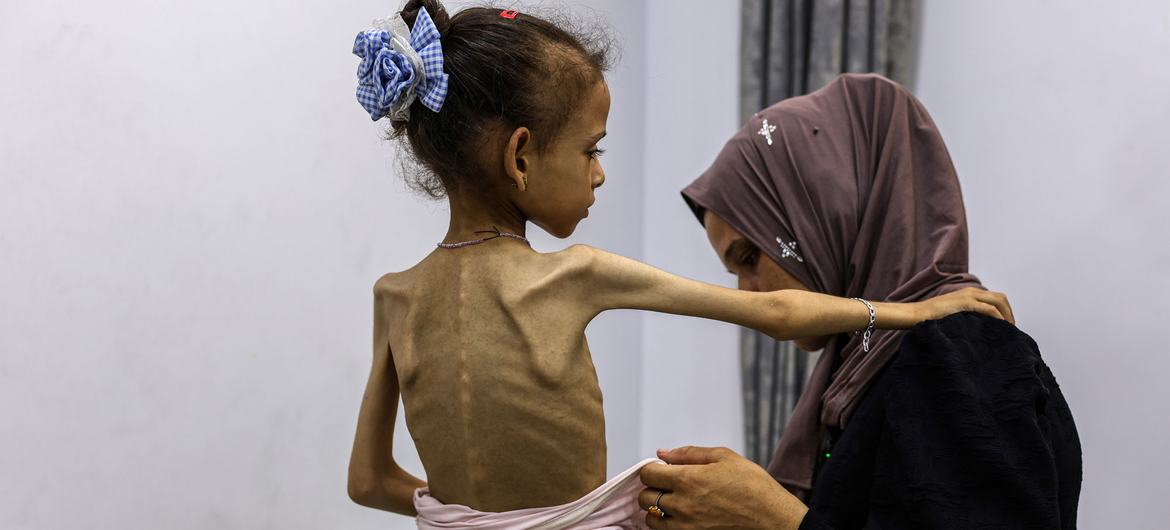
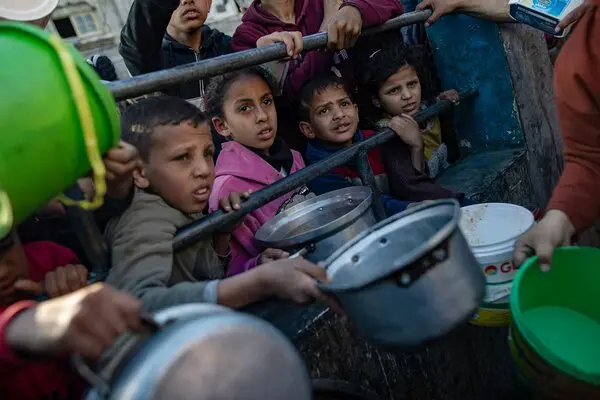
This is the end. The final blood-soaked chapter of the genocide. It will be over soon. Weeks. At most. Two million people are camped out amongst the rubble or in the open air. Dozens are killed and wounded daily from Israeli shells, missiles, drones, bombs and bullets. They lack clean water, medicine and food. They have reached a point of collapse. SickInjuredTerrifiedHumiliatedAbandonedDestituteStarvingHopeless.

In the last pages of this horror story, Israel is sadistically baiting starving Palestinians with promises of food, luring them to the narrow and congested nine-mile ribbon of land that borders Egypt. Israel and its cynically named Gaza Humanitarian Foundation (GHF), allegedly funded by Israel’s Ministry of Defense and the Mossad, is weaponizing starvation. It is enticing Palestinians to southern Gaza the way the Nazis enticed starving Jews in the Warsaw Ghetto to board trains to the death camps. The goal is not to feed the Palestinians. No one seriously argues there is enough food or aid hubs. The goal is to cram Palestinians into heavily guarded compounds and deport them…

…There are people I have known for years who I will never speak to again. They know what is happening. Who does not know? They will not risk alienating their colleagues, being smeared as an antisemite, jeopardizing their status, being reprimanded or losing their jobs. They do not risk death, the way Palestinians do. They risk tarnishing the pathetic monuments of status and wealth they spent their lives constructing. Idols. They bow down before these idols. They worship these idols. They are enslaved by them.

At the feet of these idols lie tens of thousands of murdered Palestinians.

The Radical Power of the Poetic Word

By Rev. Bill Wylie-Kellermann

Walter Brueggemann: A Remembrance (March 11, 1933 – June 5, 2025)

When I was a student at Union Seminary in New York, Abraham Heschel taught at Jewish Theological Seminary across the street. Though he died within my first year, the author of The Prophets, was notorious, it was said, for being the professor who actually believed in God. Something related might be said about Walter Brueggemann who crossed over to the ancestors and saints June 5.

He was an eminent scholar, among those like Norman Gottwald who altered the landscape of biblical studies by bringing sociological analysis to interpretation, and for such reason presided for years in the biblical guild. Yet, as a discipline, he was eminently readable and accessible to movement and church for whom the work was ultimately intended.

Once in a footnote to Israel’s Praise, he cited a 1985 order of the Pretoria regime prohibiting Blacks from singing Christmas carols in the townships because they generated such revolutionary energy. The newspaper report quoted a South African police agent: “Carols are too emotional to be sung in a time of unrest…Candles have become revolutionary symbols.” Which is to say, he could write an analysis of the world-shaking and world-making power of Israel’s liturgy and psalms, but then put out a book of prayers for our own moment. He prayed. He imagined a new world with all his heart. He invited us likewise.

Continue reading “The Radical Power of the Poetic Word”

Christian Zionism is the Iceberg

From Micha K. Ben-David, a former IDF soldier and the co-founder of Breaking the Silence. This is a response to the violent attack on the pro-Israel demonstration in Boulder, CO yesterday. Re-posted from Ben-David’s Facebook account.

Please. Yeah. I’m pissed.

Because the Israel Lobby, the Zionist communities, and whoever else has their PR hands in this, are already spinning what happened in Boulder into some textbook case of antisemitism. And I hate to say it—but this wasn’t that. Not even close.

I’ve lived in the U.S. for a few years now. I’ve seen real antisemitism—actual swastika-drawing, conspiracy-spewing, neo-Nazi, Christian nationalist, white supremacist hate. The everyday kind that shows up at city halls and school boards, the kind that attacks synagogues and fuels mass shootings. And yeah—it scares the shit out of me. Not just as a Jew. As a human.

But that kind of hate doesn’t come from the Palestinian movement. It doesn’t come from Muslims. And it doesn’t only come for Jews. It hits everyone—Black communities, immigrants, queer folks, anyone who doesn’t fit inside some twisted white fantasy of who deserves to exist.

So no, what happened in Boulder was not that.

I’ve seen that march. Every Sunday, up and down Pearl Street. I’ve watched them defend the un-defendable. I’ve seen the signs that ask people to look away from a genocide, to doubt their own eyes, to stay silent—not just in passive complicity, but in loud, moral support of mass death. It’s not subtle. It’s not peaceful. It’s not neutral.

Continue reading “Christian Zionism is the Iceberg”

The Liberation of All Oppressed Peoples

An excerpt from the Combahee River Collective Statement of 1977. It comes from a Black lesbian feminist socialist organization that met consistently in the mid to late 70’s.

Above all else, our politics initially sprang from the shared belief that Black women are inherently valuable, that our liberation is a necessity not as an adjunct to somebody else’s may because of our need as human persons for autonomy. This may seem so obvious as to sound simplistic, but it is apparent that no other ostensibly progressive movement has ever consIdered our specific oppression as a priority or worked seriously for the ending of that oppression. Merely naming the pejorative stereotypes attributed to Black women (e.g. mammy, matriarch, Sapphire, whore, bulldagger), let alone cataloguing the cruel, often murderous, treatment we receive, Indicates how little value has been placed upon our lives during four centuries of bondage in the Western hemisphere. We realize that the only people who care enough about us to work consistently for our liberation are us. Our politics evolve from a healthy love for ourselves, our sisters and our community which allows us to continue our struggle and work.

This focusing upon our own oppression is embodied in the concept of identity politics. We believe that the most profound and potentially most radical politics come directly out of our own identity, as opposed to working to end somebody else’s oppression. In the case of Black women this is a particularly repugnant, dangerous, threatening, and therefore revolutionary concept because it is obvious from looking at all the political movements that have preceded us that anyone is more worthy of liberation than ourselves. We reject pedestals, queenhood, and walking ten paces behind. To be recognized as human, levelly human, is enough.

Continue reading “The Liberation of All Oppressed Peoples”