A Public Accounting

Photo credit: Joe Henson

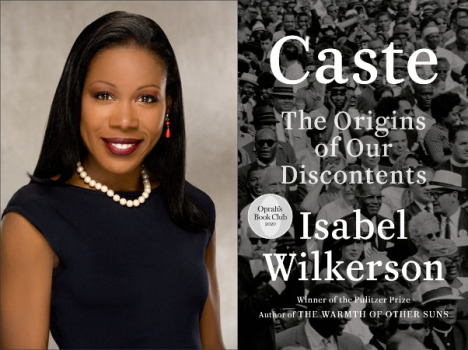
An excerpt from Isabel’s Wilkerson’s Caste: The Origins of our Discontent (2020).

Our era calls for a public accounting of what caste has cost us, a Truth and Reconciliation Commission, so that every American can know the full history of our country, wrenching though it may be. The persistence of caste and race hostility, and the defensiveness about anti-Black sentiment in particular, make it literally unspeakable to many in the dominant caste. You cannot solve anything that you do not admit exists, which could be why some people may not want to talk about it: it might get solved.

The Absentee Landlord

By Greg Jarrell, re-posted with permission from his website (July 29, 2021). A sermon on Psalm 118 and Mark 12:1-12.

In January of 1960, Martin Waters of Waters Insurance and Realty stood before the Charlotte City Council to make one last plea to stop Urban Renewal. The council was set to vote that night, after a decade of starts and stops, to formally adopt the recommendations of the Charlotte Redevelopment Commission and to submit their final plans to the federal Urban Renewal Administration. The council planned to seize and destroy the Brooklyn neighborhood, a historic Black neighborhood that had been, for decades, one site of Black thriving and creativity in Charlotte. It had also been subjected to the long siege of Jim Crow policies. The vote in council chambers seemed like just a formal step, a foregone conclusion, but several people stood to speak in protest anyway.

They weren’t the first to lodge a protest. The local NAACP chapter in 1950, under the leadership of Kelly Alexander, Sr., had pushed a 10-point plan to remake Black neighborhoods in Charlotte. That plan argued for basic infrastructure, and for the elimination of exploitative landlording relationships that caused untenable living conditions for many tenants. Accomplishing even half of the NAACP’s plan would have radically altered the shape of those neighborhoods, including the Brooklyn neighborhood that in 1960 was in the crosshairs of the Redevelopment Commission. The NAACP plan might have eliminated the possibility of Urban Renewal a decade later by making it far more difficult for local white leaders to declare the area a “slum” and schedule it for demolition. (Doubting the tenacity of Charlotte’s elite in following through on a land grab might be a mistake, though.) Charlotte’s public and civic leaders ignored Alexander and the NAACP. And, landowners in Brooklyn – 90% or more of whom were white – went on ignoring the eroding conditions of their rental properties, though never ignoring the rent.

Continue reading “The Absentee Landlord”

Your Integrity is not Flammable

By Nichola Torbett, a sermon re-posted from her blog The Longing is the Compass

I am grateful to Marvin K. White and the members of Glide Memorial Church for inviting me to bring this word on Sunday, July 25, 2021. The focus scripture is Daniel 3. If you prefer, you can watch the video here, following a short introduction from Marvin.

There is a part of you that can never be taken from you, cannot be sullied, cannot be co-opted, cannot be killed. This part of you is something I will call your integrity. It is made up of who you are created to be, the people you come from, the web of life that has sustained you all these years. Your integrity is your umbilical cord connecting you to the source of all the love in the universe. And that connection can never ever be severed. It CAN be ignored. It can be buried. You can try to walk away from it, but it will never actually leave you. Your integrity is not flammable.

Let me tell you a story.

Once, not so very long ago, there were three young people. History has assigned them he/him pronouns, but I don’t think history ever asked them about that, so we will call them by their names. Except that their real names have been lost. You see, these youngsters…their people had been overrun by a mighty and land-hungry empire, and the most promising young people, including our subjects here, were taken away as prisoners of war, seized from their families and communities and brought to the emperor’s court, where they were “educated,” “civilized” if you will. As part of this process, these young people were given new names, names from the imperial language, names that maybe were easier for their captors to pronounce, names that made more sense to the good citizens of the empire. How many know that naming is power? Our friends’ new names were Shadrack, Meshach, and Abednego. 

And they were smart and talented kids, so the functionaries of the land groomed them for leadership—within the very empire that had ripped their lives apart. This is what empires do—they offer us secure roles n exchange for our loyalty to the regime. 

Anyway, around this time, the emperor fashioned for himself a god, a golden statue just outside the courtly walls. I don’t know the name of this god, but it might have been named The Economy, or Profit Margin, or Respectability,, or Social Status, or Whiteness, or Buy Now Before This Deal Gets Away—something like that. And then the emperor issued a decree to all those who kept the empire running—the judges and lawyers, the doctors and nurses, the teachers and nonprofit directors, the pastors and the Amazon warehouse workers. “Henceforth,” he said, because he liked to use fancy words like that, “whenever you hear the sound of the advertising jingle, the cash register, the Venmo app, the police siren, the national anthem, the text notification, or the ice cream truck, you will bow down and worship the god of the empire, and whoever does not bow down and worship will be thrown into a furnace of blazing fire.

Continue reading “Your Integrity is not Flammable”

For Sharing and Abundance

by Lydia Wylie-Kellermann.
From Dirty Prayers: Pocket Prayers to Read in the Garden.

As I gaze upon this little garden
I see not time scarcity
or profit motive
or long term financial yields.

I see a harvest of abundance
Some for my mouth
more for my neighbors
some shelved for the long winter
And yet more will fall like manna.
Squirrels will feast
worms will fill their bellies
and little by little capitalism with crumble.

The Logic of the Cross

By Tommy Airey, re-posted from Easy Yolk

On the cross, Jesus cried out in Aramaic, his native tongue, Eloi, Eloi, lama sabbachthani. Many who overheard it thought he was calling out for the prophet Elijah. He was actually quoting Psalm 22 from the Hebrew Bible: My God, My God, why have you forsaken me? I learned in seminary that in the Jewish tradition, when folks quote the first verse of a Psalm, they are not sound-biting, but referencing the entire chapter. The next line of Psalm 22 goes like this: Why are you so far from helping me, from the words of my groaning? Jesus’ higher Power was a Sabbath God who shows up in the text hearing and responding to the groans of those oppressed and impoverished by the policies of Solomon.

In Genesis, it was the blood of murdered Abel. In Exodus, it was the Israelites groaning under slavery to Pharoah. In the Psalms and Prophets, the sighs and cries consistently come before the One who hears. In James, it was the unpaid wages of the day laborers crying out. In Romans, all of creation is groaning with labor pains, longing to be released from bondage, and the text says that, in our weakness, we do not know what to say in our prayers—but the Breath of God intercedes for us with groans that go beyond our glossary.

Continue reading “The Logic of the Cross”

For Each Child That’s Born

A collective poem from The Sandbox Revolution: Raising Kids for a Just World.

For each child that’s born
Earth waits with her gift and wounds;
The creatures smile and weep;
The waters and winds rush and grow still.

A monarch unfolds its wings,
A beak breaks through its shell,
A tadpole finds legs,
And a million larva take flight.

For each child that’s born,
The Balance shifts to make room
and matter, time and light bend around
The squalling cries.

For each child that’s born,
An ancestor lives.
May this child ancestor be welcomed
as a previous, sacred being
By all of creation-
As a partner and friend.
May their landing be gentle
and our protection and love be fierce.

May this child be a joyful wake-up call to each of us
To live with gusto and stillness,
With righteous anger and creative action,
With tenderness and compassion.
May we say that your birth breathes life in each of us.

Continue reading “For Each Child That’s Born”

The Inner Gesture of Dying

An excerpt from a longer piece by Brother David Steindl-Rast, re-posted from his piece “Learning to Die” in Parabola (February 29, 2016).

Most of what I have said simply means: let’s learn to die so that, when our last hour comes and if we are still alert to it, we will be able to die well. But at any rate let’s learn it, and that means let’s learn to give ourselves over and over again to that which takes us; let go of things, or rather give up as a mother gives up. Let go is a little too passive, it comes too close to letting down; giving up is the truly sacrificial gesture. So in many traditions you have this notion that throughout our lives we train for a right dying; and that means to train for flowing with life, for giving ourselves. And this suggests some more symptomatic idioms of taking and giving that show ways we can make the inner gesture of dying: giving thanks instead of taking for granted; giving up rather than taking possession: for-giving as, opposed to taking offense. What we take for granted does not make us happy; what we hold on to deteriorates in our grasp; what we take offense at we make into a hurdle we can’t get past. But in giving thanks, giving up, forgiving, we die here and now and become more fully alive.

Seeds Are Our Lifeline to Future Generations

Image Credit: Meredith Stern, “Save Seeds,” July 2011, Linoleum Block Print, 12 in. x 12 in.

By Edith Woodley. Originally published in Geez 61: Seeds are Sacred.

We look to the seeds to sustain our future.

Eloheh Indigenous Center for Earth Justice and Eloheh Farm & Seeds is a learning centre, farm, and community that includes a seed bank and a seed store. My husband, Randy, and I consider ourselves to be co-sustainers of the land and of the seeds. We understand seeds as our lifeline to the future generations. Seeds are not an object, but they are precious relatives to be enjoyed. Each seed is beautiful, unique, and life-giving. When I hold the seeds in my hand, I talk to them as if they were my own children. I want the best from them, so I treat them with love and respect, and in return, they give us their best. If we don’t attend the seeds properly, we are simply cutting ourselves off from Mother Earth and our future as co-sustainers of the Earth.

Continue reading “Seeds Are Our Lifeline to Future Generations”