This past Sunday one of our members, Stan Wilson, offered the “call to the table” in our congregation’s zoom worship screen-gathering. He led with a suggestion that was equivalent, in my hearing, to a thunderclap.
“How about for Lent this year we give up Donald Trump?”
It was a table invitation (we celebrate the Eucharist every week) and an altar call rolled into one. And it certainly had my name on it.
The last four years in the US have been a national demolition derby, a Three-Stooge-esque comedy of incompetence and disrepute, a racketeer’s paradise and grifter’s playpen—only with real-world torment, particularly for those here and abroad with little shelter from the abuse.
By Ric Hudgens (right), a reflection from the Ash Wednesday service at North Suburban Mennonite(2/17/2021)
It feels as if we’ve been observing Lent all year. Always Lent and never Easter.
Almost a year ago we started wearing masks, separating from family and friends, working from home, moving to remote worship services, learning to sublimate desire on a daily basis. As the poet Anne Sexton wrote: “Your courage was a small coal that you kept swallowing.”
I’m tired of swallowing coal.
Under normal circumstances (remember those?) I anticipate and savor the season of Lent. I savor how it focuses on our finitude, the certainty of our death, and our organic connection to the earth. The imposition of ashes and the declaration “dust thou art, to dust thou returneth” is a clarifying reassurance in the midst of much that is uncertain and confusing.
Although these elements are not the entirety of the Christian message, they have always seemed to me fundamental and necessary.
I love this season for its potential earthiness. Lent’s ability to ground us in the physical realities of our bodies and of our daily lives. I appreciate that recurring discovery that an annual confrontation with death can be a life-giving experience.
A timely Lenten offering from the Alternative Seminary in Philly. An online gathering on Saturday morning.
The cross can heal and hurt; it can be empowering and liberating but also enslaving and oppressive … I believe that the cross placed alongside the lynching tree can help us to see Jesus in America in a new light, and thereby empower people who claim to follow him to take a stand against white supremacy and every kind of injustice.” ― James H. Cone, The Cross and the Lynching Tree
We are witnessing how the Christian faith has been contorted to almost unrecognizable shape and put at the service of empire – even though the founder of the faith was executed by empire. The cross of Christ, perhaps the central image of Christian life and thought, has been frequently been used to promote the idea of “redemptive violence,” and has been directly or indirectly used to vindicate and even bless human violence.
It may be helpful, in attempting to understand the basic nature of the new caste system, to think of the criminal justice system—the entire collection of institutions and practices that comprise it—not as an independent system but rather as a gateway into a much larger system of racial stigmatization and permanent marginalization. This larger system, referred to here as mass incarceration, is a system that locks people not only behind actual bars in actual prisons, but also behind virtual bars and virtual walls—walls that are invisible to the naked eye but function nearly as effectively as Jim Crow laws once did at locking people of color into a permanent second-class citizenship. The term mass incarceration refers not only to the criminal justice system but also to the larger web of laws, rules, policies, and customs that control those labeled criminals both in and out of prison. Once released, former prisoners enter a hidden underworld of legalized discrimination and permanent social exclusion. They are members of America’s new undercaste.
I am not, obviously, the first person to ever poke holes in the idea that is the American Dream, but no matter how many times you have heard it before, no matter how many times you have heard it critiqued, I believe it bears repeating: the American Dream is bullshit. And it’s not bullshit so much because of its relative unlikelihood, but because it rests on the very idea that inequality is natural and good. You can, in America, come from nothing and gain everything—a fantastic idea if you think it is at all just that there would be people who have nothing. The Dream is premised on the idea that someone, somewhere, will always have so little that they must do more, must sacrifice their time, their body, their values, their self in order to achieve, in order to have more. And more is not always more, sometimes more is simply the basic means of survival. Most of the time.
“It’s not simply: better jails, better police, better training. It’s no police, it’s no jails, no prisons. It’s creating a new means of justice that’s not based on criminalization but based on affirmation and reparation, and by reparation that is trying to repair relationships that have been damaged and destroyed as a result of five centuries of warfare against Indigenous peoples, Africans, poor white people, Asian-Pacific Americans, and Latinx populations.”—Robin D.G. Kelly
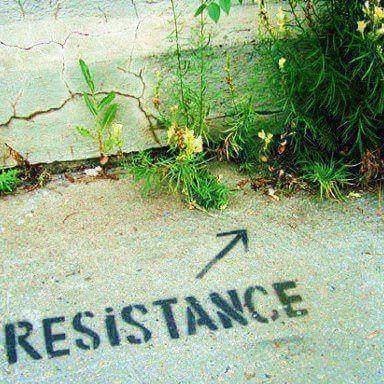
Lent starts next week. A season to take spiritual inventory. To assess crucifying realities. To grieve. To confess our complicity. To rise up into newness of life. This year, the Lenten journey begins on Wednesday, February 17—four weeks into a new Presidential administration committed to “going back to normal.” This year, more than ever, Lent resists “normal.” Lent lifts up what Dr. King called a radical revolution of values. Protecting people over profit motives and property rights. Black people. Brown people. Indigenous people. Immigrant people. Poor people. We want nothing to do with a “normal” world of racism, materialism and militarism. Following Jesus of Nazareth, we are inaugurating a world that brings good news to the poor and proclaims release to the captives. We are rolling away the stone guarded by those who protect and serve empire.
In homage to Black History Month, I’m reposting this essay about one of my heroes Dr. Vincent Harding (1932-2014). This is slightly edited from the original which was written for “The Movement Makes Us Human”, Rock! Paper! Scissors!, Vol 1, No 1, edited by Joanna Shenk, 2018. A bit out of the beaten path of these essays, but revealing the roots of my own journey through this time.
Introduction
We knew how blessed we were by the gifts of Vincent Harding as a historian, educator, and “veteran of hope.” Less known is the contribution Harding made to the development of the first generation of black theology.
Theologian Dwight Hopkins writes that Harding “has had a profound effect on the development of contemporary black theology in the United States, particularly the young black theology of the 1960s and early 1970s.” Harding’s essays in the mid-1960s preceded James Cone’s writings and described a religious spirit rooted in the beauty, horror, and creativity of the black experience. But Harding disavowed any formal interest in black liberation theology. “I’m much more interested,” Harding told Hopkins, “in the liberation of spirituality.” It’s the contribution of Vincent Harding to liberation spirituality that interests me here. [See Dwight Hopkins, Black Theology USA and South Africa: Politics, Culture, and Liberation, “Vincent Harding,” Wipf & Stock, 2005, pages 81-84].
By Lindsay Airey (right, on the banks of Nandewine Sippy)
You say I have a heart so big it needs its own moon to orbit around.
I say this heart of mine feels weary from carrying around so much weight it often feels like it will drown me.
You say what clarity you bring! What love and joy and challenge… How is it possible? In one being.
I say I am so tired… from being one being: feeling fire-tending raging weeping feeling it seeing it saying it wiping your tears building you up holding you up digging you out of the pit with all these hard-fought tears, and knowing.
From Jesmyn Ward in The Fire This Time: A New Generation Speaks about Race (2016)
Though the white liberal imagination likes to feel temporarily bad about black suffering, there really is no mode of empathy that can replicate the daily strain of knowing that as a black person you can be killed for simply being black: no hands in your pockets, no playing music, no sudden movements, no driving your car, no walking at night, no walking in the day, no turning onto this street, no entering this building, no standing your ground, no standing here, no standing there, no talking back, no playing with toy guns, no living while black.