The Moral and the Ethical

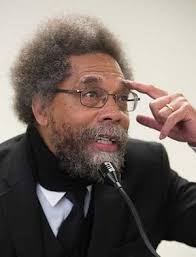
CornelFrom Cornel West, in an interview last month with Salon.

Part of [the global struggle for human rights] is realizing that we are in a moment now where people’s conception of community has been degenerated into a conception of constituency. It’s that people’s conception of a cause has been degenerated into a conception of a brand. People’s conception of the public has been degenerated into PR strategies. This creates a spiritually and morally impoverished culture. And so in order to have some notion of human rights that is actually full of content and substance, one has to have some primacy of the moral and the ethical. The calculations cannot be just the Machiavellian. So much of the culture just comes down to strategies and questions such as, “How am I going to make more money? How am I going to get something out of somebody?” Continue reading “The Moral and the Ethical”

Stigma

Blasey FordAn excerpt from The Sun Magazine‘s January 2019 interview with Dr. Anne Hallward.

Professor Blasey Ford demonstrated remarkable bravery in telling her story and responding to questions in front of a phalanx of men who were hostile to her. Her experience of not being believed, of being threatened for daring to speak up, was all too familiar.

I do think her willingness to make herself vulnerable was in the service of women everywhere. Her testimony is a powerful example of how telling our stories is a form of nonviolent social change. Though the outcome of the hearing was painful, I believe it will bear fruit in the long run, raising awareness of sexual assault and helping people understand what makes it hard to bring up. Professor Blasey Ford was highly credible, and yet many senators had already chosen not to believe her. Part of how the powerful maintain the status quo is by rendering certain voices noncredible. In our culture women’s voices are often not taken seriously. We demand proof that is impossible to obtain, or we critique them as shrill or strident. In Professor Blasey Ford’s case, she suffered death threats in an attempt to silence her. Continue reading “Stigma”

Wild Lectionary: Let them Praise!

72869828_10156645667586146_9128614668779126784_oChristmas 1A

Psalm 148

By Laurel Dykstra

Salal + Cedar is the Watershed Discipleship community that curates Wild Lectionary. Psalm 148, which both celebrates and demands more-than-human praise for the creator, has become something of a “theme psalm” that we return to in worship. As it appears each year in the lectionary cycle we use it as a chance to look back at our year.

Praise God!
Praise God from the heavens
Praise in the Heights
Praise God, all you angels
Praise God, all you hosts Continue reading “Wild Lectionary: Let them Praise!”

Santa’s Surprise

12600-illustration-of-a-christmas-tree-with-presents-pvBy Liza Neal

I know a child
whose Christmas tree
was packed so high with presents
you couldn’t see its base,
and after a few hours excitement, he was bored.

I know another child.
“Santa Claus brought me a backpack!”
She told me with shining eyes.
And frankly I was surprised,
because I didn’t think
Santa Claus would come
to an asylum seeker at El Chaparral.

It was of course
the only thing she owned,
which did not diminish the joy, weeks later,
of a Christmas gift received
by a child fleeing death. Continue reading “Santa’s Surprise”

Merely Adequate

MVSFrom the Facebook page of Mark Van Steenwyk (right), executive director of The Center for Prophetic Imagination.

I’m working on giving myself permission to be merely adequate. Otherwise, I hold myself to a ridiculous standard that I don’t hold others to.

Part of being a white man is internalizing a message that dominance and excellence is a birthright. And that to not achieve these things means one is a failure. Continue reading “Merely Adequate”

It’s a Specific Position That Stands Actively–Not Passively

Bree NFrom a recent Black Perspectives interview that Ajamu Amiri Dillahunt did with Bree Newsome Bass, an artist who drew national attention in 2015 when she climbed the flagpole in front of the South Carolina Capitol building and lowered the confederate battle flag.

I often get the question, “how do I become an activist.” The simple answer is that an activist is one who acts, who takes action in furtherance of a cause. I was an activist before I consciously identified as such. I never had ambitions of being an activist, only an ambition to change things for the better. The labels only serve to describe what it is I do. It’s become very hip to identify as an activist–not necessarily a bad thing–but it’s important to not let this word become devoid of meaning. Many of the struggles and movements of the past have been Disney-fied and watered down to focus merely on the tactic of nonviolent protest and to portray the tactic as being the goal itself. That is, the reason for the protests, racial and economic oppression, are erased and glossed over to make it seem like the extent of being an activist is participating in a nonviolent protest. The white power structure continues to find new ways to dilute or subvert the central issue of racism in America. One of its most recent tactics is introducing the notion of “bothsideism” to activism. Every cause qualifies as “activism” and everyone is an “activist” with little time or examination given to what cause folks are actually being an activist for. Continue reading “It’s a Specific Position That Stands Actively–Not Passively”

Wild Lectionary: Choosing the True Mystery

79965780_509901882994143_3794969524344717312_nAdvent 4A

Isaiah 7:10-16
Psalm 80:1-17, 17-19
Romans 1:1-7

By Lanni Lantto

Isaiah was a prophet in times of kings. In the lectionary passage, God sends him to Ahaz, a king defending his earthy kingdom, to say that God will send a sign: a young child named Immanuel meaning God is with us. This child, from a very young age, will know how to, “refuse the evil and choose the good.” For Ahaz, who may have felt powerless in his situation, this message was meant to give him hope for a time of peace and restoration.

Continue reading “Wild Lectionary: Choosing the True Mystery”

Joseph

Rembrandt_Dream_of_Joseph
Rembrandt, Dream of Joseph, 1645, Gemäldegalerie, Berlin

By Ken Sehested

Obscured brother
consigned to the margins
of Incarnation narrative.
Carpentry-calloused hands
now shield the shame
of sagging face, drooping, disgraced.
Chiseled lines prematurely sculpting
age in youthful countenance.
Thoughts of Mary smudge the heart
as tears smear the face.
Mary. Beloved. Betrothed. Betrayed?
Mary. With child. Whose? How, and why?
Joseph, companion in confusion
over God’s intention.
No multi-colored coat for you as for
your scoundrel namesake of old.
But who dares answer, much less complain? Continue reading “Joseph”

This Bethlehem Dream

Advent JesusBy Tommy Airey, from Listening in the Dark: Daily Advent Reflections for Radical Discipleship Communities (2017)

We script & sing this Bethlehem Dream
Of Life reflecting divine Reality,
Light illuminating every dark cavity,
When the lion and the lamb
Dance to a silent tune sung by all humanity.

Until then,
Addiction assaults an
Anxious audience
Caught in counterfeit dramas spun on cable channels. Continue reading “This Bethlehem Dream”

Liberation Feminism

ImaniFrom an interview that The Nation did with professor Imani Perry, the author of Vexy Thing.

I wanted to produce a work of feminist theory, or as I call it, liberation feminism, that would speak to the particular conditions of neoliberal capitalism and the hypermedia age—this eruption of digital media, where things that look like democratic spaces are at the same time corporate platforms.

I saw so many uses of the term “patriarchy” that didn’t actually apprehend the structure of domination. Patriarchy is a project that coincided with the transatlantic slave trade and the age of conquest. It’s not just attitudes. It’s legal relations between human beings, which lead to very different encounters with violence and suffering. The book begins with where patriarchy comes from, and then morphs into the current landscape, in which conditions are different but where that foundational structure is still present. Feminism is ultimately a way of reading the world with an eye towards reducing or eliminating unjust forms of domination, violence, and exploitation.