
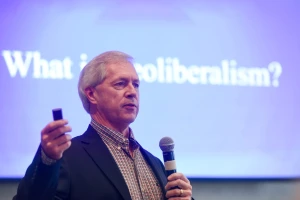
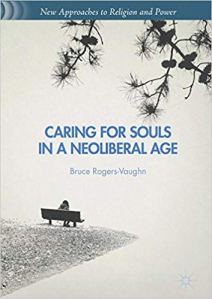
Three years ago, we interviewed Dr. Bruce Rogers-Vaughn (above), an ordained Baptist minister, pastoral psychotherapist and Associate Professor of the Practice of Pastoral Theology and Counseling at Vanderbilt Divinity School, and the author of Caring for Souls in a Neoliberal Age (Palgrave, 2016). “Neoliberalism,” he writes, “has become so encompassing and powerful that it is now the most significant factor in shaping how, why, and to what degree human beings suffer.”
This is why Bruce presses for a “post-capitalist pastoral theology” that empowers people to resist the system (instead of adapt to it), to embrace communion and wholeness in relation to others and the earth (instead of functioning in accord with the values of production and consumption) and to pursue interdependent reliance within the web of human relationships (instead of accepting shame-based personal responsibility narratives).
Above all, Bruce prods pastors, therapists and social workers to identify the source of personal distress in the social and political environment instead of within the individual (he rejects what he calls “sophisticated exercises in blaming the victim”). Oh—one more thing about Bruce. All of his work is informed by his deep roots in southern Appalachia.
This is an excerpt from the beginning of our five-part conversation. See this for Part I, this for Part II, this for Part III and this for Part IV.
—————————————————————————————-
Neoliberalism is simply an awful word. It is almost inevitably misleading. When I first encountered this expression, I imagined it was designating some new (“neo-”) form of political or theological “liberal.” But, actually, the term originates from economic philosophy. Its first proponents—the so-called “German Ordoliberals”—coined the name during the 1930s. Today the word is used, almost exclusively by its critics, to refer to the current phase of capitalism. This phase gained political traction in the USA and the UK in the 1980s, during the Reagan and Thatcher administrations, and by the mid-1990s was the dominant way of thinking and believing that guided global economics, politics, and culture.
Continue reading “Capitalism and Christianity are Incompatible”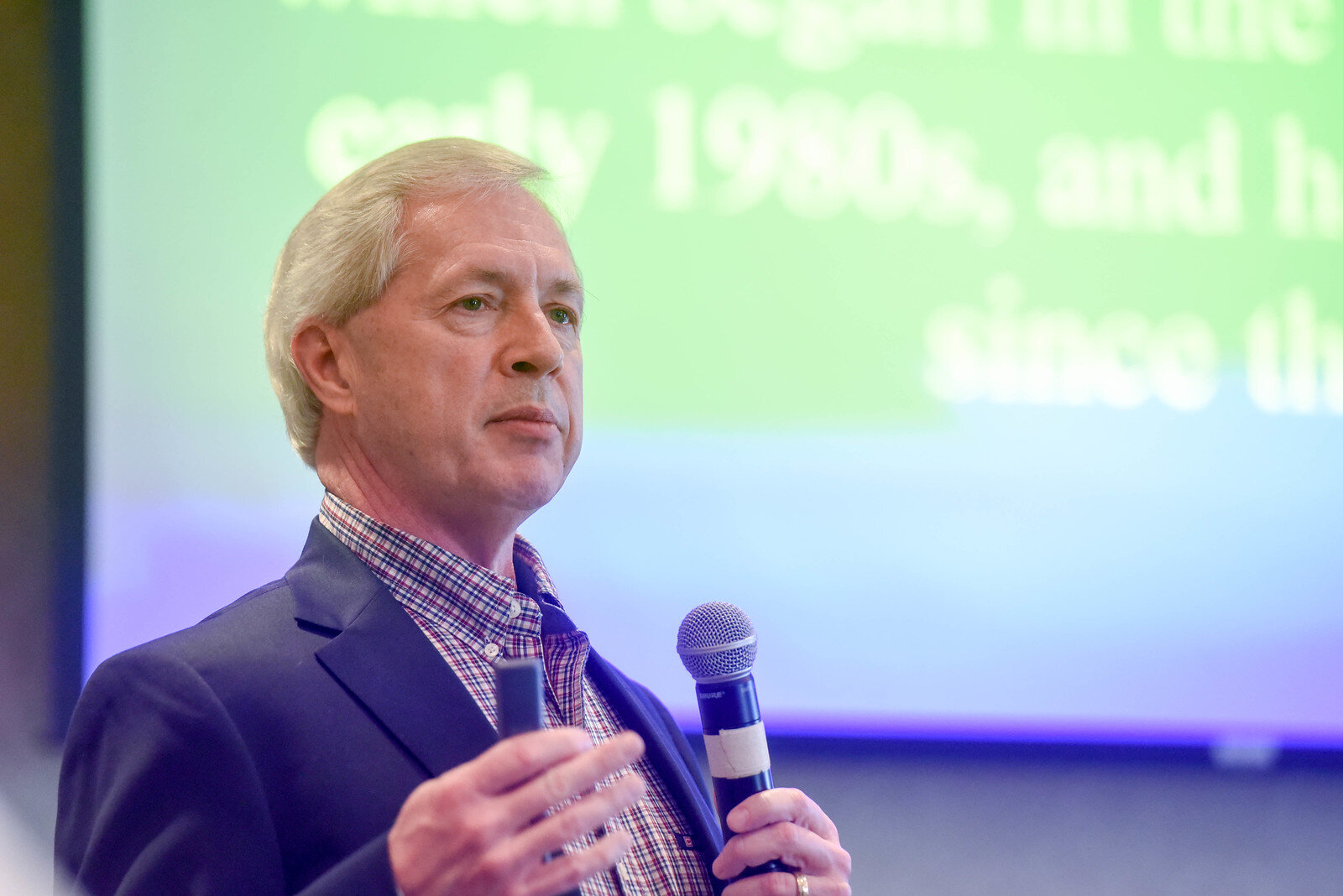


 By
By  Radical Discipleship