Standing on Our Own Feet

MertonBy Tommy Airey

It takes more courage to examine the dark corners of your own soul than to be a soldier on the battlefield.
Cornel West

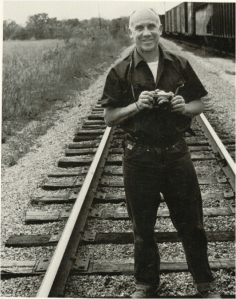
45 years ago, Jim Douglass wrote a little book called Resistance and Contemplation (1972), urging radical disciples to take seriously both the personal and political–what he called “the yin and the yang of the Movement.” In the second chapter, he recounts the last talk that Thomas Merton (photo right) gave, just hours before his death from electrocution in that Bangkok bathtub in 1968. Merton told the story of Tibetan Buddhist monks being driven out of their homeland by Communist revolutionaries. The elder monk tells the fretting younger protege, “From now on, Brother, everybody stands on his own feet.” Continue reading “Standing on Our Own Feet”
Confronting Legion

DemoniacBy Ched Myers, Fifth Sunday of Pentecost, Luke 8:26-39

Note: This is part of a series of weekly comments on the Lukan gospel readings from the Revised Common Lectionary during year C, 2016.

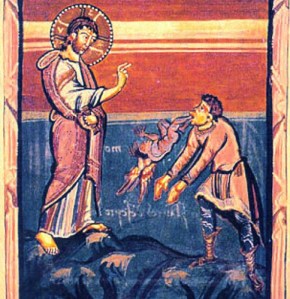
This Sunday’s text is Luke’s version of the infamous Markan “political cartoon” of the Gerasene Demoniac (Mk 5:1-20). Here Luke follows Mark relatively closely (whereas Matthew changes and shortens it significantly, Mt 28-34), including placing it on the heels of Jesus’ crossing and storm-stilling on the Sea of Galilee (which Luke insists on calling a “lake”). Continue reading “Confronting Legion”

The Price of Political Ambivalence

water shut offsBy Tommy Airey

When I see an act of evil, I’m not accommodated. I don’t accommodate myself to the violence that goes on everywhere; I’m still surprised. That’s why I’m against it, why I can hope against it. We must learn how to be surprised. Not to adjust ourselves. I am the most maladjusted person in society.
Rabbi Abraham Joshua Heschel

Detroit, Michigan

Last month, water shut-offs were ramped up for residents of this city two months behind on their bills. Tens of thousands already live in homes that do not have running water. Leaders of the city make claims that both payment plans and cash assistance are available for those who cannot afford water. Unfortunately, a vast majority of people take them at their word. Continue reading “The Price of Political Ambivalence”

Sabbath Economics

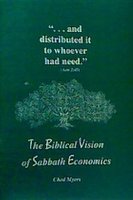
Sabbath EconBartimaeus Cooperative Ministries has proclaimed a Jubilee on their Sabbath Economics curriculum, packaging their regular Sabbath Economics book bundle with the Mammon to Manna DVD at a super Sabbath price of just $7.77 for all three (plus shipping, and tax where applicable). Click here to order. This is a quote from The Biblical Vision of Sabbath Economics by Ched Myers (2001):

Privately controlled wealth is the backbone of capitalism, and it is predicated upon the exploitation of natural resources and human labor. Profit maximization renders socio-economic stratification, objectification and alienation inevitable. According to the gospel, however, those who are privileged within this system cannot enter the Kingdom. This is not good news for First World Christians–because we are the “inheritors” of the rich man’s legacy. So the unequivocal gospel invitation to repentance is addressed to us. To deconstruct our “inheritance” and redistribute the wealth as reparation to the poor–that is what it means for us to follow Jesus.

Do You See Her?

Anointing FeetBy Ched Myers, Fourth Sunday of Pentecost, Luke 7:36-8:3
Note: This is part of a series of weekly comments on the Lukan gospel readings from the Revised Common Lectionary during year C, 2016. Thanks to Wes Howard Brook and Sue Ferguson for their reflections that took us through Eastertide and into Pentecost; we’ll again now trade off more regularly during “Ordinary Time.” As this story represents a hermeneutic key to Luke’s social outlook, my comments here will be longer; their purpose is to reveal exegetical details that can help restore the dynamism of this encounter (I recommend acting the story out). Painting (above right) by Wayne Forte.   Continue reading “Do You See Her?”

Just Enough Courage

Daniel Berrigan - Anti-Vietnam Peace Activist
ITHACA, NY – CIRCA 1970: Daniel Berrigan at Cornell University circa 1970 in Ithaca, New York. (Photo by PL Gould/IMAGES/Getty Images)

Dan Berrigan Week continues with this excerpt from Ched Myers’ living eulogy in 2003 (read it in it’s entirety here in this month’s Bartimaeus Cooperative Ministries newsletter!):

None of us would be gathered here—neither Catholic Workers nor members of the Immaculate Heart of Mary community, nor any of us assorted feral Christians—were it not for Dan’s showing and telling of the gospel. The political spaces he opened through his public witness, the theological imagination he ignited with his pen, the language he gave us in a time when lies are sovereign—all these have helped us find just enough courage to embrace something of the Way.

The Feast of St. Mark

St MarkFrom Ched Myers’ Binding The Strong Man: A Political Reading of Mark’s Story of Jesus (1988):

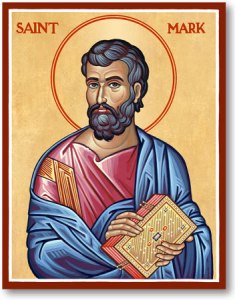
Mark’s Gospel originally was written to help imperial subjects learn the hard truth about their world and themselves…His is a story by, about, and for those committed to God’s work of justice, compassion, and liberation in the world…to those willing to raise the wrath of the empire, Mark offers a way of discipleship.

The First Bible Study in the History of the Church

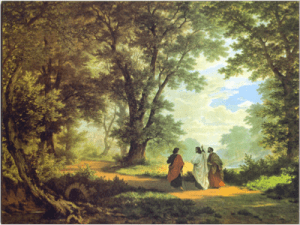
EmmausBy Ched Myers

Note: This is part of a series of Ched’s occasional comments on the Lukan gospel readings from the Revised Common Lectionary during year C, 2016. Because the Easter Sunday reading from Luke is long, so too is this reflection. It is abbreviated from a chapter entitled “Easter Faith and Empire: Recovering the Prophetic Tradition on the Emmaus Road,” in Getting On Message, edited by Peter Laarman, Beacon Press, 2006.

In the first century Pax Romana, Christians had the difficult and demanding task of discerning how to cling to a radical ethos of life—symbolized preeminently by their stubborn belief in the Resurrection of Jesus—while living under the chilling shadow of an imperial culture of domination and death. Today, in the twenty-first century Pax Americana, U.S. Christians are faced with the same challenge. Continue reading “The First Bible Study in the History of the Church”

The ‘Liturgy of the Palms’ as Political Street Theater

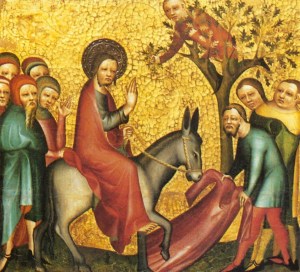
Palm SundayBy Ched Myers, for Palm Sunday

Note: This is part of a series of Ched’s occasional comments on the Lukan gospel readings from the Revised Common Lectionary during year C, 2016.

Luke’s Jerusalem narrative commences with the so-called “Triumphal Entry,” a misnomer for several reasons. For one, Luke’s version of the story omits the Hosannas and the palms—indicating that these are not the most important parts of the “Palm Sunday” parade (even though that’s all most First World Christians focus on). For another, this carefully choreographed political street theatre is designed to repudiate Messianic triumphalism.

Let’s take a careful look. Continue reading “The ‘Liturgy of the Palms’ as Political Street Theater”

Unless we turn around from Empire, the victimization will continue

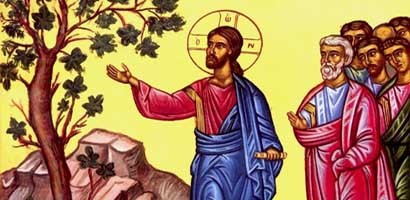
Fig TreeBy Ched Myers, for the 3rd Sunday of Lent

Note: This is part of a series of Ched’s occasional comments on the Lukan gospel readings from the Revised Common Lectionary during year C, 2016.

Somewhat strangely, the RCL reading this week moves backwards, from the end of Luke 13 on Second Lent to its beginning this Sunday, leapfrogging the poignant story of the “Bent Over Woman” in the middle of that chapters (which we’ll look at on the 14th Sunday after Pentecost, Aug 21st). Continue reading “Unless we turn around from Empire, the victimization will continue”