For over 20 years, Jim Perkinson has been riffing on lectionary selections in spoken word mode and often presenting the same at worship services of St. Peter’s Episcopal Church just outside downtown Detroit. This is the first in a series of collaborations between Jim and Tim Nafziger putting this poetry in video form and adding commentary and footnotes flowing from their conversations.
if the donkey could talk (matt. 21: 1-11)
jim perkinson original: 3/27/99 updated: 3/30/22
so what do you think mister flop-eared ferry-back carting the precious cargo across palm-covered dust and peasant boys shouting messianic manifestos in the ears of pilate’s guard shouting terror in the tone-deaf ears of old-men-arrogance the priestly pomposity the scribal-orthodox heresy of
By Jim Perkinson, a sermon on Transfiguration, St. Peter’s Episcopal Church, Detroit, MI, February 27, 2022
I have developed a late life habit. When the snow falls around our house, these days, the bird seed comes out. I am a bit loath to invite too much wild dependence on human provision, so I normally don’t lay out food that way. But given our urban Detroit encampment on the habitat of so many wild creatures, I figure snow may interrupt some of the other foraging possibilities and so sprinkle some seed. The local sparrows and chickadees are quick to spy out the offer and just as quick to spread the word, sparrow style. But it is especially the cardinal pair whose territory we occupy that I delight in. For two winters now, when my gift-giving begins, they are adept at the uptake and 2-3 times per day, beginning around noon, will summon me by cavorting in the front bushes outside my second-story study-window. Once I see, I get up, go down to the front door while they vigil in a front-row, top-of-the-bush seat. I give a little throw onto the sidewalk from the open door; they hop down and feast.
The clear untouched pool accepts me into its emerald depths like a big drop of water . . . I dive down again and again, feel the water-fingers softly caressing my hot face, tracing my underarms, my neck and breasts—nipples raised hard against the cold . . . and though the water is not going anywhere, it seems to move against me still, even as I lie immobile on its surface. I flip and turn, purring to the sensual caress. I have dipped into a private treasure and am wrapped in the arms of the True Gods (Lee, 132, description of Glen Canyon pothole only fifteen feet wide, whose smooth sloping sides refuse her efforts to climb out wet and nearly kill her over the next hour).
I begin in the unlikely place of a quote from raconteur Katie Lee—author, musicologist, folk singer, storyteller, Hollywood actress, song writer, filmmaker, photographer, poet, and river runner (in the words of her bio, Lee, 273). She is not indigenous. But she is a “grit” person, as Terry Turner Tempest offers in the Foreword—a woman “not afraid to laugh and tease, cajole, and flirt, cuss, rant, howl, sing and cry.” “Katie Lee,” says she, is “the desert’s lover, her voice is a torch in the wilderness” (Lee, ix). I begin here, away from the subject, because that is where I begin, where most of us today begin, in this land of the less-than-free, home of the most-often-cowardly. We who are not indigenous, not native, pretend to own the land, but we are not of the land. Rather than belong to it, we belong mostly nowhere, counting strip malls and car interiors and I-Phone screens our domiciles of greatest comfort.
by jim perkinson, ps 71: 1-6, lk 4:21-30, performed at st. peter’s episcopal church (detroit, mi), 1-30-22
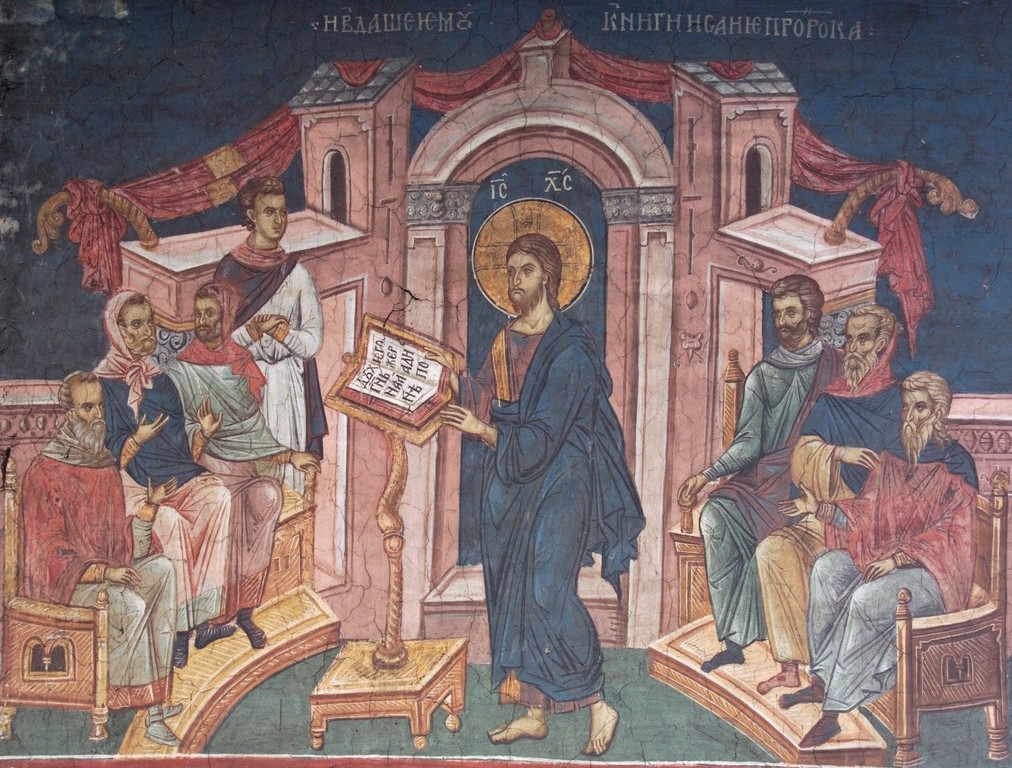
“they lead him to the brow of the hill that they might throw him off” says the lectionary text for the 4th week-take on epiphanies and magi and comet-streaked skies of the season but they failed to catch the snatch— the orator at nazareth was a rock-kvetched match for their outraged snit, hatched like a birthed-again chic from rugged outcrop, spirit-born and dove-mourned just back from a 40-day stretch
By Jim Perkinson, a sermon for Detroit Unitarian Universalist Church (9-26-21)
What Time Is It on the Clock of the World?: Climate Catastrophe Time
What Time Is It on the Clock of the World?: Voter Suppression Time
What Time Is It on the Clock of the World?: Collapse Health Care with Cavalier
COVID Response Time
What Time Is It on the Clock of the World?: Right Wing Authoritarianism Time
What Time Is It on the Clock of the World?: Billionaire On-the-Take Booty Time
What Time Is It on the Clock of the World?: Flee to Mars If You Are Elon Musk
Time
What Time Is It on the Clock of the World?: You Fill In the Blank—What Time Is
It For You!
This title question was a favorite litmus test query any time someone met with the late great Eastside Detroit activist Grace Lee Boggs over the last ten years of her extraordinary life. In vernacular counterpoint to Boggs’ more philosophical probe, garbage-art impresario Tyree Guyton of Heidelberg Project fame—also on the Eastside—festoons many of the trees of his bright throbbing block with clocks whose hands salute the hours every which way. Each asks outside the politesse of our typical interactions, what hour do you think it is—really?
The Christian tradition that underwrites the theology elaborated here offers — as its primary icon of “how” and “where “God is present in the world and “who” God is in the world — an image of a human being hanging on an instrument of state torture, crying out to God, against God (Mark 15:34). That God is not ripped down miraculously from that piece of wood (Mark 15:29-30). That God does not make it into comfy old age. While still alive “in the flesh,” that God did not always have a full belly (Matt. 12:1-4), did not live in the posh quarters of the city (Luke 9:58), was not greeted with acclaim by the movers and shakers of his day (John 7:45-52), did not have a good retirement policy. “He” regularly angered the foundations like the Sanhedrin or the Herodian Temple Corporation that would otherwise have funded his ministry (Mark 3:11-6). He publicly blessed the welfare queens, hookers, day laborers and beggars, and other assorted “rabble” who had been downsized out of legitimate livelihoods (Luke 6:20-23). He publicly cursed the banquet-givers (Luke 6:24-26), and conference-goers, and upright, uptight stalwart citizens, who, as the pillars of their community, continuously expropriated land from the “people” by means of the debt-code in order to reemploy them as tenant farmers on their own lands (Matt. 20:1-16; see Herzog, 1994, 79-97). He loudly and loquaciously denounced the lifestyle supported by such exploitative practices and labeled “abomination” what the elites claimed as “God’s blessing” (Herzog, 1994, 53-73; 2000, 90-108; Myers, 1997, 125). He openly charged the scribal ideologues and their judicial patrons with privately wrestling widows’ last pennies away from them (Mark 12:38-44) even as they were publicly encouraging the sons to give their mothers’ estates away “to God” through the Temple apparatus called “corban” (that, in effect, transferred such endowments from the marginalized elderly to the Temple’s rapacious high-priestly high-livers) (Mark 7:5-13).
what is this language the psalmist, in fervor, trumpets forth like a meteor? it is loud today, and harsh as silence, reverberating, pounding, whispering, like a flame going up a pine, or a wave on a city street in flood, as unseen as a virus, or potent as a blizzard in texas indeed, these have no words they have no need of words they have no need of bombast and advertising
Undoubtedly anxious, perhaps even terrified, Mary breaks water under the bureaucratic duress. Motel 6 is filled, as is the local youth hostel. Tradition has it she camps out in a cave—likely one of the rocky caverns around Bethlehem that shepherds used as corrals. In short order, she has her newborn in a “manger,” feeding trough for domesticated livestock, enslaved creatures whose own wildlands grazing has been reduced to slopping beheaded grain from a wood or stone container.
Meanwhile local herding folk, out on the hills with their flocks, reading the stars and weather, tending to the night cacophony for any hint of danger, schooled, not in texts of Torah but in the sensuous spells of the wild holiness that is their “bible,” are struck with an apparition, an emergent power of the outback, taking shape on the rocks, whispering omens, filtering light into a strange miasma of significance. They hear, are terrified, then comforted. Offered “good news.” An event has taken place. Continue reading “A Divine Offering in a Food Tray for Animals”→
By Jim Perkinson, for the St. Peter’s Episcopal community in Detroit, MI on October 4, 2020 (Romans 8:18-27; Matthew 3:1-4:11)
Detroit Will Breathe
So we are up against the wall now, facing the logic of the country, as our settler colonial and white supremacist history rises up incarnate in an orange-headed inciter. We have lived without yet fully facing what we have visited on others—on Natives, genocidally eliminated to the tune of 95% (somewhere between 60-90 million killed over 500 years), African folk enslaved (behind the 12 million carried across the Atlantic and sold on the auction block, 30-40 million killed before getting here), 553 other places invaded over the course of 244 years, resources pirated, garbage and pollution outsourced to the rest of the globe, an ocean heating and full of plastic, 200 species pushed into extinction per day, Water and Fire as Great Living Beings, now shouting back, and a tiny microbe whispering warning: full halt, stop your self-absorption as a species, recognize the rest of the biosphere as well as the all the displaced marginalized people, as Creatures of Beauty and Worth and Mystery. Do we—who have been the beneficiaries—think we should continue to be exempted from what we have visited on so many others? We are on the Titanic, the iceberg is in full view, there is probably not time to turn the rudder, what now?!
By Jim Perkinson, a sermon for Land Sunday, St. Peter’s Episcopal Church (Detroit, MI)
Dr. James Perkinson, offering a spoken word at the Heidelberg Project in Detroit, Michigan.
The word for today is “woe.” Woe, woe, woe, woe, woe, woe! The potency of a cry! It is the season of the sob—the wail of grief, the howl of anger, the warning of danger! But we live in a society that is illiterate in the language of lamentation. Neither the tears of mourning nor the rage of wounding is acceptable in the halls of power or the decorum of wealth. Lose a spouse or child to disease? We give three days off from work. Then you better be fully functional and productive again, not talk of the agony, not exhibit the melancholy. Go private with the pain; pretend in public. Lose a spouse or child to violence—it is the same. Lose entire families and communities to violence—like generation after generation of black folk up against the nooses and walls, choke-holds and policies, traffic stops and bullet barrages of white folk? Swallow hard and invisibly, smile politely and submissively, and re-assume “the position.” Dare arch an eyebrow? Your funeral is next. March in the streets? Now we really uncover the history and reality of the country. Out come the labels, the AKs, the white-sheet posses (now dressed Hawaiian or khaki), the full metal jacket riot squads hot-to-trot, itching-to-swat, backed by bellicosities Fox and Hannity, Carlson profanity, Barr absurdity and the sheer inanity of an Orange-headed contempt for fact and truth and reasonable conversation.