Caring for the Old Woman of Samhain: A Riff on Matthew 22:34-46

JPerk
By Jim Perkinson, a sermon (10.29.17) for a turning Season 

In the Lectionary gospel for the day, the stakes are high. Jesus has just side-swiped the annual Passover parade, organized an Occupy-takeover of the Temple the next day, held a teach-in naming the site “Thug Central,” “Den of Robbers,” opened the space to the blind, the lame and children, gone underground in Bethany overnight, come back up to the central shrine, which is also the national bank, begun his word-joust-defense of his action—and the clock is ticking.   The contract has been out on his life ever since the early days of his community organizing in Galilee where he led his inner circle in a civil disobedience action, poaching wheat from fields on the Sabbath. Continue reading “Caring for the Old Woman of Samhain: A Riff on Matthew 22:34-46”

Irma and La Tuna, Charlottesville and North Korea: The Voice Under the Voice, Still Unheard

KidRockTrump
Detroit, Michigan: Six sold-out shows to open up the new $800 million Little Caesar’s Arena

Dr. James Perkinson, Ecumenical Theological Seminary (Detroit, MI)

The signs of our time shout! Harvey hammers Houston and the entire Gulf Coast camps out in a boat or a grave. Then comes Irma with Jose and Katya in Her wake, raking an entire peninsula with rebuke. While fire ungraced with gendered traces of naming, blisters the west. All on top of Charlottesville, itself evoking Trump, chopping restraints militant and policing, channeling a large chunk of the dominant demographic of the country! As I write, Kid Rock readies his concert of hate in downtown Detroit, as front for the Ilitch family take of Motown turf, faking concern, raking in tax dollar support, celebrating white vituperation in the gala opening of a new ice hockey stadium at the core of an 82 % black city. Little Caesar indeed! But what do all of these events have to do with each other? How might a community aspiring to some measure of humanity and morality “hear” what these events sound out? I do not yet even dare to say, “Respond.” Continue reading “Irma and La Tuna, Charlottesville and North Korea: The Voice Under the Voice, Still Unheard”

Whose Violence? Which Insurgence?: White Supremacy in the Mirror of Nate Parker’s Birth of a Nation

Nat TurnerBy Dr. James Perkinson, Ecumenical Theological Seminary (Detroit, MI), prepared comments presented at Hartford Memorial Baptist Church’s “Social Justice Forum,” October 21, 2016 in response to the film

It was a Jewish man, Walter Benjamin, during WWII, who once said, “Only that historian will have the gift of fanning the spark of hope in the past who is firmly convinced that even the dead will not be safe from the enemy if [it] wins. And this enemy has not ceased to be victorious” (Benjamin, 255)

Nat Turner’s spirit is buried beneath the shouts and cries (Cone, 61)

It is a deep honor to be asked to offer a few words in memory of so courageous and clear a spirit of resolve as Nat Turner. It is an honor doubly difficult to measure up to in that my skin is white and my life circumstance therefore privileged with respect to Turner’s color and condition and the people whose struggle for justice he represented with such determination and daring that it presaged the only resolution of the institution of slavery white people would accept. War. And it is a war that has never yet ceased. And so my standing here today is not innocent. Continue reading “Whose Violence? Which Insurgence?: White Supremacy in the Mirror of Nate Parker’s Birth of a Nation”

Wild Lectionary: Kingdom Like a Seed

7007039354_a6903e0e32_b
wild mustard (public domain)

Eighth Sunday After Pentecost
Proper 12(17)

Matthew 13:31-32

This week’s Wild Lectionary offers two different but complimentary takes on the seed parables.

The first is a host of resources –devotions, bible studies, children’s curricula, adult education material etc. prepared by A Rocha Canada for churches that are new to engaging with creation care. The free downloadable materials are focused on Good Seed Sunday, celebrated the Sunday after Earth Day, but are also relevant for the Season of Creation and this summer stretch of Year A in the Revised Common Lectionary where we visit the seed parables in Matthew.

The second offering is excerpts from an essay by Jim Perkinson: Continue reading “Wild Lectionary: Kingdom Like a Seed”

Sermon: The Wheat and the Weeds: A Riddle of Love?

index
Photo by Jessica Rose

By Jim Perkinson, St. Peter’s Episcopal Church, Detroit, July 23, 2017

Such a rich lectionary offering this morning, I am hard put to choose among the Hebrew scripture, the Greek epistle, and the Aramean gospel.  I could easily focus on Jacob’s experience with a dreaming-stone, propping up his tired head on his way upstream from Isaac’s abode in Canaan, charged with not taking a wife from among the indigenous Canaanites, but going north and east to Aramean kin, from whence his ancestor Abraham had fled originally (Gen 28:10-19a).  The stone, likely a meteorite, births vision—Jacob seeing a ladder like a cosmic tree, granting movement between this world and the Spirit-World for angelic folk, the Powers in their proper role, and hears, speaking from the rock, the same great I AM that Moses will hear much further down the road speaking from a bush.  Continue reading “Sermon: The Wheat and the Weeds: A Riddle of Love?”

Place-Based Resurrection

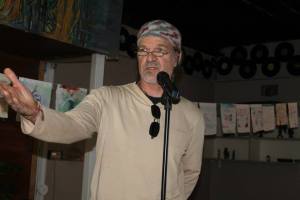
PerkBy Dr. James Perkinson (right), a sermon on Luke 24:13-35
I want to begin with a word of prayer before we jump into the gospel for today, but to facilitate that, first—a story about prayer and some necessary preliminaries. I have a half-Filipino poet friend in Detroit who tells of his first experiences of the Lord’s prayer, while growing up. Whenever he heard “Our Father who art in Heaven,” his five-year-old vernacular ears could not compute “art” as anything other than what happened when you put paint on paper, so his five year-old mind supplied a little slurred “n” in there, and what he actually thought he heard was “Our Father, who aren’t in heaven.” And it rattled him; he couldn’t figure it out; he says he kept thinking, “Well, where is he then?” If not there, then where? But he gradually came to hear it as a positive affirmation: a God who “aren’t” in heaven, because that God’s “place” is really right here, with us. A deep intuition, I would say, for all—what I would call place-based confession. Continue reading “Place-Based Resurrection”

A Revolutionary Spirit

JPerkDay 29 of our Lenten Journey through Dr. King’s “Beyond Vietnam” speech.

These are revolutionary times. All over the globe men are revolting against old systems of exploitation and oppression, and out of the wounds of a frail world, new systems of justice and equality are being born. The shirtless and barefoot people of the land are rising up as never before. The people who sat in darkness have seen a great light. We in the West must support these revolutions.

It is a sad fact that because of comfort, complacency, a morbid fear of communism, and our proneness to adjust to injustice, the Western nations that initiated so much of the revolutionary spirit of the modern world have now become the arch antirevolutionaries. This has driven many to feel that only Marxism has a revolutionary spirit. Therefore, communism is a judgment against our failure to make democracy real and follow through on the revolutions that we initiated. Our only hope today lies in our ability to recapture the revolutionary spirit and go out into a sometimes hostile world declaring eternal hostility to poverty, racism, and militarism. With this powerful commitment we shall boldly challenge the status quo and unjust mores, and thereby speed the day when “every valley shall be exalted, and every mountain and hill shall be made low, the crooked shall be made straight, and the rough places plain.”

A genuine revolution of values means in the final analysis that our loyalties must become ecumenical rather than sectional. Every nation must now develop an overriding loyalty to mankind as a whole in order to preserve the best in their individual societies.

“Beyond Vietnam; Before Apocalypse” by Dr. James Parkinson (photo above), Ecumenical Theological Seminary (Detroit, MI)

Fifty years ago, Dr. Martin Luther King’s “Beyond Vietnam” speech marked a moment of decision for King and the movement he led. Speaking out to link the dropping of bombs on brown skin in Asian rice paddies with the refusal to enact policy addressing the real needs of black people in inner city America laid bare the depths of US violence. It was not enough to address civil rights alone; profound concern for the civil sphere enjoined profound concern for the military, the economy and society at large. King went to the bone with his knife, cut open putrid flesh long festering, joined the right to sit at lunch counters with whites to the question of the right to eat at all. Like Malcolm and so many others before him, once insisting the ugly triplets (militarism, materialism, and “melanism”) were in fact features of each other, King did not have long to live. And the movements he anchored or provoked—Civil Rights and Black Power alike—faced draconian repression and damnable cooptation. Fast forward. Continue reading “A Revolutionary Spirit”

Trumpeting More Whiteness

j-perkBy Dr. James Perkinson, Ecumenical Theological Seminary, Detroit, MI
So I am reading the left alt-press for insight on what just happened with the election of Donald Trump, and find myself yet one more time provoked at our white blindness. No less than Glenn Greenwald—whose typically razor-sharp analysis I have relied on so often in the past—quotes Nate Cohn to the effect that “Clinton suffered her biggest losses in the places where Obama was strongest among white voters. It’s not a simple racism story.” And offers further: “Matt Yglesias acknowledged that Obama’s high approval rating is inconsistent with depictions of the U.S. as a country ‘besotted with racism.’” How little we have learned for all of our supposed “learning.” Continue reading “Trumpeting More Whiteness”

I Am Being “Unsettled”

perkinsonA excerpt from Dr. James Perkinson’s “Unsettling Whiteness: Refocusing Christian Theology on Its Own Indigenous Roots” in Wrongs to Rights: How Churches Can Engage the U.N. Declaration on the Rights of Indigenous Peoples (2016): 

What is this thing called “Whiteness” as a force of history?  A hidden Power that inhabits institutions, influences policies, whispers in psyches, and colors perceptions without itself appearing, except in shadows and at the edge of vision.  I have only become aware of how profoundly this Power has moved my will, shaped my desire, and birthed my thought, as black and native people in my life have called out its nearly invisible Presence that is so obvious to them.  I am married to a Filipina, from a country colonized by my own for half a century, so the scrutiny is relentless–but also very healing, in the midst of the “trouble” it occasions.  I am, year-by-year, deepening my understanding that I am a Settler on someone else’s land, and enjoy access to unjust amounts of “resources” and goods because of someone else’s labour.  I am being “unsettled.” Or more precisely, what is being unsettled within and around me is White Power (I am actually more than just the Whiteness that “possesses” me).

Witnesses to the Resurrection: Color on the Rise

chicoryBy Jim Perkinson, Detroit, MI

Resurrection shows up as color: the riot—bombastic or subtle—that is spring.  The oldest, most ancestral “return” from the grave is clearly the gift of plants—for millions of years now refusing to stay embalmed in earth.  Revealing every tomb as womb, disclosing soil—even dusty versions—as a compost deity!  Indeed, for the indigenous the globe over, the trash heap was the most ancient of shrines, the place where seeds and discards of every manner recombined into life. And Life, in every wild and insurgent upwelling shouts color. What hits the ear as percussion and polyrhythm, titillates the iris as shocking brightness. Red as wily ribaldry; green as svelte grammar; blue as primordial echo of grief or iridescent hint of the kiss of sky on water!   Tribal peoples have always known the truth that color is the first language of trance, of seeing beyond the surface of the present. The world over, resurrection-peoples have squeezed their resistance to the colonial into even so subtle an upsurge as chartreuse shoes and pupil-popping scarves.  In Detroit, Tyree Guyton makes paint a tool of spirit-war, pulling an entire neighborhood out of the grave.   Bronze-toned Jesus and purple chicory: signs of the same.  Irrepressible! Continue reading “Witnesses to the Resurrection: Color on the Rise”