Wild Lectionary: Beware the Cataclysm!

19024614_10154383615946567_367044656_o
Photo by Helen H. Richardson, The Denver Post

By Wes Howard-Brook and Sue Ferguson Johnson, Abide in Me

For readers of Wild Lectionary, there is hardly a Scripture passage more fitting than Genesis’ account of the Flood. The powerful, terrifying narrative is often reduced to a kids’ story, replete as it is with “cute” animals in the Ark. But, of course, beneath the surface is a story of divine near-omnicide, revealing a deep rift between the Creator’s vision and humanity’s response to God’s gift of the earth. In combination with the conclusion of the Sermon on the Mount (Matt 7.21-28), this week’s texts offer a sobering reminder of the cost of human violence to the earth and its creatures, including sapiens. Continue reading “Wild Lectionary: Beware the Cataclysm!”

Wild Lectionary: The Harmony Way

13495384_288455458167725_183598715059083997_o
Randy and students at Eloheh Farm. Credit: Patricia McSherry

Trinity Sunday
Genesis 1:1-2:4a

By Randy Woodley

As a follower of Jesus from a Keetoowah Indian heritage, my “canon” consists of Scripture, creation, and the “Native American Old Testament” (God’s revelation to Native People through generations of culture and tradition.) Continue reading “Wild Lectionary: The Harmony Way”

Wild Lectionary: The Coming of the Holy Breath

Djordje_Alfirevic_-_Breath_of_Earth
Djordje Alfirevic – Breath of Earth, CC 3.0 License

Pentecost

Acts 2:2-21
John 7:37-39
Psalm 104:25-35, 37

By Ragan Sutterfield

They were gathered for a festival of word and wheat, the harvest of plants grown from soil–breathing carbon, exhaling oxygen. Beneath the soil, the plant roots had spread a sugar feast for microbes who in turn gave their bodies for the wheat’s growth.  Those plants had now gone to seed, passing on their life to another season’s crop and in their abundance there was a harvest of bread for people and seed for birds and field mice and the life upon life that lives close to the ground.  It was at a festival for all these interactions, joined with a celebration of the coming of the Torah, those books that offered the story of a God who gives life to soil and cares about every detail of the material world.  The festival was Shavuot, Pentecost.  Continue reading “Wild Lectionary: The Coming of the Holy Breath”

Wild Lectionary: The Predator Within

2249220298_de45840ab4_o(1)Easter 7

Discipline yourselves, keep alert. Like a roaring lion your adversary the devil prowls around, looking for someone to devour.  –1 Peter 5:8

by Ric Hudgens

We must not domesticate our understanding of the wild. I am not referring to domesticating wild places into civilized spaces. I am noting our tendency to romanticize the wild in a way that removes its sharp edges.  In the rewilding of our theologies we must deconstruct docetic expressions that remove the divine and human from nature. Also, we must keep the divine and human embedded in real nature – not a romanticized Disneyland nature where animals sing and dance or time lapse photography makes change appear sudden.

The natural world which is filled with the divine and the contains the human is also “nature red in tooth and claw,” as Hobbes wrote. There are predators. There are prey. Continue reading “Wild Lectionary: The Predator Within”

Wild Lectionary: Wild Church

-1.pngSixth Sunday of Easter
Acts 17: 22-31

The God who made the world and everything in it, he who is Lord of heaven and earth, does not live in shrines made by human hands, nor is he served by human hands, as though he needed anything, since he himself gives to all mortals life and breath and all things. Acts 17:24-25

Re-connecting people with an untamed God in our wild homes.

There is a movement happening.  From isolation to connection.  From detachment to immersion.  From dualism to integration.  Spiritual leaders from a wide range of denominations are beginning to question the wisdom and consequences of regarding “church” as a building where you gather away from the rest of the world for a couple hours on Sundays.

In Texas, New Hampshire, Ontario, Colorado, Virginia, California, Washington DC and British Columbia. We are a growing network of pastors and spiritual leaders, who have made bold moves to launch new expressions of church outside to re-acquaint, re-cover, and re-member our congregations as loving participants of a larger community.  In this age of mass extinctions, we feel burdened by the love of Christ to invite people into direct relationship with some of the most vulnerable victims of our destructive culture:  our land, our waters, the creatures with whom we share our homes.

And, there, people remember that they belong to a larger beloved community.  Along the way, we have remembered that our Christian tradition of spiritual transformation has always been rooted in the actual local wilderness.

Join the Wild Church Network if you lead or want to lead your congregation out of buildings and into deeper relationship with God through nature in your community.

Wild Lectionary is curated by Laurel Dykstra, Priest in Charge of Salal + Cedar, Coast Salish Territory.


Wild Lectionary: Good Shepherd

Catacomb-Art-Shepherd
Earlychurch.com

Good Shepherd Sunday
Acts 2:42-47 • Psalm 23 • 1 Peter 2:19-25 • John 10:1-10
By Noel Moules

A shepherd is a wilderness figure. Distinctive, as they move across the horizon line, while at the same time blending and flowing with and within their surrounding landscape. Always an outsider in terms of mainstream society, yet across the story of human cultures their mystique has left an imprint out of all proportion to their actual power and influence.

Biblically, the concept of the ‘shepherd’ presents a multitude of possible perspectives we might explore, even within the confines of our chosen lectionary passages. However, as a Christian animist I want to focus on a theme of central importance to me, that of ‘relationship’. Continue reading “Wild Lectionary: Good Shepherd”

Wild Lectionary: Homeless, Unrecognized on the Road

11102961_10155455528045714_1366849916479858489_n-1
Emmaus by Melanie Delva

Third Sunday of Easter
Luke 24:13-35

By Ched Myers

The gospel story begins with Jesus’ family fleeing violence as political refugees, pushed around Palestine by the imperial forces of Caesar and Herod (Matt 1–2; Luke 1–2). Continue reading “Wild Lectionary: Homeless, Unrecognized on the Road”

Wild Lectionary: Plastics as a Spiritual Crisis

IMG_3769 copy
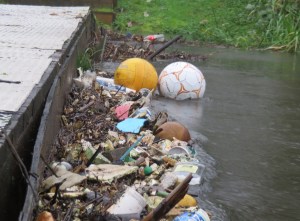
Plastics in Still Creek, salmon spawning stream, Fraser River watershed

Palm Sunday
Psalm 118:22

The stone that the builders rejected has become the chief cornerstone.

By Sasha Adkins

The ever-increasing abundance of plastic trash in land, sea and bodies is, fundamentally, a spiritual problem. Plastics habituate us to accept unhealthy relationships—and not only because our use of them is so typically fleeting. The foundation of a healthy relationship lies in a celebration of the Other’s unique and intrinsic value; disposable plastics, however, are by design both fungible and instrumental. Continue reading “Wild Lectionary: Plastics as a Spiritual Crisis”

Wild Lectionary: Heaven and Earth, Sun and Moon, Mountain and Cloud

IMG_1192
Burnaby Mountain on the Kinder Morgan Trans-mountain Pipeline Expansion route.

Notes for Lent 2, By Laurel Dykstra

Genesis 12

In these four verses two words, rough synonyms, eretz and adamah, are used for land

  1. 1 Eretz is used twice in this verse to speak of Abram’s native country, territory or perhaps property. It is linked to his people, his kin.
  2. 3 Adamah (same root as Adam) is used for the earth—the known world, and in contrast to v. 1 it is linked to all families.

Continue reading “Wild Lectionary: Heaven and Earth, Sun and Moon, Mountain and Cloud”

Wild Lectionary: Water is Life

image-11-3-16-at-1-30-pm
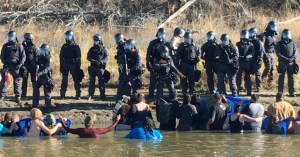
Photo caption: water protectors in the Cannonball River Photo credit: resistmedia

Baptism of the Lord
January 8, 2017

Laurel Dykstra, priest in charge of Salal + Cedar, a watershed discipleship community in Coast Salish Territory near Vancouver BC, and Steve Blackmer, priest at Church of the Woods in Canterbury, NH discuss the readings for January 8.

Steve: There’s so much here but what stands out to me is water, living, real water.
Laurel: What do you mean by “real water”?
S: Real water as opposed to tame water that is contained in the font, sometimes even covered up with a lid, the water itself is tamed and the act of baptism is tamed. But this is actual flowing water. You can imagine Jesus—not a casual surfacing but a splashing, bursting forth! In the psalm the voice of the LORD over mighty waters, powerful and present there’s a sense of divine power. It makes oak trees writhe, that is not a tame God but something wild and untamable.
L: Let’s look at the readings verse by verse. Continue reading “Wild Lectionary: Water is Life”