The Christian season of Lent will kick-off on the exact same day as Islam’s holy month of Ramadan.
This is not just a coincidence. This is a divine conspiracy.
It all starts on Ash Wednesday, February 18.
I am wondering what it might look like for a network of Christians and Jesus-adjacent folks in North America to cross over and fast from food and drink during daylight hours for the entire month of Ramadan.
I see this as a small act of solidarity with Muslims all over the planet – and specifically with Palestinians who are enduring ethnic cleansing and genocide abroad, and constant demonization here in the US.
I also see this as a tangible way for Christians to repent from all the anti-Arab racism and Islamophobia built into the body of Christ.
A sermon from Jim Perkinson on Luke 13:1-9 (March 23, 2025 at St. Peter’s Episcopal Church in Detroit, MI)
13 There were some present at that very time who told him of the Galileans whose blood Pilate had mingled with their sacrifices. 2 And he answered them, “Do you think that these Galileans were worse sinners than all the other Galileans, because they suffered thus? 3 I tell you, No; but unless you repent you will all likewise perish. 4 Or those eighteen upon whom the tower in Silo′am fell and killed them, do you think that they were worse offenders than all the others who dwelt in Jerusalem? 5 I tell you, No; but unless you repent you will all likewise perish.”
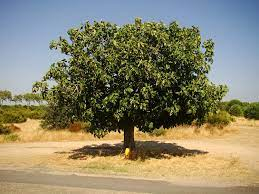
6 And he told this parable: “A man had a fig tree planted in his vineyard; and he came seeking fruit on it and found none. 7 And he said to the vinedresser, ‘Lo, these three years I have come seeking fruit on this fig tree, and I find none. Cut it down; why should it use up the ground?’ 8 And he answered him, ‘Let it alone, sir, this year also, till I dig about it and put on manure. 9 And if it bears fruit next year, well and good; but if not, you can cut it down.’” (Lk 13:1-9)
You know me, always trying to get down under the meaning, looking for an unforeseen seed going on journey in the soil, suddenly bursting unanticipated from below ground. Well, it happened here. In today’s text We read our bibles in English. Which translates the ancient Latin (Vulgate). Which translates the Greek. Which translates the Aramaic. Which translates the Hebrew. We are more than four times removed, more than four cultures out of sync with the text. We can’t really get back there in any pristine form but can at least muse. Let some things happen with images that provoke consternation or amusement! So come with me for a minute.
Our indigenous teacher, Martín Prechtel is always telling us, “Pay attention to the etymology, to the sequence of meanings that a given word harbors over time.” Underneath this word right here, that seems mundane and boring to you, there is an older meaning, and under it an even older meaning, and then another and another and another. Follow the root of the word back and down and ultimately you come out in place that is likely ancestral and indigenous and very different than here in the seemingly “ordinary” sense the word now conveys. There are ancestors and grand mysteries up inside many of our words, but deep under their present appearance and sound—like the hair on the side of a root of a mushroom under the soil, leading into a network as wide as an entire forest.
Over the next three weeks, the Christian season of Lent will overlap with the Muslim holy month of Ramadan, which started yesterday at sundown. Yesterday. When a billion Christians read the Gospel text where the radical rabbi Jesus tells the wealthy and powerful Nicodemus that Jesus himself must be lifted up on a cross – just like Moses lifted up the serpent in the wilderness.
Jesus was giving a little sermon on the story in the Hebrew bible about the post-exodus Israelites getting bit by poisonous snakes. God tells Moses to make a bronze snake, put it on a pole and raise it up whenever someone gets bit – so they can look up at the snake and be healed. Jesus says that he is now playing the role of the bronze snake.
In the Gospel story, Jesus will inevitably be lifted up on a cross. Because he paved a path that threatened those who clung to their privilege, power and wealth. Radical Christian spirituality roots salvation in gazing at Jesus up on that imperial cross.
Lent is when the ecstasy and the agony of life collide.
Monday, 28 February, was the next-to-last-day of Mardi Gras, celebrated in the US along the Gulf Coast, New Orleans being its epicenter.
As the sun was going down in New Orleans, the eve of “Fat Tuesday,” the party hardying prior to the abstinence of Ash Wednesday, a man in California killed his three daughters and the woman supervising the girls’ visit with her father, part of the terms dictated since his divorce. Then killed himself. In a church sanctuary.
Note: This is a re-post from an ongoing series of Ched’s brief comments on the Markan gospel readings from the Revised Common Lectionary during year B, 2015.
Jesus’ long march to Jerusalem takes Mark’s story from the margins of Palestinian society (the Jordan wilderness and Capernaum in Mk 1) to its center. Arriving at the suburb of Bethany (11:1), Jesus prepares to enter the Holy City not as a reverent pilgrim demonstrating allegiance to the Temple, but as a subversive prophet challenging the foundations of State power. Mark 11-12 narrates Jesus’ second “campaign of direct action.” In the first campaign in Galilee (1:20-3:35) he confronted the status quo with his powerful actions of exorcism and healing. Now he takes on the Temple system and its stewards: the Jerusalem clerical establishment. This campaign, like the first, will culminate in polarization and rift, and will conclude with Jesus’ withdrawal to further reflect upon his mission in a second sermon about revolutionary patience (13:1ff; see 4:1ff). Continue reading “PALM SUNDAY AS SUBVERSIVE STREET THEATRE: SIXTH SUNDAY IN LENT (MK 11:1-11)”→
It can be fairly said that discipleship is the topic of Lent. The liturgical road from Ash Wednesday leads straight to Passion-week Jerusalem. To enter wholeheartedly into the season costs more than tag along admiration from the margins of a multitude. A call and a choice are put point blank: take up your cross and follow.
Lent was first and still remains a season of baptismal preparation. Before the church year took shape there was only the unitive feast of Easter which went on for fifty days until Pentecost. But for some (those initiates to be baptized into the death and life of Christ on Easter) it was the culmination of a three year period of instruction and discipline. In the underground rigors of pre-Constantinian faith the scrutiny was serious, the preparation prolonged, and the prayer intense. Those demanding final days before baptism were marked with a fast. In part, by a simple act of solidarity and intercession, other members even whole congregations, were drawn instinctively to join the fast and renew their own sacramental vows come Easter sunrise.
This past Sunday one of our members, Stan Wilson, offered the “call to the table” in our congregation’s zoom worship screen-gathering. He led with a suggestion that was equivalent, in my hearing, to a thunderclap.
“How about for Lent this year we give up Donald Trump?”
It was a table invitation (we celebrate the Eucharist every week) and an altar call rolled into one. And it certainly had my name on it.
The last four years in the US have been a national demolition derby, a Three-Stooge-esque comedy of incompetence and disrepute, a racketeer’s paradise and grifter’s playpen—only with real-world torment, particularly for those here and abroad with little shelter from the abuse.
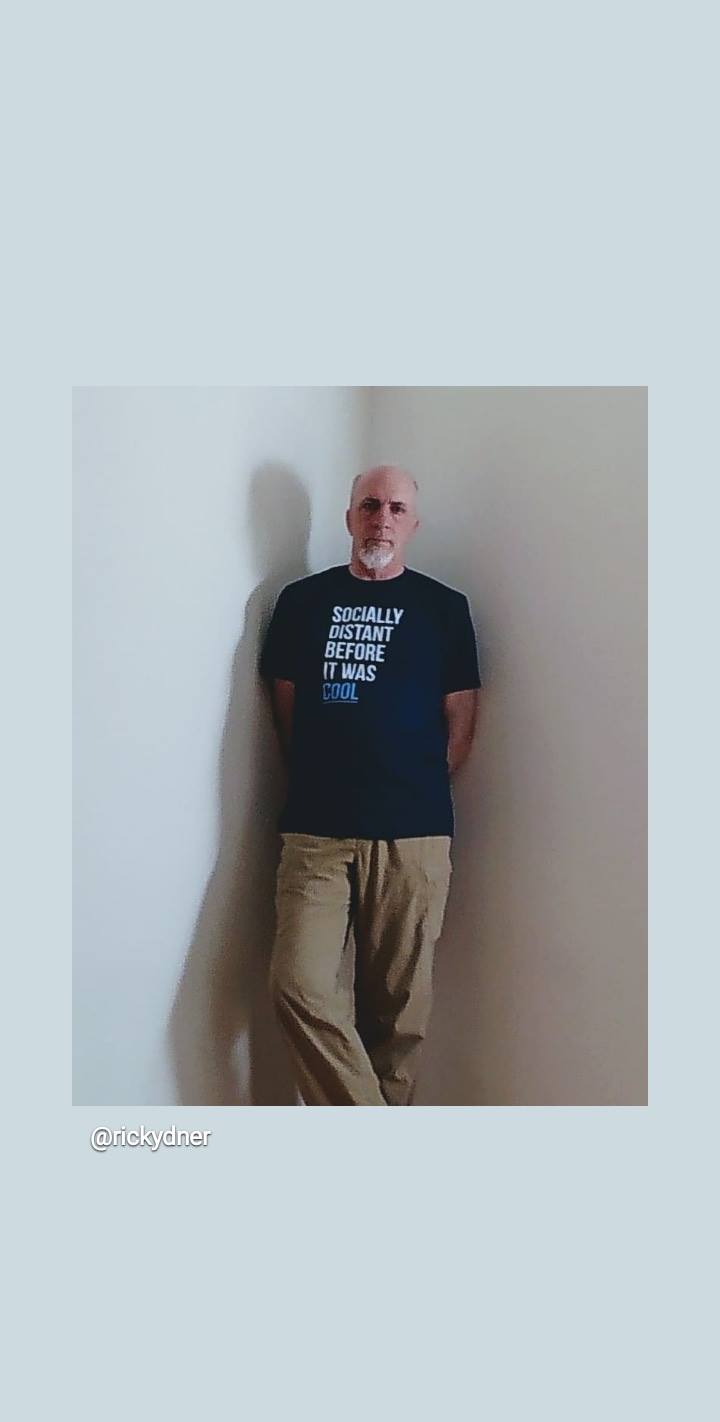
By Ric Hudgens (right), a reflection from the Ash Wednesday service at North Suburban Mennonite(2/17/2021)
It feels as if we’ve been observing Lent all year. Always Lent and never Easter.
Almost a year ago we started wearing masks, separating from family and friends, working from home, moving to remote worship services, learning to sublimate desire on a daily basis. As the poet Anne Sexton wrote: “Your courage was a small coal that you kept swallowing.”
I’m tired of swallowing coal.
Under normal circumstances (remember those?) I anticipate and savor the season of Lent. I savor how it focuses on our finitude, the certainty of our death, and our organic connection to the earth. The imposition of ashes and the declaration “dust thou art, to dust thou returneth” is a clarifying reassurance in the midst of much that is uncertain and confusing.
Although these elements are not the entirety of the Christian message, they have always seemed to me fundamental and necessary.
I love this season for its potential earthiness. Lent’s ability to ground us in the physical realities of our bodies and of our daily lives. I appreciate that recurring discovery that an annual confrontation with death can be a life-giving experience.
“It’s not simply: better jails, better police, better training. It’s no police, it’s no jails, no prisons. It’s creating a new means of justice that’s not based on criminalization but based on affirmation and reparation, and by reparation that is trying to repair relationships that have been damaged and destroyed as a result of five centuries of warfare against Indigenous peoples, Africans, poor white people, Asian-Pacific Americans, and Latinx populations.”—Robin D.G. Kelly
Lent starts next week. A season to take spiritual inventory. To assess crucifying realities. To grieve. To confess our complicity. To rise up into newness of life. This year, the Lenten journey begins on Wednesday, February 17—four weeks into a new Presidential administration committed to “going back to normal.” This year, more than ever, Lent resists “normal.” Lent lifts up what Dr. King called a radical revolution of values. Protecting people over profit motives and property rights. Black people. Brown people. Indigenous people. Immigrant people. Poor people. We want nothing to do with a “normal” world of racism, materialism and militarism. Following Jesus of Nazareth, we are inaugurating a world that brings good news to the poor and proclaims release to the captives. We are rolling away the stone guarded by those who protect and serve empire.
Like each of you, I am spinning and dancing in the flux that is COVID-19.
My city, Philadelphia, is on lockdown, people asked to go out only for necessities or to the doctor. Every day I have gotten news of loved older ones exposed or friends who have COVID-19, schools and colleges closed, information overload. I’ve cancelled retreats and trips I have looked forward to for months, reeled home one college student from across the globe. I’ve been anxious about what the virus will do in Project HOME’s 900-resident community of formally homeless and vulnerable people, concerned and sad about life experiences cancelled, uncertain about how long it may go and how bad everything may get. You probably have a similar list of things falling, failing, the world shifting a bit under fear and responsibility.



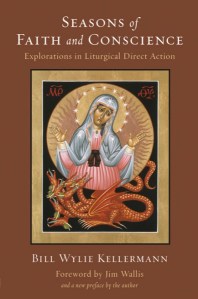 Excerpt and reflection from Bill Wylie-Kellermann’s

 Radical Discipleship