Save the Date: Beyond Vietnam as a Lenten Devotional on RadicalDiscipleship

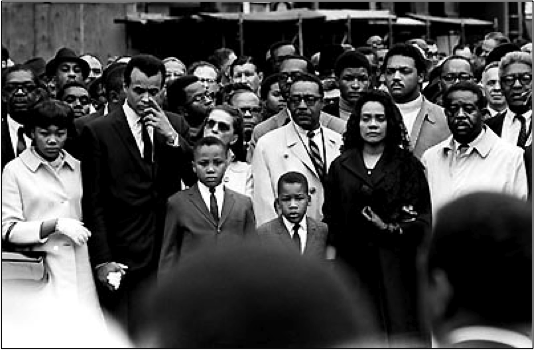
mlk3.jpgBeloved Community,

RadicalDiscipleship invites you to journey with us through the 40 days of Lent by reading and reflecting daily on Martin Luther’s King’s “Beyond Vietnam.”

March 1-April 16 Continue reading “Save the Date: Beyond Vietnam as a Lenten Devotional on RadicalDiscipleship”

This Lent

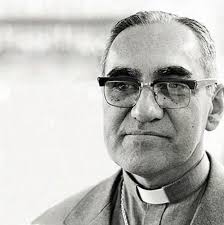
romero.jpg

This Lent, which we observe amid blood and sorrow, ought to presage a transfiguration of our people, a resurrection of our nation. The church invites us to a modern form of penance, of fasting and prayer – perennial Christian practices, but adapted to the circumstances of each people

Lenten fasting is not the same thing in those lands where people eat well as is a Lent among our third-world peoples, undernourished as they are, living in a perpetual Lent, always fasting. For those who eat well, Lent is a call to austerity, a call to give away in order to share with those in need. But in poor lands, in homes where there is hunger, Lent should be observed in order to give to the sacrifice that is everyday life the meaning of the cross.

But it should not be out of a mistaken sense of resignation. God does not want that. Rather, feeling in one’s flesh the consequences of sin and injustice, one is stimulated to work for social justice and a
genuine love for the poor. Our Lent should awaken a sense of social justice.

  • Archbishop Oscar Romero


Lent with Howard Thurman

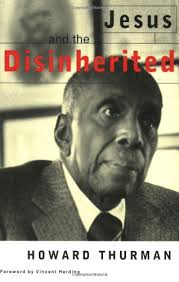
thurman.jpgBy Will O’Brien, Alternative Seminary, Philadelphia, PA

This Lent, I have using as a meditation guide Howard Thurman’s classic Jesus and the Disinherited. This book and other writings of Thurman, an African American scholar, theologian, and activist whom Vincent Harding called our “Black prophet-mystic,” were a spiritual taproot of the civil rights movement and continue to animate many people of faith who hunger and thirst for justice. Just in the first pages, his writing has revealed itself to be an unsettlingly relevant text for this season of repentance and metanoia.

Early in the book, Thurman recounts a visit to India in 1935 – a delegation of American students on a “pilgrimage of friendship.” One day, the principle of a Law College in Ceylon personally asked Thurman to have coffee. He posed a pointed question, addressing Thurman as an African American Christian: “What are you doing here?” Continue reading “Lent with Howard Thurman”

“Who Will Roll Away the Stone? A Meditation on Mark’s Easter Story”

MyersTopBy Ched Myers

Note: This year Easter (Apr 5) falls close to the anniversary of Martin Luther King’s assassination (Apr 4). This is an abridged excerpt from the conclusion of Who Will Roll Away the Stone? Discipleship Queries for First World Christians (Orbis, 1994); it appeared in Sojourners (April 1994, Vol. 23, No. 3, pp. 20-23; King pictures added).
——————-
VERY early on the first day of the week, when the sun had risen, Mary, Mary, and Salome went to Jesus’ tomb (Mark 16:2).

Sooner or later, we who have tried to follow Jesus find ourselves weary and broken like the Galilean women, on our way to bury him. It is the morning we awake to that inconsolable, aching emptiness that comes only from hope crushed. This dawn does not bring a new day, only the numb duty of last respects. Continue reading ““Who Will Roll Away the Stone? A Meditation on Mark’s Easter Story””

The Crucified God

Micah IconBy Tommy Airey

God will again have compassion upon us;
God will tread our iniquities under foot.
You will cast all our sins
into the depths of the sea.
Micah 7:19

At the heart of the prophetic proclamation there stands the certainty that God is interested in the world to the point of suffering.
Jurgen Moltmann, The Crucified God (1972)

*This is the final installment in our series on Micah posted every Wednesday during Lent.
————-
In the midst of Holy Week, we pause to remember our 6-week Journey through Lent thus far. Our daily trek towards the Divine starts with stripping down so that we can vulnerably and transparently take inventory of our weaknesses, copings and inconsistencies. We summon the strength and focus to study the ways social, political, economic and religious systems enslave and devour humanity and the land. We ask ourselves how we are complicit and benefit from these arrangements. Then we expose oppression, injustice and greed while casting a vision and creatively constructing another Way.
Continue reading “The Crucified God”

The Prophetic In The Face of Plunder

Micah IconBy Tommy Airey

Alas for those who devise wickedness
and evil deeds on their beds!
When the morning dawns, they perform it,
because it is in their power.
They covet fields, and seize them;
houses, and take them away;
they oppress householder and house,
people and their inheritance.

Micah 2:1-2

*This is the second installment in a series of seven pieces on Micah posted every Wednesday during Lent.
—————–
This week, Micah takes us from the personal to the political. I write from a church office with a cold, crisp view of downtown Detroit. Just on the other side of the skyscrapers, a man worth $100 million lives in a 14,500 square-foot mansion. He is buying cheap land from the city to plant a tree farm. He is hailed as a job creator and a blight reducer. But there’s more to the story: banks, land developers and young middle-class white folks coming in from the suburbs are targeting certain (poor, black) neighbors through city-imposed tax foreclosure & water shut-offs. These powers (including the multimillionaire tree farmer) are not innocent bystanders. Their intentions inevitably create unintended consequences. They prosper off the misery of poor people.
Continue reading “The Prophetic In The Face of Plunder”