Wild Lectionary: Fishing On Our Ancestral Territory

pic 2
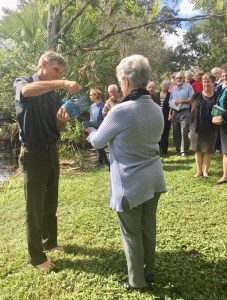
My late father, on our traditional Nisga’a fishing territory. Photo credit Tanya Stanley, summer 2011.

Epiphany 3B
Mark 1: 16-18

By: Jeffery Stanley

May the words of my mouth, and the meditation of my heart, be acceptable unto you, Oh God our rock and Redeemer.

“As Jesus passed along the sea of Galilee, he saw Simon and his brother Andrew casting a net into the lake – for they were fishermen. And Jesus said to them ‘follow me and I will make you fish for people.’ And immediately, they left their nets and followed him.”

In the days of Jesus of Nazareth it was the custom for teachers to gather their students from the people of any community and lead them as a company from place to place as they taught. He (a teacher) would from time to time, talk to people and share truths with them. Certain students would be attracted to him and would come to listen to him from time to time. Sometimes they would linger at some favorable spot for awhile and persons would join them to listen and often respond to the message. Gutzke, Manford George. “Plain talk on Mark” pp. 18 Continue reading “Wild Lectionary: Fishing On Our Ancestral Territory”

Wild Lectionary: Woven in the Depths

Womb_2_Kovil_BG
Womb 2 Kovil BG Photo Credit: Fillipov Ivo, Creative Commons

Epiphany, Year B
Psalm 139:1-6, 13-18

By Ragan Sutterfield

E. Stanley Jones once wrote that if there is an instinct in the human heart to conceal there is also a deeper instict to reveal” (Victory Through Surrender). And yet, our culture keeps from authentic disclosure. We are invited, instead, to a kind of performative exposure, a way of revealing that also hides. We want to be known and seen but we do not trust those who might see us. We are afraid of what might happen if we are known, fully, authentically. So we manufacture disclosure on Facebook, hoping that in the commiseration of comments or praise of likes we will achieve what we are afraid to risk through a real openness. It is disclosure at the surface rather than at the depths.

Continue reading “Wild Lectionary: Woven in the Depths”

Wild Lectionary: Metanoia and John – Transformation in Wilderness

Jan 7 photo.jpgBy Valarie Luna Serrels

Epiphany 1B
Mark 1:4-11

There’s a story in Greek mythology about Kairos, the young, swift god of opportunity, with wings on his feet. When he passes by you, it’s too late to grab hold of said opportunity. However, in the wake of Kairos’ fleeting journey, stands the sorrowful goddess Metanoia. She invites those passed by with opportunity for reflection, mourning, and space to make a decision. An urgent decision. Metanoia literally means change. A changed mind, heart, behavior, life. Continue reading “Wild Lectionary: Metanoia and John – Transformation in Wilderness”

Wild Lectionary: Mary, Hildegard and the anawim

IMG_2855Advent 4B

Luke 1:26-38, 46b-55

You have deposed the mighty from their thrones and raised the lowly to high places. Luke 1:52

By The Reverend Marilyn Zehr

I met her this afternoon when I went for a walk. She was throwing the ash from her woodstove onto the snowy road just outside her front door.

“Helps the cars get traction,” she said. “You’re the new minister aren’t you? Want to come in and see my Christmas decorations?” Continue reading “Wild Lectionary: Mary, Hildegard and the anawim”

Wild Lectionary: Learn from the Fig Tree

PhotoAdvent 1B

Isaiah 64:1-9
Psalm 80:1-7, 17-19
1 Corinthians 1:3-9
Mark 13:24-37

By Jessica Miller

Many years ago, on a prairie in Michigan, I became a student of the landscape. Officially, I tracked phenology, or the study of seasonal phenomena. Mostly I would wander the tall grass, seeking changes in the flowers. Who is blooming? Who is senescing? Whose shoots are green and growing? Some days would be punctuated by the commanding, haunting, rolling trumpet-call of sandhill cranes. The sound yanked my head up out of the grass and up to the sky. Where were they coming from? Where were they going? Learning the birds and plants and just a tiny fraction of the invisible strings that tie them to the world (the temperature, the direction of the wind, the rising and setting of the sun) taught me how to listen to the Spirit. Where does she come from? Where is she going? You can never know for sure, and yet you can become familiar with her flight-paths. Continue reading “Wild Lectionary: Learn from the Fig Tree”

Wild Lectionary: Soothe the Earth and Heal the Waters

at_Nevada_National_Security_Site_2011
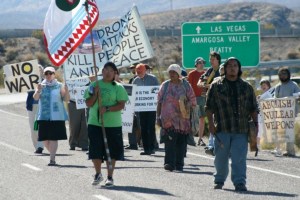
Western Shoshone and North American Catholic Workers at the Nevada National Security Site.

Feast of Christ the King

Ezekiel 34.11-12, 15-17
1 Corinthians 15:20-26, 28
Matthew 25:31-46

By Victoria Marie

Today is the feast of Christ the King or Reign of Christ Sunday. The mental images that the words “king” and “reign” bring to mind are based on our knowledge of the actions of kings and political leaders.  Today’s first reading from the prophet Ezekiel gives us God’s view of leadership. The image of the shepherd is commonly used to portray monarchs in biblical literature. So, if we think of Christ the King as Christ the Good Shepherd, we have a truer sense of what this day is about. Continue reading “Wild Lectionary: Soothe the Earth and Heal the Waters”

Wild Lectionary: Look to the Acorns

IMG_2956.JPG
Dark-eyed Junco
Photo Credit: Laurel Dykstra

Proper 28(33) A
Pentecost + 24

Matthew 25:14-30

By Ragan Sutterfield

I have been spending my mornings in the woods lately, a short hike before I begin to work on the tasks of the day. As fall finally arrives here in Arkansas the juncos have returned, twittering as they flash the white of their tails, and the long metallic notes of white-throated sparrows echo in the understory. Each step along the trails comes with a crunch, not only of the newly fallen leaves, but also of the acorns, cracking orange against the gray shale of the hillsides. Continue reading “Wild Lectionary: Look to the Acorns”

Wild Lectionary: Letting it flow down the creek

IMG_4361Proper 27(32)A
Pentecost + 23

I Thessalonians 4:13-18
Matthew 25: 1-13

Keep awake therefore, for you do not know the day or the hour. (Mt 25:13)

…so that you may not grieve as others do who have no hope. (1 Th 4:13)

By Andrew Hudson

I’m an empty-nester, twice over. I sent my son off to college a couple years ago, and I’m still not through adjusting. And just recently, I had a similar experience, sending off a good, small Mennonite congregation to a new location at the end of my being their interim pastor.  Continue reading “Wild Lectionary: Letting it flow down the creek”

Wild Lectionary: Until there is room for no one but you

kContinued from yesterday’s reflections on the lectionary for the 18th Sunday after Pentecost
Isaiah 5:8-23

By Ched Myers

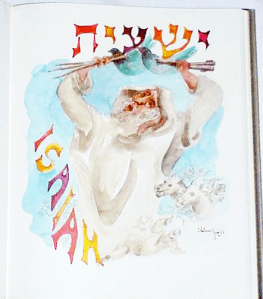
Isaiah articulates the contemptible socio-economic disparity in Israel. A series of prophetic “woes” (howy) commences in verse 5:8 that extend through 5:23, and the first one summarizes starkly and succinctly all that will follow. The image of  “joining house to house and field to field” specifically refers to the phenomenon of “latifundialization,” the economic process by which large landowners increase their holdings by foreclosing on indebted small farmers. Theologians Urich Duchrow and Franz Hinkelammert point out that the 8th century BCE saw history’s first wave of “privatization” spread throughout the Mediterranean world, including Israel: Continue reading “Wild Lectionary: Until there is room for no one but you”

Wild Lectionary: Ecological Theology of the Vineyard

kj
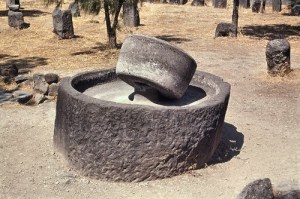
Old millstone, Palestine

Proper 22 (27)
18th Sunday after Pentecost

Isaiah 5:1-7
Matthew 21:33-46

By Ched Myers

The 18th Sunday after Pentecost this year comes on the heels of the “Season of Creation,” a contemporary liturgical and lectionary movement celebrated during the four Sundays in September prior to St Francis of Assisi Day (4 October). Today’s haftorah—Isaiah’s famous “Song of the Vineyard”—continues this vein of ecological theology. Continue reading “Wild Lectionary: Ecological Theology of the Vineyard”