Unless we turn around from Empire, the victimization will continue

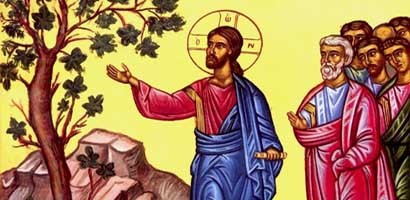
Fig TreeBy Ched Myers, for the 3rd Sunday of Lent

Note: This is part of a series of Ched’s occasional comments on the Lukan gospel readings from the Revised Common Lectionary during year C, 2016.

Somewhat strangely, the RCL reading this week moves backwards, from the end of Luke 13 on Second Lent to its beginning this Sunday, leapfrogging the poignant story of the “Bent Over Woman” in the middle of that chapters (which we’ll look at on the 14th Sunday after Pentecost, Aug 21st). Continue reading “Unless we turn around from Empire, the victimization will continue”

The Prophetic Script

bartBy Ched Myers, for the 2nd Sunday of Lent (Luke 13: 31-35

Note: This is part of a series of Ched’s occasional comments on the Lukan gospel readings from the Revised Common Lectionary during year C, 2016.

More than any other gospel writer, Luke portrays Jesus as using Israel’s prophets for his own interpretive lens. This theme stretches across the whole arc of Luke’s story, from its beginning where the coming promise of redemption comes “through the mouth of God’s holy prophets from of old” (1:70) to the Emmaus road epilogue, which stresses this traditions as a hermeneutic key to the problem of suffering: “Then beginning with Moses and all the prophets he interpreted to them the scriptures” (24:25-7; 44f). Continue reading “The Prophetic Script”

Jesus on a Wilderness Vision Quest

JesusTemptationBy Ched Myers, 1st Sunday in Lent (Luke 4:1-13)

Note: This is part of a series of Ched’s occasional comments on the Lukan gospel readings from the Revised Common Lectionary during year C, 2016. For a longer version of this reflection and a close look at each of the temptations, see http://www.chedmyers.org/sites/default/files/02-4-Pb%2C%20Jesus%20Wilderness%20Temptations%20as%20Vision%20Quest.pdf.

The church traditionally inaugurates Lent by reflecting on the “wilderness temptations” of Jesus. In preparation for his mission, Jesus follows a mysterious yet compelling calling to radical wilderness solitude. He fasts. He lives in the wild. He wrestles with spirits. (Above: Ivan Nikolaevich Kramskoy, “Christ in the Wilderness,” 1873.) Continue reading “Jesus on a Wilderness Vision Quest”

Transfiguration

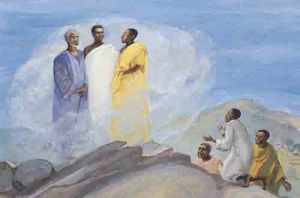
transfigurationBy Wes Howard-Brook and Sue Ferguson Johnson, Commentary on Readings for Feb 7, Transfiguration Sunday

Then from the cloud came a voice that said, “This is my Son, my Chosen; listen to him!”

Our gospel this week finds Jesus and a few companions taking some time out on the earth for what Dorothy Day might have called “clarification of thought” or others have called “illumination.” Luke has just shown that the disciples don’t understand who Jesus is. In the wider narrative context, Luke has Jesus ever more clearly revealing that the divine power he embodies and offers to disciples is not that of the warrior “messiah,” but of the suffering Human One (9.20-26). But the disciples, like so many “Christians” through the ages, cling stubbornly to the hope that he would be the military leader who would remove the Romans by force (see Lk 24.21). Even worse, they seem utterly deaf to Jesus’ Good News of radically inclusive hospitality and leadership from below. Surrounding the Transfiguration scene are numerous situations where we see how out of tune they are with the song Jesus is singing. Consider this sequence of encounters: Continue reading “Transfiguration”

Risky Midrash: The Jubilee Pertains to Our Enemies Too

NaamanBy Ched Myers, for the 3rd Sunday of  Epiphany (Jan 24, 2016: Luke 4:22-30)

Note: This is part of a series of Ched’s occasional comments on the Lukan gospel readings from the Revised Common Lectionary during year C, 2016.

The audience reaction to Jesus’ inaugural sermon in Nazareth is somewhat ambiguous (4:22). Though they “witness to him” (the Gk emarturoun with the dative is usually positive), they also “wonder” about him (ethaumazon, which can connote surprise in a negative sense; see Lk 11:38), no doubt skeptical about how such eloquence can come from a humble construction worker’s son. This explains Jesus’ immediate move to the defensive, then quickly to the offensive. Continue reading “Risky Midrash: The Jubilee Pertains to Our Enemies Too”

Ongoing Direct Encounter

Jesus in TempleBy Wes Howard-Brook and Sue Ferguson Johnson, commentary on readings for the First Sunday after Christmas

Note: This is part of a series of Wes & Sue’s occasional comments on the Lukan gospel readings from the Revised Common Lectionary during year C, 2015-16.

Christmas carols continue to echo around and within us, but Sunday’s Gospel from Luke has Jesus already nearly grown. Only Luke provides any glimpse of Jesus’ childhood. This tantalizing scene, though, offers many hints for how the adult Jesus will subvert both the expectations of his Roman audience and of those hearers who, so far, may be expecting Jesus to become a warrior “messiah like David” (1.32, 69; 2.11).
Continue reading “Ongoing Direct Encounter”

Magnificat: Poor Women’s Voices Liberated

MyersMagnificatBy Ched Myers, for the 4th Sunday in Advent (Luke 1:39-55)
Note: This is part of a series of Ched’s occasional comments on the Lukan gospel readings from the Revised Common Lectionary during year C, 2015-16.

Luke 1 is the prolegomenon to the nativity story, and is structured around the stories of two women who, for radically different reasons, cannot conceive. In a nutshell, Elizabeth is too old, and Mary is too young. Their stories are narrated in staggered parallel:

  • Annunciation to Elizabeth (1:5-25) Annunciation to Mary (1:26-38)
  • Elizabeth’s Response (1:41-45) Mary’s Response (1:46-55)
  • John’s birth (1:57-66) Jesus’ birth (2:1-20)

Continue reading “Magnificat: Poor Women’s Voices Liberated”

The Baptist’s Radical Critique of Entitlement: Repentance as Radical Discontinuity

LentzJohntheBaptistBy Ched Myers, the 3rd Sunday in Advent (Luke 3:7-18)

Note: This is one of Ched’s occasional comments on the Lukan gospel readings from the Revised Common Lectionary during year C, 2015-16.

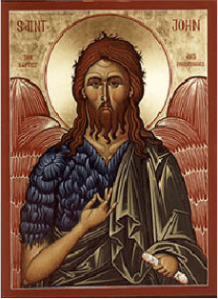
The third week in Advent lingers on Luke’s portrait of John the Baptist, in which we get our most substantive glimpse into this wilderness prophet’s message (right, icon by Robert Lentz, 1984). This reading cuts sharply against the grain of the holiday season, so often defined in corporate-sponsored Christmas culture by commercialization and commodification of all things religious. But the Lectionary’s wisdom seeks to restrain the manic rush into what a young Jewish friend calls “the days of craze,” insisting rather on a sober look at the travails of empire.
Continue reading “The Baptist’s Radical Critique of Entitlement: Repentance as Radical Discontinuity”