The Christian season of Lent will kick-off on the exact same day as Islam’s holy month of Ramadan.
This is not just a coincidence. This is a divine conspiracy.
It all starts on Ash Wednesday, February 18.
I am wondering what it might look like for a network of Christians and Jesus-adjacent folks in North America to cross over and fast from food and drink during daylight hours for the entire month of Ramadan.
I see this as a small act of solidarity with Muslims all over the planet – and specifically with Palestinians who are enduring ethnic cleansing and genocide abroad, and constant demonization here in the US.
I also see this as a tangible way for Christians to repent from all the anti-Arab racism and Islamophobia built into the body of Christ.
Today marks the 70th anniversary of forty-two-year-old Rosa Parks refusing to give up her seat on that Jim Crow bus in Alabama. It was not a spontaneous act. It was not a mid-life crisis either. It was the choreographed move of a community conspiring against a system built and maintained by racial segregation.
Rosa Parks was the spark that lit the 381-day movement wildfire called the Montgomery Bus Boycott.
Rosa Parks was not new to the movement. Rosa Parks was true to the movement.
In her early twenties, Rosa Parks courageously stood up to a white man attempting to rape her while she was working as a nanny. “If he wanted to kill me and rape a dead body,” she wrote years later, “he was welcome, but he would have to kill me first.”
In her early thirties, despite blatant efforts to threaten and intimidate her, Rosa Parks launched “The Alabama Committee for Equal Justice for Mrs. Recy Taylor” to defend a 24-year-old Black mother and sharecropper who was gang-raped by six white boys.
In her early forties, a few months before she refused to give up her seat, Rosa Parks attended a two-week training facilitated by Septima Clark at the Highlander School in Tennessee, one of the only places in the South that dared to host integrated meetings.
Highlander was started during the Great Depression by a white man named Myles Horton, a Union Seminary graduate who sought to multiply democratic leadership through the training of what he called “non-charismatic people.”
Myles Horton used this jargon to challenge the wide-spread belief that a just society would only come about when a well-intentioned, good-looking, smooth-talking alpha male was in charge.
Myles Horton knew that mustard seed revolutions spread through well-organized communities of peers, where everyone has a role, especially soft-spoken seamstresses like Rosa Parks and public-school teachers like Septima Clark, whose father was born into slavery.
Myles Horton knew that transformative leadership does not drip down from on high. It percolates from below.
“It takes more courage to examine the dark corners of your own soul than it does for a soldier to fight on a battlefield.” – William Butler Yeats
When I was twenty-one, I tried to take all of Bill Tuttle’s history courses. He was a middle-aged white guy with bushy eyebrows and out-of-control curls who wore tie-dye t-shirts to class. He was warm, welcoming and had a passion for justice. I was enthralled by all his lectures on the Black Freedom Struggle.
What’s weird is that, at the time, I was a white Christian nationalist.
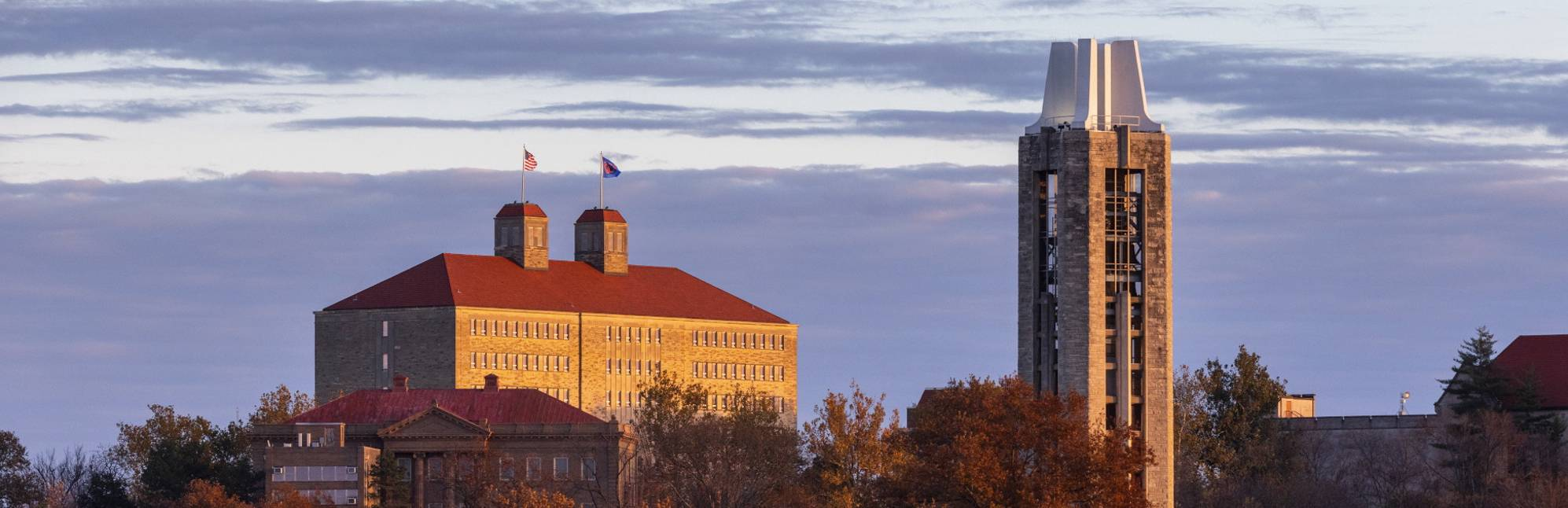
I was an undergrad at the University of Kansas and I was mastering the art of compartmentalizing. I read Dr. King’s speeches and studied the history of housing segregation. I was learning so much, and yet, I kept all that important information in books, in classrooms, in papers, and in the safe, secure corners of my head and heart.
Two weeks before Donald Trump bombed Iran under false pretenses to protect an apartheid state’s right to commit genocide on Palestinians and then (true to form) tweeted “now is the time for peace,” the Waymos were burning up in Los Angeles.
Watching that scene from 2,000 miles away brought me back to a Saturday in early Spring, when my friend Sheldon and I drove to downtown LA to march with staff and faculty from UCLA demanding the protection of their international students who have publicly demanded that the university divest from occupation and genocide.
We parked and walked a dozen blocks to the corner of Broadway and Temple. On our way, we were stunned to see our first Waymo, the uber that runs on a Silicon Valley algorithm, now operating in a handful of cities. We struggled to come up with adjectives as we watched this moving car, in the middle of downtown, with no one at the wheel.
After we drove back to Orange County and had dinner, I was cleaning the kitchen when I heard a horrible crash in front of my mom’s house. Sheldon and I ran outside to find a car up in the bushes of the front yard right across the street.
There was a human driving this car. While we were trying to figure out how he got up there in the bushes, he was revving the engine to the limit, trying to get out. We could see that he hit a parked car next door and then demolished the electric box.
By Tommy Airey, re-posted from his Substack newsletter
Last week, I wrote about how the social construction project of empire hammers away at our humanity with all sorts of destructive norms. This week, I woke up on Monday morning to the jack-hammering of a construction project two blocks north of us on Rosa Parks Blvd, right across the street from Greater Faith Missionary Baptist Church.
It’s Spring in Detroit. These days, the jack-hammering goes into overdrive.
My Celtic ancestors called this season Beltane, a whirling dervish of planting, budding, birds and bees, a time to celebrate abundance, fertility and fresh ideas. Beltane, which begins on May 1, literally means “bright fire.” My deep ancestors on the Emerald Isle cleansed their souls and sparked the land back to life by jumping over bonfires. They did this every year before they drove their cattle out to pasture.
Speaking of pasture, Psalm 23 comes up in the Western Christian lectionary this weekend. This ancient Hebrew text, famously read at funerals, describes the divine as a shepherd who restores our souls by leading us out of imperial construction projects, into a wilderness of green pastures and still waters. This feral Force, overflowing with goodness and steadfast love, is greater than empire itself.
St. Mark’s Episcopal Church in Washington D.C. (PC: Lindsey Jones-Renaud)
By Tommy Airey, re-posted from his weekly newsletter (12.22.2004)
On the first Christmas day, right after Mary the unwed pregnant teen gave birth to her first child, the Gospel of Luke says that she wrapped him in bands of cloth and laid him in a manger.
Because there was no room in the inn.
On Good Friday, much later in Luke’s story, a rich man named Joseph took down the body of Jesus from the cross, wrapped him in a linen cloth and laid him in a tomb.
By Tommy Airey, re-posted from his weekly Substack newsletter
In the months after police murdered George Floyd in Minneapolis, I joined counter-protesters at the “White Lives Matter” rally in front of the pier in Huntington Beach, a former sundown town in Southern California. One of the white men who mattered was toting a two-story pole with three flags: the stars-and-stripes, the 18th century “Don’t Tread on Me” rattlesnake and a “Trump 2020: No More Bullshit” banner. He wore a shirt that said, “I stand for the flag and kneel for the cross.”
As I digested his message, I scrolled through all the memory verses stored away in the recesses of my post-evangelical mind. The only passage in the bible that even remotely resembles kneeling for the cross is in the second chapter of Philippians.
The verse from Paul’s letter to a little house church in the Roman colony says that in the name of Jesus, every knee shall bow and every tongue shall confess that Jesus is lord. Context matters. The passage subverts the patriotic supremacy of its day. Back then, every knee bowed to Caesar and every tongue confessed that Caesar was lord.
The first Christians pledged allegiance to Something Else.
By Tommy Airey, a re-posted and slightly abridged version of his weekly newsletter
Bernadette Atuahene is a Black woman who grew up fifty miles north of me in Southern California. She is my age and has multiple degrees from places like UCLA, Harvard and Yale. A couple years after Lindsay and I moved to Southwest Detroit, she moved to the Eastside to study the city’s housing crisis. Her research unveiled something truly apocalyptic.
In the decade spanning Barack Obama’s inauguration to George Floyd’s murder, one-third of the entire city of Detroit lost their homes to illegal tax foreclosures. The city overcharged its poorest residents, almost all of them Black. Residents were evicted. Homes were seized and auctioned off. At the same time, the city spent more than a half billion dollars to demolish many of these homes and wealthy white investors were given hundreds of millions of dollars in subsidies to redevelop the land in their own image.
The only reason that we know about this epidemic of illegal tax foreclosures in Detroit is because Bernadette Atuahene devoted three years of her life to doing the research. The only reason that we know about the poisoning of faucets in Flint is because Black women testified and tested the city’s water on a mass scale. The only reason that we know about the police murder of George Floyd is because a Black woman filmed it on her phone and posted it to her socials. The more I see this trend, the more I wonder what else is happening, hidden behind the curtain called American exceptionalism.
“The idea of sumud has become a multifaceted cultural concept among Palestinians: it means steadfastness, a derivative of “arranging” or “saving up”, even “adorning”. It implies composure braided with rootedness, a posture that might bend but will not break.” – Hala Alyan
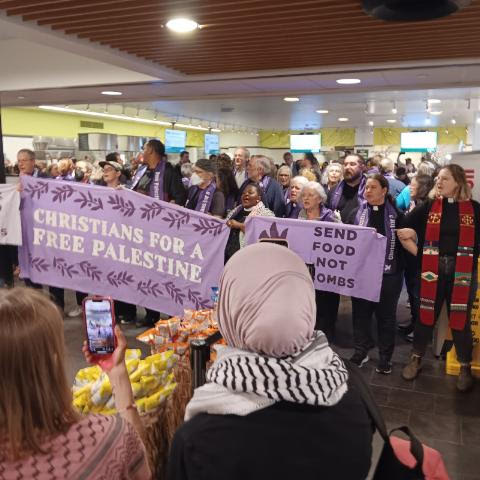
This week, on the anniversary of the execution of Dietrich Bonhoeffer, I watched my spouse get arrested. Lindsay joined dozens of other members of Christians for a Free Palestine publicly calling out the role of the American government and American churches in supporting the apartheid state of Israel’s decades-long occupation and blockade of Gaza, now spiraling into a genocide. After a short worship service of confession, communion and commission under a Magnolia tree a stone’s throw from the Capitol in DC, these parents, professors, engineers, social workers, retired seniors, seminary students and ordained ministers bee-lined for the cafeteria in the basement of the US Senate building. They planned to get “lunch” together.
The cafeteria was crowded and noisy. The Jesus people were ready to turn over tables. But they walked in casually, blended right in, played cool, waiting for their cue. Then, a few of the faithful started singing.
Palestine will be free. Palestine will be free We will not avert our eyes. Palestine will be free.
Over and over again. They rose from their seats and walked to the front of the line and locked arms behind banners that read Send Food Not Bombs and Christians for a Free Palestine and Woe to you who Slay the Hungry and Break Bread not Bodies. They stood in front of the cashiers to block customers from paying. They locked arms, connecting the dots and telling the truth together with loud, coordinated chants. It was more than a symbolic action. If American leaders won’t let Gaza eat, then they don’t deserve to eat lunch. A minor inconvenience compared to forced starvation.
***
In that moment, I was reminded of something I once heard from Lindsay, who not only has a criminal record, but is also a licensed marriage and family therapist. These two credentials are connected. The year after Minneapolis police murdered George Floyd, she told me that whenever we repress or guard or just go along to get along with something that is counterfeit, then the counterfeit will inevitably come out sideways. If we stay silent in the face of injustice, exploitation and oppression built on disinformation, myths and lies, then it will do something serious to the deepest parts of who we are. Because the soul is a web that connects everyone to everything else.
By Tommy Airey, an unabridged end-of-the-year review
On Easter Sunday this year, I made my way out to the sacred place Native people call Wahnabeezee. It’s a 962-acre island in the middle of the Detroit River. I walked over to the willow tree. Right where I snapped a photo of my dad on his final Father’s Day in 2015. He was standing under the long yellow stems that the original stewards of this land used to weave baskets. Dad was looking across the water to Canada. Where enslaved Africans were once ferried to freedom. The last stop of the underground railroad.
On that clear blue Easter morning, I sprinkled some of my dad’s ashes. On the base of the trunk where the lichen was growing. Willow sounds like wallow. The basket tree held my sorrow. Crucifixion came six months later. Samhain summoned me back to my dad’s ashes. When I pulled up, I could not find the willow. It was gone. Not even the trunk. Totally uprooted. The only traces were a few long stems she left behind.
I thought to myself. We truly are living in The Age of the Uprooted. Palestine was heavy on my heart. An oppressed people enduring occupation, apartheid, genocide. For the past seventy-five years. Totally uprooted. I was also thinking about my neighbors. Over the past fifteen years, more than one-third of the entire population of Detroit has been forced to foreclose on their homes. Totally uprooted. Almost all of them Black. Rev. Roslyn Bouier runs a local food pantry. She recently told me that many of these residents now live out of their vehicles. A significant population of women and children sleeping in parked cars.







 Radical Discipleship