A Reading List for Repentance

By Tommy Airey

I’ve been working on a book project over the past few years. It has evolved into a series of shorter reflections focused on reconstructing a biblical spirituality committed to collective liberation for those of us who have been in a process of deconstructing fundamentalist, evangelical, conservative Catholic or denominational expressions of Christian Supremacy. This reconstruction project pivots on the Power of love, the only force that can fuel us to live for Something Else. 

I believe that this Something Else is rooted in the radical act of repenting from the American Dream, the corporate-sponsored conventional wisdom that comes at the awful expense of this agonizing statistic: the US and Canada comprise 5% of the world’s population – and consume over 30% of the world’s resources. I am calling the North American context the 5/30 Window, a play on what my white Evangelical pastors referred to as “the 10/40 Window,” the African, Asian and Middle Eastern regions of “unreached” people who live between ten and forty degrees north latitude. I am flipping the script and saying that the souls of dark-skinned Buddhists, Hindus and Muslims who live on the other side of the world do not need to get saved. We do. 

Continue reading “A Reading List for Repentance”

The Reverse Card

By Tommy Airey

Last week, in Southern California, we got to spend an entire afternoon at the beach with our nephews. We were on boogie boards for most of it. The next morning, Riley and his brother Mason played a couple games of UNO with their Aunt Linds while I made them pancakes. Riley won both times. When we were driving them back to their dad’s place, Riley pulled out an UNO reverse card from his pocket.

Riley said he carries the card with him because it possesses the power to reverse any of the bad stuff that might happen in real life. He said there’s a YouTube clip that shows a guy getting pulled over by a cop. He flashes his UNO reverse card and the cop lets him go without a ticket or jail time. Riley said the blue UNO reverse cards are the most powerful – then the red, the green and the yellow. In that order. He said that all the other fourth-graders at his school last year respected the power of the UNO reverse card too.

Continue reading “The Reverse Card”

A God Who Confuses

By Tommy Airey

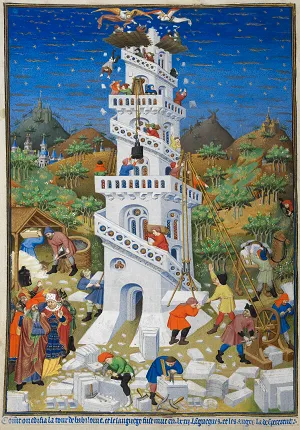
And at this sound the crowd gathered and was confused… – Acts 2:6a

Last weekend, I preached a Pentecost sermon at a church down in Kentucky. The text brought me back to my roots. When I was ten, I transferred to the Christian school where my mom got hired to teach 5th grade. Every single morning, we pledged allegiance to the American flag, to the Christian flag and to the bible. We would pray together. We would read something from the scriptures – and then my teacher, Mr. Cavallaro, who I absolutely loved, would proclaim, “God said it. I believe it. And that settles it.” His triumphalism is all it took to hook me.

I was ten – and I was being scripted into Christian Supremacy. My pastors and teachers propagated a world that was black and white, saved and damned. They taught me that we get to heaven by believing what God said, but also that some people are just better than others. Some people earned their wealth, their power, their sun-splashed perch overlooking the Pacific. Other people made bad decisions. They live in ghettos, reservations, barrios, slums, cells and socialist countries because they swerved from God’s Holy Word. Game Over.  

Continue reading “A God Who Confuses”

The Healing Potential of Hatred

By Tommy Airey

Four years ago this month, Lindsay and I found ourselves, for a short time, living in Bend, a rapidly developing whitopia in Central Oregon where the Great Basin Desert meets the Cascade Mountains. While we waited for the birth of our nephew Milo Brooks, my brother-in-law and I spent several nights bonding over the Portland Trailblazers, who boasted a backcourt of Damian Lillard and C.J. McCollum, two smaller guards who played at obscure division one colleges. Lillard, who reps the number 0 to honor Oakland – his hometown – was and is the face of the franchise. His signature celebration is what fans affectionately refer to as “Dame Time.” After a big shot, he lifts up his left hand to the crowd and taps the invisible watch on his wrist. It’s not just game time. It’s Dame time.

In the first round of the 2019 playoffs, Dame and the Blazers were pitted against the Oklahoma City Thunder and Russell Westbrook, the all-star point guard from L.A. who also wears 0. When Russ does something spectacular, he brings his hands together and rocks back and forth, like he is cradling an invisible baby. When smaller opponents (like Dame) try to guard him, Russ treats them like little babies. Lillard carries himself with a quiet confidence energized by who he is for (the team, the city, his family, his hometown). Russ stays locked in on who is out to get him (real or imagined). While Dame Time taps into self-love, Westbrook’s trademark gesture is a taunt. His staring, glaring brand of bully ball is dead-set on diminishing others. Russ was (and is) so easy to root against.

Continue reading “The Healing Potential of Hatred”

Unmasking a Long Crisis

By Tommy Airey, co-founder and curator of RadicalDiscipleship.net

Last Wednesday, this site propped The People’s CDC, a coalition of public health practitioners, scientists, healthcare workers, educators, advocates and people from all walks of life working to reduce the harmful impacts of COVID-19. The People’s CDC is a great resource for orgs and communities on the left committed to keeping all their people safe. Its weekly Covid “weather reports” are clear, concise and hyperlinked to back the stats. Last week, I received an email from a long-time reader who loves Radical Discipleship, but who had “great concerns” about Wednesday’s post. She referred to a recent study (Cochrane) that she claimed “summarizes that masks are not all that effective.” She was concerned that Wednesday’s post was building on a fear that is unwarranted because the “virus has gone to a much less virulent illness.”

I want to respond publicly to this email because I know that these sentiments are widespread, even on the left. Before I do, allow me to offer this full disclosure: Lindsay and I mostly work from home and we do not have children of our own. We have navigated the pandemic with unique privileges. My heart goes out to my former colleagues in the classroom, friends who are working nine to five jobs, folks I went to seminary with who are orchestrating Sunday services and parents of young children trying to make decisions about masks and gatherings in this climate of Covid denial and minimalism.

Trying to keep up with Covid-19 and make it make sense is an increasingly challenging and risky task. The problem is that ordinary people are swimming against a strong current of “open the economy” campaigns funded by white elites taking advantage of statistics that show people of color are more vulnerable to Covid-19. These stats and targeted disinformation have led white Americans to be consistently less fearful of the disease and less supportive of safety precautions for the past twenty months.

Continue reading “Unmasking a Long Crisis”

Meek Ain’t Weak

By Tommy Airey

I am someone who spends a lot more time casting a vision for what’s coming next than composting what’s already happened. It is both a gift – and a growth edge. I am learning that the more I slow down and process the particulars of my suburban past, the more I can subvert the sources that scripted my supremacy. One of those old sources was Gene, the father of one of my best friends. He was a passionate and playful pillar of the community. He was also a purveyor of patriarchy – and he had a profound impact on my early years.

Gene dismissed the perspectives of women with a warm smile and a witty joke. He made it clear that he believed that women were the weaker sex. Why? Because the bible says so. One time, when we were teenagers, Gene read us the passage from I Peter that says that wives must accept the authority of their husbands and that real women – biblical women – should stop obsessing over outward appearances, and instead embrace the lasting beauty of a meek and quiet spirit.

When I started studying the original languages of the bible in seminary, I learned that the word meek, in Greek, is praus, pronounced prah-ooce’. It is a divine strength soaked in gentleness, confidence, humility and open-heartedness. The irony is that Jesus used it to describe himself, not women. Jesus was a Palestinian Jewish rabbi who empowered people who were oppressed by professional religion and Roman culture. Jesus preached that God reigns not from the perches of the powerful, but from within the hearts of weary and burdened people.

The message of Jesus, according to Howard Thurman, focused on the urgency of a radical change in the inner attitude of his people. They had access to divine power and agency. It was rooted in how they responded whenever provoked by their oppressors. Thurman wrote that humility – not fear, hypocrisy or hatred – is the best defense against everything intended to humiliate. “Take my yoke upon you, and learn from me,” Jesus said, “for I am praus and humble in heart, and you will find rest for your souls.”

Continue reading “Meek Ain’t Weak”

Something Else

By Tommy Airey

Thirty years ago this month, I packed up my car and left Loyola Marymount University. I was a freshman on a full-ride basketball scholarship. I drove home. Just fifty-five minutes south on the 405 freeway. Back to Orange County. I left LMU because I was miserable – and I was nineteen. I struggled to emotionally connect with our head coach who tried hard to be funny (but wasn’t) and whose favorite word was “horseshit” – always used as a descriptor for either our team or one of our players. Sometimes it was aimed at me. I did not have a clue how to metabolize what was going on inside of me. It’s just not what young men who change in locker rooms are equipped to do.

Our team – half-Black and half-white in the immediate aftermath of the L.A. uprising – bonded during preseason fitness conditioning. Coach made it clear that, before official practice started in October, everyone had to run a mile in under five minutes. Together. If anyone didn’t make it, everyone would have to wake up at 6am every morning and run it again. Together. Until everyone could do it. At the same time. We had guys who were 6’9” and weighed 240 lbs. We had other guys who never failed to miss the fraternity keg party. We all ran a sub-five-minute-mile on our first attempt. This is one of the reasons I believe in miracles.   

Continue reading “Something Else”

The Recovery Room

By Tommy Airey

After a thirty-month delay, I finally went in for hernia surgery last week. Lindsay hauled me over to the hospital in Grosse Pointe, Michigan – Detroit’s eastern adjacent suburb. As soon as we crossed Alter Road, everything changed. The mourning turned into mansions. Dr. King gave a speech in the high school gym in Grosse Pointe three weeks before he was assassinated. He talked about the two Americas. Those who grow up in the sunlight of opportunity – and those barely surviving in the fatigue of despair. During the speech, he was shouted down – several times – by white people who did not appreciate some outsider telling them that racism was still a real thing.

The day before my surgery, I drove to the lab in Grosse Pointe to get my pre-surgery blood screening. A Black woman was working the front desk. While I was waiting, an unmasked white man in his seventies walked in asking where to sign in. She pointed to the table and told him he needed to put on a face covering. He looked at me and shook his head, muttering that he had one in his bag. I stared him down. He didn’t sign in. When he found his seat across the room, he looked at me again. I just stared back. We both grew up in the sunlight of opportunity, but I wanted him to know that I would not be signing off on his supremacy story.

Across Jefferson Boulevard from the hospital, the yards of the mansions are lined with election signs promoting the GOP candidate for Secretary of State who got her masters degree in Christian Apologetics from BIOLA and is adamant the 2020 election was stolen. Many signs say, “Vote No on Prop 3,” the reproductive justice measure that got more signatures than any initiative in Michigan history. When we arrived at the hospital on the morning of my surgery, everything was quick and convenient. Parking spaces were abundant and free-of-charge. It was a close walk to the lobby. The surgery wing was a well-oiled machine. I did not wait long to get in.

Continue reading “The Recovery Room”

Upstream

By Tommy Airey

“There is no bad luck in the world but whitefolks.” – Toni Morrison, Beloved

Last weekend, I hiked with friends on traditional land of Watlala people, about fifty miles southeast of Portland, Oregon. At the trailhead, there were a half dozen Chinook Salmon swimming in the cold shallow water below. They were traveling upstream, from the Pacific to the Columbia to the Sandy to the Zig Zag to Camp Creek. The females, returning to the place of their birth, were preparing to lay their eggs – and then die four days later. Despite all the dams that have been built, there are still a few of these Beings, so sacred to Native people here, who have the strength to swim against the current, teaching us how to give up our lives for the next generation.  

On my two-hour drive back to the Deschutes River, I was pondering the contrast between Chinook Salmon who swim upstream and those who built the dams, white people conditioned by conformity, always moving with the current, not against it. I was thinking about the white people I know who now refer to “wokeness” as a bad word, as a kind of far-left cult that is extreme and dangerous, existing only to shame white people. The conservative talking points are penetrating the language of white moderates and liberals. Right-wing strategists know what they are doing! Wokeness is the perfect pinata for people unwilling to swim upstream and shed their own whiteness.

Continue reading “Upstream”

Back It Up

By Tommy Airey

The year George Floyd and I were born, Paul Simon came out with a song called “American Tune.” Simon sung it to the melody of a Medieval Christian hymn. It hummed on the heavy, confusing mood of the country, caught up in the Watergate scandal and the bloody Vietnam conflict. It concludes with these verses.

We come on the ship they call The Mayflower.
We come on the ship that sailed the moon.
We come in the age’s most uncertain hours
And sing an American tune.

Last week, fifty years later, “American Tune” made an appearance at the Newport Folk Festival. But this time, it was sung by Rhiannon Giddens, a banjo-playing woman in her forties boasting Black, Native and white ancestry. Simon backed her up on acoustic and she tweaked the lyrics at the end.

We didn’t come here on the Mayflower.
We came on a ship on a blood red moon.
We come in the age’s most uncertain hour
And sing an American tune.

Continue reading “Back It Up”