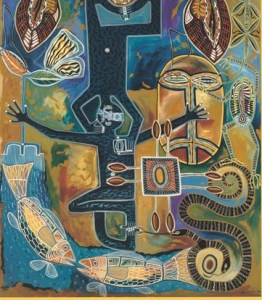
Circle of Life, Zane Saunders, 1993 Creative Commons
Fifth Sunday after Epiphany C
Isaiah 6:6:1-13
1 Corinthians 15:1-11
Luke 5:1-11
By Wes Howard Brook and Sue Furguson Johnson
This week’s readings reveal life springing forth from sky, sea and soil: seraphim speak to Isaiah, fish are netted by Simon Peter, and images of fleshy seeds of resurrection flow from Paul’s mouth (in the section of 1 Cor 15 that follows the lectionary passage). And if we listen a bit more closely, we can hear the usual lines that distinguish one creature from another blur and cross: Jesus promises that Simon will fish for people, while, for Paul, humans bloom and fruit like flowering trees. What might these criss-crossing images teach us about the intersectionality among living beings, in this realm and in the realm beyond the veil? Continue reading “Wild Lectionary: Seraphim, seed people and fish folk, oh my!: celebrating God’s kaleidoscopic web of life”→
Photo Credit: Hill Country of Judea by Ferrell Jenkins
Advent 2C
Luke 3.1-6
By Wes Howard-Brook and Sue Ferguson Johnson
Just as the CNN and MSNBC cameras turn their lenses to the president and his people, God’s Word comes to an obscure group of folk whose hope is elsewhere.
We who read the pages of Radical Discipleship hardly need to be told that our hope is not in Trump or the Democratic Party or any of the professional purveyors of the imperial status quo. So it is not surprising to us to hear that in Luke’s time, the Word of God was heard not in Rome or Judea or elsewhere in the corridors of worldly power but in the wilderness.
This week’s Gospel from Mark is a familiar one, in which a rich man comes to Jesus seeking the path to inheriting “eternal life.” As Ched Myers noted three decades ago now (!), the key to the story is the “ringer” command Jesus adds to the familiar ones from Exodus 20 and Deuteronomy 6: “You shall not defraud [Gk, apostereō].” Continue reading “Wild Lectionary: Money Doesn’t Grow on Trees!”→
Readers here of the “Wild Lectionary” series hardly need to be convinced of the Bible’s deep concern for all of God’s good creation. Our shared journey through the Scriptures from the perspective of Earth and her creatures has brought forth beautiful, poignant and powerful reflections on our own broken relationship with creation and the path to mutual healing.
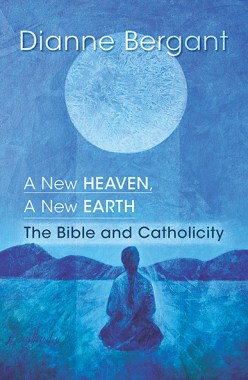
But as we also know, humanity as a whole continues to run roughshod over the planet as if the constant alarm bells of record-breaking heat, storms and drought were not audible over the din of commerce and headphoned distractions. People who identity as “Christians” often lead the charge of climate denial and rejection of God’s love for creation. For such people, Dianne Bergant’s solid, steady, gentle overview of the Bible’s message of ecojustice may be just what is needed to shift perspective enough to join the movement to transform and to heal our relationship with creation. Continue reading “Review of Dianne Bergant, A New Heaven, a New Earth: The Bible and Catholicity”→
Then Joseph said to the people, “Now that I have this day bought you and your land for Pharaoh, here is seed for you; sow the land. And at the harvests you shall give one-fifth to Pharaoh, and four-fifths shall be your own, as seed for the field and as food for yourselves and your households, and as food for your little ones.” They said, “You have saved our lives; may it please my lord, we will be slaves to Pharaoh.” (Gen 47.23-25) Continue reading “Wild Lectionary: Imperial Logic and Creation”→
“Six days later, Jesus took with him Peter and James and John, and led them up a high mountain apart, by themselves.” (Mk 9.2)
It has been a long, wet, grey, dark winter so far here in the Issaquah Creek watershed. While we have been spared the intense cold and massive snowfalls visited upon our sisters and brothers to the east, the relentless “parade of storms” from the Pacific Ocean (as local weatherfolk like to call it) can wear away at even the most committed pluviophile. Continue reading “Wild Lectionary: Transfiguration”→
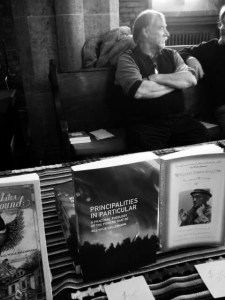
Rev. Bill Wylie-Kellermann and his recent releases
Because Christmas has become so central to the American economy and American consumption is so central to global capitalism, this festival of ‘Holy Days’ has become a central expression and embodiment of American imperial domination, an imperial religion. Richard Horsley, Religion and Empire (2003)
Truly, this Season signals a major tension for North American radical disciples. We resist and reclaim. Whether it is our love language our not, we give. But some forms of giving are far more redemptive than others.
It is in this Spirit that we offer gift ideas from more out-of-the-way, up-and-coming, long-suffering and open-hearted thinkers and artists. Links to their work are provided here and will eventually be added to our now-pemanent “STORE” tab up top. We hope this list is an Advent-instigator: please add your recommendations to the comments below or email us so we can add them to the store!!!
A beautiful 2016 publication from Philly-based pastor-parent-activist about using the difficult and challenging parts of life as a way to deepen your spiritual path and become more authentic.
Truly, it is a time of exile for those of us on the left. Let’s set the clock back to the early Bush years with this re-examination of the Exodus from a Vancouver-based pastor-activist.
From the foot of Tiger Mountain in Washington State comes a vital perspective on early church history (aka, “the roots of why Christians want to make America great again.”).
And lest we think gift-giving is only for adults, the executive director of the Center for Prophetic Imagination in Minneapolis tells this St. Francis-inspired tale for our young ones.
This year, Charlottesville exposed us all to some of the most vicious forms of American white supremacy. But far less known, C’Ville is home to some radical experimentation, including sweet sounds from a young singer-songwriter. Perfect for people defined by death-and-resurrection.
And this! From a Minneapolis-based artist and PhD candidate releasing her first album, a powerfully rich blend bursting with beauty, grief, creativity and prophetic wisdom.
Probably the most unique musical contribution of the movement is from Philly-based Holy Fool Arts, a voice of and for the wilderness that combines poetry, theatrical masks, ancient rhythms, traditional and modern dance forms, with a heavy side of the blues.
Lastly, a recommendation from author-activist Wes Howard-Brook fair-trade, organic chocolate from Mama Ganache. From WHB:
They are THE BEST! As we all know, corporate chocolate production is both a human and environmental horror show. The folks at MG use their profits to support farmers in West Africa in many ways, as explained on their website. I’ve been ordering from them for years!
Fort McMurray Alberta Tar Sands, Kris Krüg CC BY-NC-ND 2.0
Proper 23(28)
19th Sunday after Pentecost
Psalm 106
By Wes Howard-Brook and Sue Ferguson Johnson
When you tell the story of your, your family’s, or your community’s journey, what role does the land and its nonhuman creatures play?
Central to God’s promise to ancient Israel was a land to call their own, both as a people and as local families. In this week’s reading, Psalm 106 presents one of several biblical summaries of Israel’s relationship with YHWH, the land and its peoples. It is framed by “praise YHWH,” although the core of the psalm laments the people’s constant disobedience and forgetfulness. Throughout the psalm, the land is close at hand, beginning with deliverance from Egypt via the Red Sea, and continuing into the wilderness struggles. Continue reading “Wild Lectionary: We Despised the Pleasant Land”→
A decade or so ago, we spent two years of our monthly Saturday teaching/retreat series with the book of Genesis. Folks eagerly engaged Genesis’ anti-city perspective and its all-too-human characters. But when we got to the Joseph story, several rebelled angrily against our starting characterization of Joseph, son of Jacob, as a self-absorbed, manipulative power seeker, who “succeeded” by teaching Pharaoh how to manage famine for personal profit. What is it about Joseph that leads so many to want to see him as a heroic expression of faith? Continue reading “Wild Lectionary: Joseph—God’s Agent or Agent of Empire?”→
For readers of Wild Lectionary, there is hardly a Scripture passage more fitting than Genesis’ account of the Flood. The powerful, terrifying narrative is often reduced to a kids’ story, replete as it is with “cute” animals in the Ark. But, of course, beneath the surface is a story of divine near-omnicide, revealing a deep rift between the Creator’s vision and humanity’s response to God’s gift of the earth. In combination with the conclusion of the Sermon on the Mount (Matt 7.21-28), this week’s texts offer a sobering reminder of the cost of human violence to the earth and its creatures, including sapiens. Continue reading “Wild Lectionary: Beware the Cataclysm!”→



 By
By  Proper 5(10)B

 Eleventh Sunday after Pentecost
 Radical Discipleship