
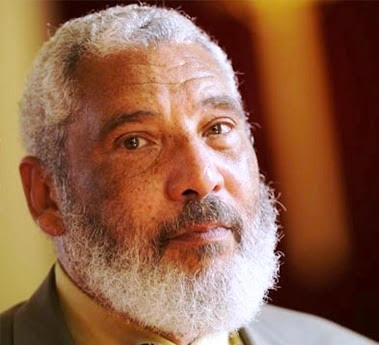
By Rev. Graylan Scott Hagler
Newt Gingrich broke onto the national political scene with his “Contract with America.” It was the offering of an agreement, that if the public allowed the Gingrich coalition to lead, that coalition would then deliver on a number of points in the contract. Whether you agreed with the framing of this contract or not it conjured the image of the covenant between God and the people in the wilderness established through Moses on Mt. Sinai. There is an “If” and “then” equation to a covenant. One act is related to the other. One thing is related to the next. One thing is required in order to get to the other thing. A covenant is where at least two parties enter into an agreement.
So-called Christian Nationalism addresses the concept of a covenant, or a contract. In this view, America is the promise of God, and blessings will unfold, fulfillment will be realized, and the country will be the “City on the Hill” as long as its people uphold their part of the bargain. If the nation fails in upholding its agreement the blessings will be squandered, the country will be in decay, and the hopes found will become lost. Hence, we hear the assertions that America was founded on Christian values and principles, and its laws should reflect that. Christian norms should be upheld lest the country fall into decadence and decay. All of the assumptions, of course, are built on concepts of a conquering god, patriarchy and white supremacy. The cultural wars are attempts to uphold these sense of values, and keep the country from falling into perceived decay and obsolesce. Therefore, other religions, other peoples, like immigrants of darker hue, defy the dominant idea of “American”. Blended sexual and family structures, bended genders, and expanding expressions of sexuality suggest a crisis and the need to assert and re-assert the perceived so-called Christian American agreement into the covenant or the blessings and the nation will eventually be lost. This is where the tension emerges.
This concept of agreements exist in law, Judaism, and Christianity. Historically in the US neighborhood covenants existed to maintain exclusive white communities until they were eventually ruled unconstitutional. But this concept of covenant still permeates the culture, and various religious expressions. Covenant is not too difficult to understand or define. It is an agreement, a contract, and the contract requires that each party has a part to play in the fulfillment of the agreement. A lease is a covenant, a mortgage is an agreement, and the fulfillment of the agreement or contract successfully delivers the goods from one party to another. In religion the idea of an agreement is offered through teachings and a collective understanding. The Zionist movement, for example, believes that there is an exclusive relationship with God and part of the blessings is the offering and promise of land as part of the covenant. The practice of Torah and keeping of the commandments are required in order for the agreement to be fulfilled. This agreement exists exclusively between Jews and God, according to a religiously Zionist understanding of the covenant. It is their understanding that the agreement or covenant offered by God to the Jewish people is founded upon the idea that an exclusive agreement exists and land is one of the rewards.
The idea of covenant is also carried forth in Christianity where the gospel of John promises the reward of a relationship and blessing if the commandments are kept, and according to John, the “sheep” of God (the people) are fed spiritually. Though I am speaking from a Christian tradition there is the universal idea of what we put out is what we will get back. The Wiccan traditions and other non-Christian traditions will state in a variant of ways that whatever energy is put forth in the world will be returned. Evil produces evil, goodness induces goodness, and kindness promises kindness. Other traditions speak about karma, or again, from a Christian perspective, “Do to others as you would have them do unto you.” Each of these in different forms amount to an equation of covenant. Our expressions of reciprocity are transactional. We give in order to get. We do for God in order to be blessed by God. We carry out our end of the covenant so that we will be blessed and not cursed.
This belief in a divine covenant creates the frontlines for a fierce battle between good and evil and blessings or curses. One group sees blessings as a transactional engagement and rallies to maintain or conform the world to the tenets of the perceived covenant. As one old hymn of the church declared, “Give me that old time religion…it was good for my old mother…” There is a belief, that is constant, that the past was somehow better, and represented (for some) a moment of idyllic blessings that begs to be rekindled and gotten back to. This is why people cheer when the governor of Florida, DeSantis, declares that “Florida is where woke comes to die,” or the way the mantra of “Make America Great” resonates. Or, where the politicians declare that this is a Christian country, founded upon Christian principles and values, and that the laws need to reflect that history and ethos. These declarations from these people are trying to engage and re-engage the articles of an agreement with God that for them feels to be in jeopardy, and along with that, the blessings of God are jeopardized.
Implicit in this are the cultural biases of the past where America is white, those in power should be male, and a time when men were men, and women were women. It is based upon divine exceptionalism, where the nation is singled out, elevated, and made to shine because of its obeisance to God. This framework of a national covenant with God is based upon a concept of roughed individualism, that grows out of a collective consciousness of what needs to be maintained in order for blessings to flow. It is a collective consciousness that understands conquest and dominance as an attribute of God, and must also be emulated by those who follow that God. But this is not new. It is woven into the existential fabric of human beings who compete for resources, mark territory, and challenge one another with ideas of supremacy while doing so. The art of justification dresses human hubris with creeds and statements of heavenly mandates and divine blessings. We claim that we have an agreement, a covenant with the divine that must be maintained. And, the idea of divine covenant when armed with power through weaponry and apparatus, enforced with violence or the threat of, is a volatile and deadly mix.
This deadly mix of divine covenant, politics, laws, violence is what has been so fearful and has alarmed so many circles in America as intellectuals and pundits attempt to understand and unpack the concept of white so-called Christian Nationalism, that was exposed with and in the aftermath of the election of Barack Obama. For the adherents of divine covenant and blessings, when Obama was elected posed a seismic shift in the cosmos. The order was disturbed. The covenant was broken. Evidence of this were the number of editorial cartoons that appeared depicting Jesus leaving the White House when churchgoing Obama was elected, and returning to the White House when non-churchgoing Trump was elected. The covenant was broken with Obama, a Black man, and reestablished under Trump, a white man. It was as if blessings were lost or threatened to be under Obama, and restored under Trump. It was the act of Making America Great AGAIN, and that meant that the covenant had been broken and needed to be reestablished.
What has been exposed is not the emergence of white so-called Christian Nationalism because that has always been built into the existential framework of America and of the white world. But it was the testing of that covenant, the perceived agreement with god that created a crisis of good versus evil and blessings versus curses. As many people thought the election of Obama was the evolution of politics and represented inclusion, yet for others, and a great many, it represented the breaking of a tacit agreement with god, and a country headed for decay, decadence and despair. The country had to be righted, and emerging was an army of religious and secular white so-called Christian Nationalist to do so. The battle is not over, but now that the tenets of this national covenant are exposed, what will be do about it?
Rev. Graylan Scott Hagler is ordained in the Christian Church (Disciples of Christ) and the United Church of Christ. Rev. Hagler is the Pastor Emeritus of Plymouth Congregational United Church of Christ, Washington, DC having served the church for 30 years. He is currently a Senior Advisor to Fellowship of Reconciliation, USA (the oldest interfaith and peace and justice organization in the country. Rev. Hagler was instrumental in ridding Washington, DC of Payday Lenders, was a co-founder of the Neighborhood Assistance Corporation of America (NACA), and is Director and Chief Visionary of Faith Strategies, LLC, a collective of clergy manifesting progressive perspectives on human and civil rights in the public arena.
 Radical Discipleship
Stunning. And so true.