
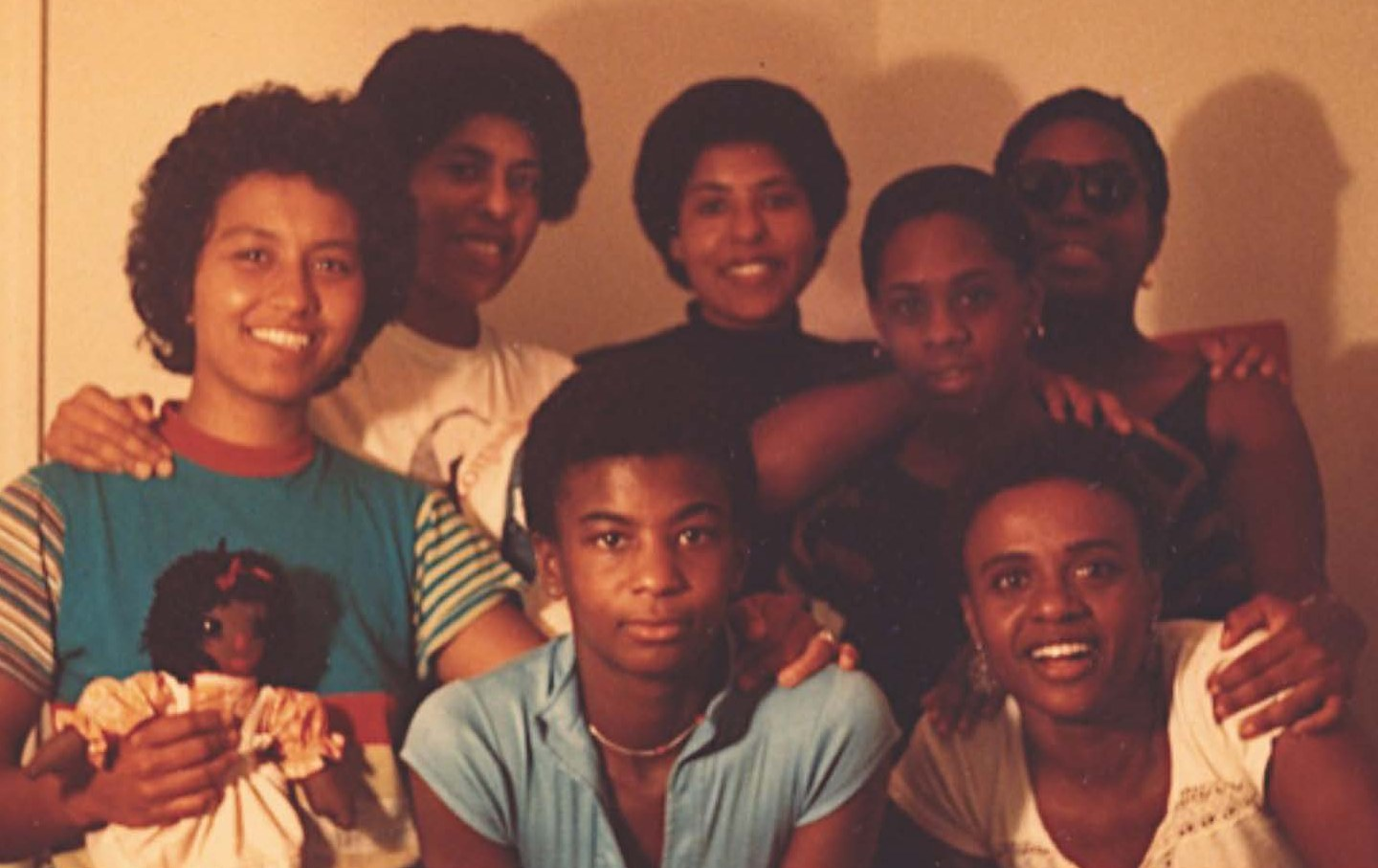
We’ll tip-off Black History Month with this excerpt from the Combahee River Collective Statement (1977). The Combahee River Collective was a group of Black feminists who met consistently for three years to define and clarify their politics while they worked in coalition with other progressive organizations and movements
We realize that the liberation of all oppressed peoples necessitates the destruction of the political-economic systems of capitalism and imperialism as well as patriarchy. We are socialists because we believe that work must be organized for the collective benefit of those who do the work and create the products, and not for the profit of the bosses. Material resources must be equally distributed among those who create these resources. We are not convinced, however, that a socialist revolution that is not also a feminist and anti-racist revolution will guarantee our liberation. We have arrived at the necessity for developing an understanding of class relationships that takes into account the specific class position of Black women who are generally marginal in the labor force, while at this particular time some of us are temporarily viewed as doubly desirable tokens at white-collar and professional levels. We need to articulate the real class situation of persons who are not merely raceless, sexless workers, but for whom racial and sexual oppression are significant determinants in their working/economic lives. Although we are in essential agreement with Marx’s theory as it applied to the very specific economic relationships he analyzed, we know that his analysis must be extended further in order for us to understand our specific economic situation as Black women.
A political contribution which we feel we have already made is the expansion of the feminist principle that the personal is political. In our consciousness-raising sessions, for example, we have in many ways gone beyond white women’s revelations because we are dealing with the implications of race and class as well as sex. Even our Black women’s style of talking/testifying in Black language about what we have experienced has a resonance that is both cultural and political. We have spent a great deal of energy delving into the cultural and experiential nature of our oppression out of necessity because none of these matters has ever been looked at before. No one before has ever examined the multilayered texture of Black women’s lives. An example of this kind of revelation/conceptualization occurred at a meeting as we discussed the ways in which our early intellectual interests had been attacked by our peers, particularly Black males. We discovered that all of us, because we were “smart” had also been considered “ugly,” i.e., “smart-ugly.” “Smart-ugly” crystallized the way in which most of us had been forced to develop our intellects at great cost to our “social” lives. The sanctions In the Black and white communities against Black women thinkers is comparatively much higher than for white women, particularly ones from the educated middle and upper classes.

