
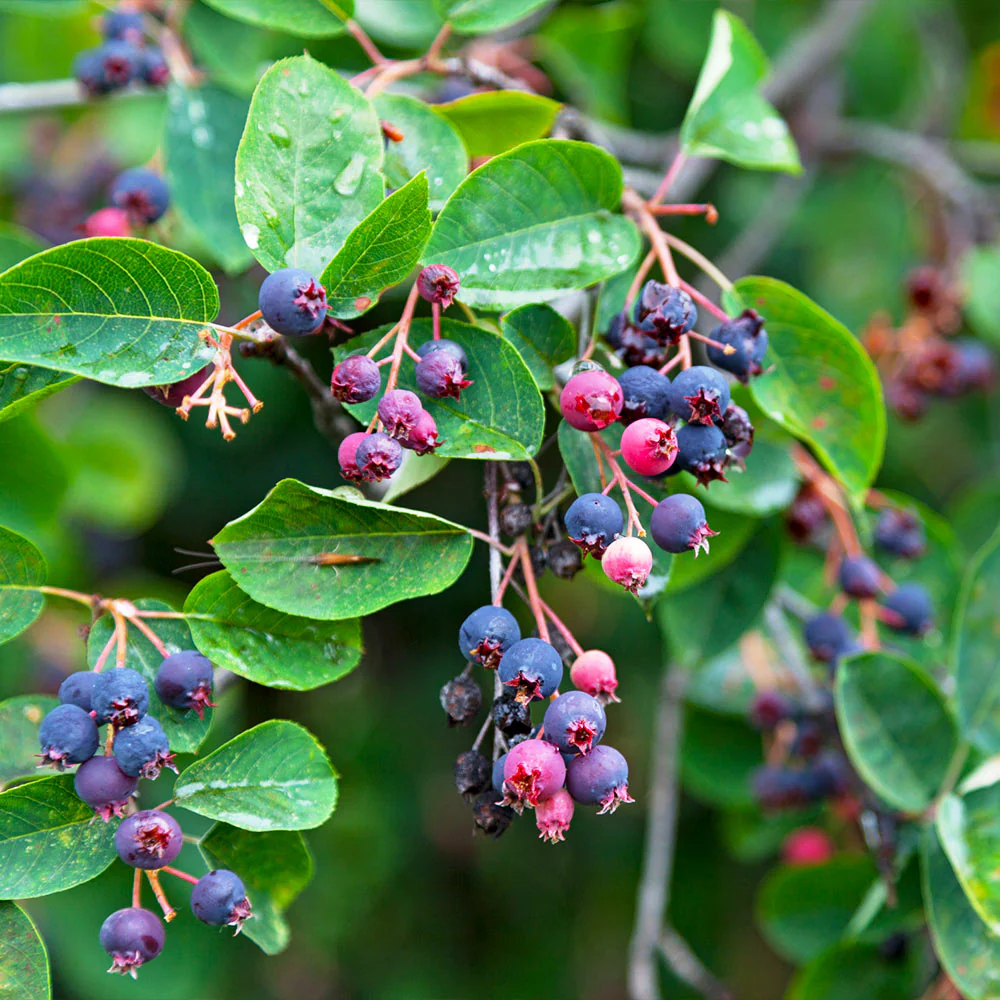
An excerpt from Robin Wall Kimmerer’s essay “The Serviceberry: An Economy of Abundance” (2022).
As the berries plunk into my bucket, I’m thinking about what I’ll do with them all. I’ll drop some off for friends and neighbors, and I’ll certainly fill the freezer for Juneberry muffins in February. This “problem” of managing decisions about abundance reminds me of a report that linguist Daniel Everett wrote as he was learning from a hunter-gatherer community in the Brazilian rainforest. A hunter had brought home a sizable kill, far too much to be eaten by his family. The researcher asked how he would store the excess. Smoking and drying technologies were well known; storing was possible. The hunter was puzzled by the question—store the meat? Why would he do that? Instead, he sent out an invitation to a feast, and soon the neighboring families were gathered around his fire, until every last morsel was consumed. This seemed like maladaptive behavior to the anthropologist, who asked again: given the uncertainty of meat in the forest, why didn’t he store the meat for himself, which is what the economic system of his home culture would predict.
“Store my meat? I store my meat in the belly of my brother,” replied the hunter.


beautiful. challenging.