Circles of Support

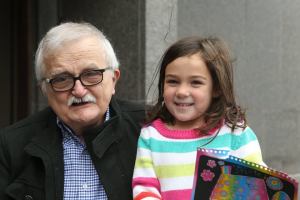
Sylvie&RichardBy Kate Foran. The following is the fourth post in a series by Kate Foran  exploring an alternative kindergarten education for her daughter Sylvie.

Part of my inspiration for pursuing an alternative education for my five-year-old daughter Sylvie has been the work of Communitas, a Connecticut-based organization focused on building inclusive community, particularly for people with disabilities.   Since the 1980s Communitas has pioneered the model of “circles of support” which focus on the dreams and capacities of people with disabilities to enhance their lives and their communities. This model of organizing came out of a time when people with disabilities were often shut away in institutions, and were seen as a collection of needs and problems rather than individuals with gifts and desires for their own lives. The idea was deceptively simple: the focus person gathers together people who will help identify and enact a vision for a full and satisfying life. Through this model, Communitas has helped people start housing co-ops, find employment, publish books, and make art. With circles of support people have been able to do everything from coordinate caregivers to meet their basic needs so that they might live more independently, to travel the country on speaking tours. Continue reading “Circles of Support” →
Suburban Radical Discipleship?

JPerkFrom Dr. James Perkinson, Professor of Ethics and ​Systematic Theology at Ecumenical Theological Seminary, Detroit, MI:

I am very close to arguing — as a kind of hermeneutic strategy of trying to occasion conversion by way of “shock” — that I don’t think it is possible to live in the suburbs (or their commuter-friendly equivalent of gentrified and gated “enclosures” inside the city itself) and be Christian. At least, not to live “peacefully” in the suburbs and try to make sense of being a disciple only on its own terms. If one lives there and regularly raises issue with who is being excluded from there, that is a different story. If one advocates for low-income housing, or homeless shelters, or HIV-treatment centers, and tries to make apparent the way a “suburb” constitutes a kind of simultaneous realization of economic appropriation (of resources from elsewhere) and social exclusion (of people whose class position and racial affiliation make them “suspect”), then that is a serious form of witness. But simply to live in a suburb “neutrally” is merely to participate in — and perpetuate — a quintessential American fiction of innocence. The suburb is not, and has not ever been, a neutral entity. Neither is it innocent.

The Root of Who We Are

Wen StephensenFrom Wen Stephenson’s What We’re Fighting For Now Is Each Other (2015):
What I have found, in the stories of those profiled here, and many others, is that the climate struggle, like so many struggles of the past, is essentially a spiritual struggle—it forces us to confront the deepest, most difficult questions about ourselves. The climate catastrophe is so fundamental that it strikes to the root of who we are: it’s a radical situ- ation, and it requires a radical response. But not radical, necessarily, in the conventional sense of ideology. Rather, it confronts us with a kind of radical necessity—a moral necessity. It requires us to wake up—to face the facts, to find out who we really are—and to act. In some cases, to lay everything on the line: our relationships, our reputations, our careers, our bodies, maybe even our lives.

The Power of Prayer: Christian Witnesses at Guantanamo

23226554212_b10f208352_o.jpgBy Frida Berrigan. Reprinted from Sojourners Magazine.

“Lamb of God, you take away the sins of the world,have mercy on us
Lamb of God, you take away the sins of the world, have mercy on us
Lamb of God, you take away the sins of the world, grant us peace.”

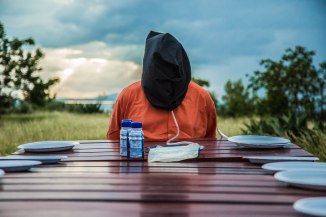
Mohammed Ahmad Said al Edah is a 52- or 53-year-old citizen of Yemen. As of Nov. 16, 2015, he has been held at Guantánamo for 13 years and 10 months. As of January 2010, the Guantánamo Review Task Force had recommended him for transfer to Yemen provided that certain security conditions were met. Continue reading “The Power of Prayer: Christian Witnesses at Guantanamo” →

Incarnating the Reign of God

DoveBy Wes Howard-Brook and Sue Ferguson Johnson, Commentary on Readings for Jan 10, Baptism of the Lord

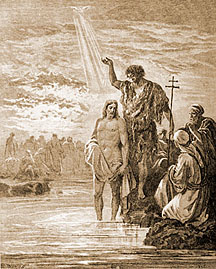
[John] proclaimed, “The one who is more powerful than I is coming after me; I am not worthy to stoop down and untie the thong of his sandals. I have baptized you with water; but he will baptize you with the Holy Spirit.” In those days Jesus came from Nazareth of Galilee and was baptized by John in the Jordan. : And just as he was coming up out of the water, he saw the heavens torn apart and the Spirit descending like a dove on him. And a voice came from heaven, “You are my Son, the Beloved; with you I am well pleased.” (Mark 1.7-11)
Continue reading “Incarnating the Reign of God” →

Annunciation/ Magnificat/ Epiphany

Sunflowers.jpgMeg Arlyn was raised Evangelical, educated Quaker, and spends her Sundays with the Mennonites. She lives in Oakland.

Annunciation

I am crossing San Pablo
Avenue at twilight and suddenly
the sky is riven with angels
one of whom
falls at my feet.

Look out!
says the man
on the bike.
You’re so beautiful,
that angel just fell from the sky Continue reading “Annunciation/ Magnificat/ Epiphany” →

The Ultimate Rite of Reversal

Jay Beck

From Jay Beck of the Carnival de Resistance:

Historically, Carnival had its origins in the traditional topsy-turvydom of the medieval Christmas season, which in turn was grounded in the doctrine of the Incarnation and expressed in Mary’s words in the Magnificat: “He has put down the mighty from their seat and raised up the humble and meek. He has fed the poor with good things and sent the rich empty away” (Luke 1:52-53). Mary rejoices in a God who overturns privilege and favors the poor and the hungry. The church, whether Catholic, Presbyterian, or Baptist, has too often been supported by and sided with the the rich and the well-fed. If we aren’t rich ourselves, we long to be. There have been wonderful exceptions: the early desert fathers, St. Francis of Assissi, Gustavo Gutierrez and Dorothy Day to name just four. There are many others.
Continue reading “The Ultimate Rite of Reversal” →