Wild Lectionary: And Then the Stones Cried Out

2017-04-29 21.19.52.jpgBy Melanie Delva & Coyote Terry Aleck, re-posted from May 2017

The first three readings for this Sunday are a seemingly bizarre mix of passages dealing with stones.  First, the stoning of Stephen as he testifies to the glory of Christ. Then the Psalmist describing God as his “strong rock, a castle to keep me safe.” Finally Christ as the “living stone,” encouraging followers of Christ to, “like living stones, let [ourselves] be built into a spiritual house.” Stones that cause pain and death; stones that provide safety; stones that support new life. Continue reading “Wild Lectionary: And Then the Stones Cried Out”

A Faux National Crisis

By Bettina Love, re-posted from Education Week

“The educational foundations of our society are presently being eroded by a rising tide of mediocrity that threatens our very future as a Nation and a people.” This sentence, rooted in misleading and skewed data, changed education forever. Forty years ago, starting in April 1983, this country manufactured an education crisis that effectively put targets on the backs of its children, especially Black children. U.S. Secretary of Education Terrel H. Bell, under the direction of President Ronald Reagan, released a 36-page report titled “A Nation at Risk.” It told the world that not only were American children failing academically, but “if an unfriendly foreign power had attempted to impose on America the mediocre educational performance that exists today, we might well have viewed it as an act of war.”

The authors claimed that data proved American children were lagging behind those in other industrialized nations in student achievement, citing, among other references, plummeting SAT scores and a functional illiteracy rate among minority children as high as 40 percent. The report kindled education reform as we know it. However, the National Assessment of Educational Progress, tests that are the most widely respected yardstick of student achievement nationally, reported that from the 1970s to the early 1980s, the performance of elementary and secondary pupils increased moderately on some examinations while dropping slightly on others. The report intentionally omitted such positive educational data, but why?

Click HERE to read the rest of the article.

My Heart Was Burning Within Me

By Rev. Solveig Nilsen-Goodin, a sermon preached at St. Luke Lutheran Church (Portland), for Earth Day (April 23, 2023)

Scripture: Luke 24:13-35 (First Nations Version: An Indigenous Translation of the New Testament)

The Road to Warm Springs

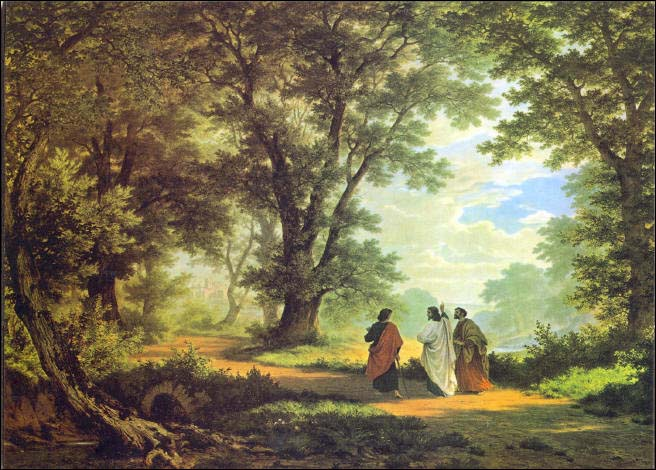
On the same day, two of the followers of Creator Sets Free (Jesus) were walking to Village of Warm Springs (Emmaus), seven miles out from Village of Peace (Jerusalem). As they walked along, they were talking about all that had happened. Creator Sets Free (Jesus) came alongside them as they walked, but their eyes were kept from seeing who he was.

He said to them, “What are you talking about?”

They stopped walking and a look of sadness fell over their faces. One of the men, Honored by His Father (Cleopas), answered him, “How can you not know about the things that have happened in Village of Peace (Jerusalem)? You must be coming from far away.”

“What things are you talking about?” he asked.

“About Creator Sets Free (Jesus) from Seed Planter Village (Nazareth). He was a prophet from the Great Spirit, with powerful medicine, who did many good things among all the people. The head holy men and other leaders handed him over to the People of Iron (Romans) to be put to death on the cross. We had hoped that he would free the tribes of Wrestles with Creator (Israel) from the People of Iron (Romans). It is now the third day since they killed him on the cross, but today some women told us an amazing story. Early this morning they went to his burial cave and found that his body was not there. They told us about visions of spirit-messengers who told them he was alive! Some of our men went to see with their own eyes and found the empty cave, but they did not see Creator Sets Free (Jesus).”

Continue reading “My Heart Was Burning Within Me”

The Rebel Heart

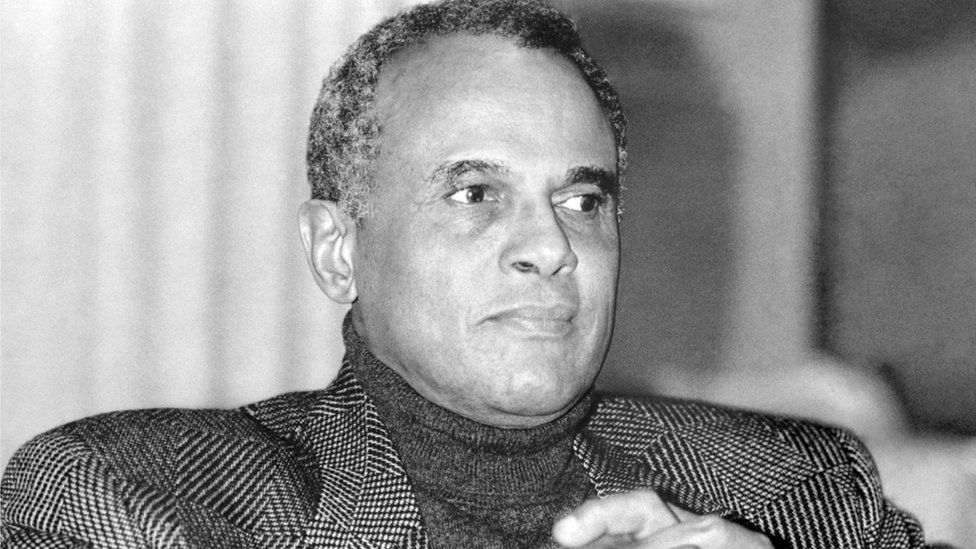
Harry Belafonte. Rest in Power. This is an excerpt from his Democracy Now interview in December 2016.

A group of young black students in Harlem, just a few days ago, asked me what, at this point in my life, was I looking for. And I said, “What I’ve always been looking for: Where resides the rebel heart?” Without the rebellious heart, without people who understand that there’s no sacrifice we can make that is too great to retrieve that which we’ve lost, we will forever be distracted with possessions and trinkets and title.

Easter Faith and Empire

By Ched Myers, a brilliant Bush-era article on Luke’s Road to Emmaus story (this weekend’s Gospel text). It is more relevant than ever.

In the first-century Pax Romana, Christians had the difficult and demanding task of discerning how to cling to a radical ethos of life – symbolized preeminently by their stubborn belief in the Resurrection of Jesus – while living under the chilling shadow of an imperial culture of domination and death. Today, in the twenty-first-century Pax Americana, U.S. Christians are faced with the same challenge: to celebrate Easter faith in the teeth of empire and its discontents.

“The words empire and imperialism enjoy no easy hospitality in the minds and hearts of most contemporary Americans,” wrote the great historian William Appleman Williams a quarter century ago in his brilliant rereading of U.S. history. Yet today, because of the ascendancy of the New Right’s ideological project (whose intellectual architecture is typified by the Project for a New American Century), the words are increasingly used approvingly in regard to U.S. policy. We are indeed well down the road of imperial unilateralism, and are seeing clearly that this means a world held hostage to wars and rumors of war. The conquest and occupation of Afghanistan and Iraq have had an enormous human and political cost. Meanwhile, the Unites States has military bases on every continent and some form of military presence in almost two-thirds of the 189 member states in the United Nations.

Read the full article here.

The Liberation of All Oppressed People

An excerpt from the Combahee River Collective (1977).

Above all else, Our politics initially sprang from the shared belief that Black women are inherently valuable, that our liberation is a necessity not as an adjunct to somebody else’s may because of our need as human persons for autonomy. This may seem so obvious as to sound simplistic, but it is apparent that no other ostensibly progressive movement has ever considered our specific oppression as a priority or worked seriously for the ending of that oppression. Merely naming the pejorative stereotypes attributed to Black women (e.g. mammy, matriarch, Sapphire, whore, bulldagger), let alone cataloguing the cruel, often murderous, treatment we receive, indicates how little value has been placed upon our lives during four centuries of bondage in the Western hemisphere. We realize that the only people who care enough about us to work consistently for our liberation are us. Our politics evolve from a healthy love for ourselves, our sisters and our community which allows us to continue our struggle and work.

This focusing upon our own oppression is embodied in the concept of identity politics. We believe that the most profound and potentially most radical politics come directly out of our own identity, as opposed to working to end somebody else’s oppression. In the case of Black women this is a particularly repugnant, dangerous, threatening, and therefore revolutionary concept because it is obvious from looking at all the political movements that have preceded us that anyone is more worthy of liberation than ourselves. We reject pedestals, queenhood, and walking ten paces behind. To be recognized as human, levelly human, is enough.

Continue reading “The Liberation of All Oppressed People”

Working for a Different Way to Live

lilyBy Lily Mendoza, from “Healing Historical Trauma: Ethnoautobiography as Decolonizing Practice,” a talk delivered at the Graduate Center, University of Pretoria, August 16, 2016:

Indeed, there is hope in remembering that for the majority of our time on the planet, we have lived very differently than we do today. We did not make war a way of life; we did not treat the Earth as mere resource to do with as we please; we did not deem ourselves the most important creatures on the planet; we did not always enslave; we did not take more than we needed and without giving back; we did not build businesses out of imprisoning huge numbers of our population, or out of producing weapons of mass destruction or psychotropic drugs meant to numb our pain and boredom; we did not take over every square inch of land driving every other species out their habitat and into extinction, etc. In other words, if, for the majority of our life on the planet, we did not do any of these things—i.e., we did not rape, pillage, and plunder—surely we can stop doing so again and start desiring and working for a different way to live on our shared planet?  Continue reading “Working for a Different Way to Live”

The Healing Potential of Hatred

By Tommy Airey

Four years ago this month, Lindsay and I found ourselves, for a short time, living in Bend, a rapidly developing whitopia in Central Oregon where the Great Basin Desert meets the Cascade Mountains. While we waited for the birth of our nephew Milo Brooks, my brother-in-law and I spent several nights bonding over the Portland Trailblazers, who boasted a backcourt of Damian Lillard and C.J. McCollum, two smaller guards who played at obscure division one colleges. Lillard, who reps the number 0 to honor Oakland – his hometown – was and is the face of the franchise. His signature celebration is what fans affectionately refer to as “Dame Time.” After a big shot, he lifts up his left hand to the crowd and taps the invisible watch on his wrist. It’s not just game time. It’s Dame time.

In the first round of the 2019 playoffs, Dame and the Blazers were pitted against the Oklahoma City Thunder and Russell Westbrook, the all-star point guard from L.A. who also wears 0. When Russ does something spectacular, he brings his hands together and rocks back and forth, like he is cradling an invisible baby. When smaller opponents (like Dame) try to guard him, Russ treats them like little babies. Lillard carries himself with a quiet confidence energized by who he is for (the team, the city, his family, his hometown). Russ stays locked in on who is out to get him (real or imagined). While Dame Time taps into self-love, Westbrook’s trademark gesture is a taunt. His staring, glaring brand of bully ball is dead-set on diminishing others. Russ was (and is) so easy to root against.

Continue reading “The Healing Potential of Hatred”

The Resurrection is Against the Law

BillAn excerpt from Bill Wylie-Kellermann’s classic Seasons of Faith and Conscience (1991).

The sealing of the tomb is, I believe, notoriously misunderstood. I grew up with a Sunday School notion that to seal the tomb was a matter of hefting the big stone and cementing it tight. The seal, in my mind’s eye, was something like first-century caulking–puttying up the cracks to keep the stink in. Not so. This is a legal seal. Cords would be strung across the rock and anchored at each end with clay. To move the stone would break the seal and indicate tampering. Continue reading “The Resurrection is Against the Law”