By Jyarland Daniels, executive director of Harriet Speaks
*Re-posted from social media (June 9, 2020)
One day I will write a book (as too many people continue to ask me to do). And a chapter of that book will be my evolution as it relates to race, racial justice and racial equity work.
That chapter will go something like this:
For much of my child and young adulthood, I was suffocated by racism, but didn’t recognize it as such. Later, I had my own personal awakening. The removing of the scales that clouded my vision started in college and in my early corporate life. In my protest, I walked away from a very lucrative career in business. I have receipts of what I have given up to do this work. Yet, I have no regrets. I only regret that I left bodies in my path. In my harshness and reactionary ways, I didn’t stop to consider that power is important to making change and somebody still needs to have a seat at the table; because, if you aren’t at the table then you are on the menu. I didn’t stop to consider that speaking up to in a way that allows you to heard is just as important as speaking up. Continue reading “On Racial Justice and Evolution”→
“The pandemic has got me thinking a great deal about how the vulnerability our species is experiencing could be an opening to imagining the threat and constriction that is the reality for so many other species and often at our hand. What about the grief in the chestnut blight or salamander epidemics?”
– Robin Wall Kimmerer
At the height of the viral bloom, our travel circumscribed,
we wander with our girls to the patches of woods that still remain
between the housing tracts and industrial parks of our neighborhood.
In the scrubby, choked lot behind the schoolyard where children never go
even when school is in session, the path winds and we stop short
0nce, on a dry and rocky footpath,
a dab of sacred saliva dampened dust.
Silently, the mender’s hands kneaded,
molded and applied the curious blend.
Mudded eyes opened. Vision restored.
These days, we walk mired down,
slogging mucky tracks, traversing
our first New England mud season,
distanced, sheltered, masked, waiting
for healing, solace and renewed balance.
April’s earth underneath our boots
is dew dampened, drizzle drenched,
thaw soaked and oh so mud mucked.
Bogged down in this deadly pandemic,
we yearn for a closure, less muddled. Continue reading “Mender’s Mud”→
Preached by Denise Griebler to St. Peters Episcopal Church Detroit via zoom.
John 11:32-54
I haven’t said or written much since we have begun sheltering in place. I’m a little nervous to do so now. I am humbled by the pandemic. I am awed by it.
I believe that God is with us and that we are with each other – the profound truth that we are in this together.
There is a story about the Chinese Master, Lau-tzu and his disciples:
The disciples were absorbed in the teaching:
Those who know do not say; Those who say do not know.
When the Master entered, they asked him what the words meant.
The Master asked them: “Which of you knows the fragrance of a rose?”
Of course, all of them knew.
Then he said, “Put it into words.”
All were silent.
I am grateful for the rawness of the gospel. A man has died. A brother. A friend. There’s mourning and crying. Jesus is late, put he does show up. The one who heals others couldn’t be there in time for his friend. He’s too late.
And it’s not like he rushed to get there. There’s a back story. Lazarus (who has died) along with his the sisters, Mary and Martha – were his good friends. They regularly helped and supported and sheltered Jesus. They were part of his trusted inner circle. Mary and Martha – had sent for Jesus when Lazarus fell gravely ill. But we’re told that Jesus lingered for days where he was sheltering-in-place, hiding out from the religious authorities who wanted Jesus dead. Finally he decides to risk going to Bethany to see his friend, but he’s too late. Lazarus has already died.
I’m grateful for the rawness.
And even Mary’s accusing question: where were you? You could have saved him.
I’m grateful that he doesn’t make excuses. He’s silent. He weeps. I’m grateful for his tears.
And for Martha recoiling from the stench of death – from her brother’s dead body. I’m grateful for Mary and Martha’s anger and impatience with Jesus. And for Jesus’ anger. And his second round of tears at the tomb. I’m grateful for the kerchief-covered face. And for the exposure of the betrayal of the ones who are plotting to keep their privilege and power, who are ready to make easy tradeoffs – one life for many.
I’m grateful for the rawness. Because honestly, I have been feeling pretty numb. And the rawness helps to break me open. I’m glad for all of the weeping in this text. I haven’t yet found my way to tears. How is that possible?
Maybe I’ve been caught up in denial and fear. I hear it in myself as I worry for the “most vulnerable” in a way that serves to distance myself from suffering ever actually touching me in my own body. I am vulnerable. We’re all vulnerable.
And I’ve been caught up in trying to keep myself and my family safe. And trying to do my part – our part – to keep others safe. All of which seem so small and pathetic. Especially when I think of people who need my help. Even as I know this is precisely the best thing most of us can do to take care of each other. Maybe I am too ashamed to weep. But that would be a mistake.
What if grief is our calling right now? Our vocation. Grief is how we can stay human in the face of all of the suffering that has been happening at a distance and is now here and washing over us in Detroit.
I heard about a meme that was circulating on FaceBook. Jesus is in his room, sheltering in place. Someone asks: “Where should I tell them you are?” Jesus replies: “Tell them I’m working in mysterious ways.”
But there actually is a mystery that he stakes is own life and death upon. I think some of the tears he cries are for himself. He knows that death is closing in on him and there is not much more time to be with his friends or his mother, or to be under the beauty of the sky, or out on the Lake, or around the table, to see or smell the lilies, or see the little sparrows or hear the dove hovering or to feel the Wind. Down to the bone he believes anyway: death does not and will not have the last word.
Maybe he’s weeping at the excruciating mystery of that.
I hope I come around to my deepest self and finally weep. I hope you do. I hope we mortals become more human. And that we come to know more deeply our place in the web of all life.
It’s hard to feel like we are doing nothing – especially if you are someone who thrives on the front lines. There’s plenty to do from the place where we are sheltering in place if you are longing for that. People have been busy advocating for the water to be turned back on. And to be turned back on safely. And now, not in 3 months from now. And then to be made affordable for the long haul. The work that we have done for years is having an effect. Thank goodness.
People are restoring other connections as well. Reaching out to family and friends with whom we’ve been out of touch for too long. And there will be neighbors and organizations that will need financial help – be generous. And water deliveries to be made – if you and others in your household are healthy and not among the vulnerable, you could help with that. There will be more opportunities.
But mostly we just need to stay put. And wait. And try to live as well as you can – with as much kindness and joy as you can – in your own household – whether that’s with family, or roommates or alone. And keep ourselves and others safe as best we are able. And let life keep insisting in us. Cindy Tobias reminds us that this is front-line work at this time.
But we can also open ourselves to the suffering and weep when we feel like weeping. Be angry at the ineptitude that could have prevented some of it.
Be awed by the terrible mystery of it and our own vulnerability.
Call on the accompaniment and wisdom of the ancestors – they are helping us.
Many years ago, when South Africa was in the stranglehold grip of the system of racial hatred and separation known as apartheid, I visited that country to learn about and report on the freedom struggle there. On one of my last evenings, a young man named Jabulani was showing me around the black township of Khayelitsha outside Cape Town, just as the sun was beginning to set. Domestics and laborers, weary from a long day’s work in the city, were making their way home in the last glimmers of daylight. A stream of women, water jugs balanced on their heads, some with swaddled babies on their backs, moved slowly out from the central spigot of the township’s rutted roads in the encroaching cool of the evening. Paraffin lamps came to life, one by one, up and down the rows of small and fragile homes constructed of plywood, cardboard, and corrugated metal. Continue reading “They Cannot Take the Sky”→
From the front porch of Mother Ruby Sales. This is the sequel to yesterday’s clarion call to young people. This was originally posted to social media on February 2, 2020.
As remnants and elders we still
have a race to run and a role to play.
Heed the call.
Earlier this week I wrote a post to my younger friends reminding them of their responsibility as new generations of leaders. I reminded them that it is now up to them to use the fluency of their bodies and minds to push us beyond where previous generations took us. Now they are the ones under the light of historical scrutiny. I hope that they realize that the glare can both blind and clarify at the same time. Continue reading “We Still Have a Race to Run”→
A two-part post from the front porch of Mother Ruby Sales. This is part I, originally posted to social media on January 31, 2020.
My young friends you have often stated that my generation should pass the baton of leadership. Well the ball is in your court as the Republicans take this nation down further into an abyss that chokes democracy to death.
I am listening to the roll call in the Senate, and it is clear that Republicans believe that Trump is above the law & they think that they are above your rebuke. Continue reading “The Ball is in Your Court”→
From Monica Lewis-Patrick (right), executive director of We The People of Detroit, leaders in the struggle for clean and affordable water in Detroit and beyond.
We didn’t call ourselves into this fight. We tell folks that we didn’t choose water. Water chose us. In the divinity of water, water was before everything else was. We see ourselves as called into this great layer of warrior women that are fighting for water all around the globe, from Cochabamba to the Arab Spring, from Ireland to the Navajo Nation, from all over these Great Lakes where we have what I call “bad revolutionary sisters” who have decided that not only will they drink, but that their children’s children’s children will drink. Our vision is even deeper than what we can see right now. It’s a transformative way of thinking.
Fishing in the Sea of Galilee. Image from the Library of Congress.
By Kateri Boucher, Homily at Day House Catholic Worker 1/26
Matthew 4: 18-22
As he walked by the Sea of Galilee, he saw two brothers, Simon, who is called Peter, and Andrew his brother, casting a net into the sea for they were fishermen. And he said to them, “Follow me, and I will make you fish for people.” Immediately they left their nets and followed him.
As he went from there, he saw two other brothers, James son of Zebedee and his brother John, in the boat with their father Zebedee, mending their nets, and he called them. Immediately they left the boat and their father, and followed him.
When taken at face value, this reading doesn’t seem to have much bearing on my life. I haven’t gone fishing in years. I’ve never been approached by a random man asking me to follow him and “catch other people.” And I’ve certainly never made a split-second decision to leave my daily life and family behind.

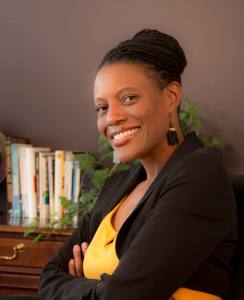 By Jyarland Daniels, executive director of Harriet Speaks
 a poem for


 From the front porch of Mother Ruby Sales. This is the sequel to yesterday’s clarion call to young people. This was originally posted to social media on February 2, 2020.

 Radical Discipleship