The Heartbeat of Every Free Person

By Anas Al-Sharif, who was assassinated by Israeli missiles yesterday

This is my will and my final message. If these words reach you, know that Israel has succeeded in killing me and silencing my voice. First, peace be upon you and Allah’s mercy and blessings.

Allah knows I gave every effort and all my strength to be a support and a voice for my people, ever since I opened my eyes to life in the alleys and streets of the Jabalia refugee camp. My hope was that Allah would extend my life so I could return with my family and loved ones to our original town of occupied Asqalan (Al-Majdal). But Allah’s will came first, and His decree is final. I have lived through pain in all its details, tasted suffering and loss many times, yet I never once hesitated to convey the truth as it is, without distortion or falsification—so that Allah may bear witness against those who stayed silent, those who accepted our killing, those who choked our breath, and whose hearts were unmoved by the scattered remains of our children and women, doing nothing to stop the massacre that our people have faced for more than a year and a half.

I entrust you with Palestine—the jewel in the crown of the Muslim world, the heartbeat of every free person in this world. I entrust you with its people, with its wronged and innocent children who never had the time to dream or live in safety and peace. Their pure bodies were crushed under thousands of tons of Israeli bombs and missiles, torn apart and scattered across the walls.

Continue reading “The Heartbeat of Every Free Person”
The Radical Power of the Poetic Word

By Rev. Bill Wylie-Kellermann

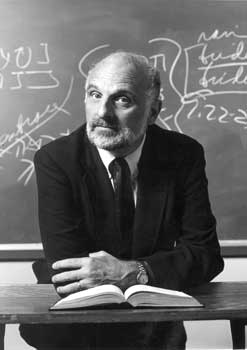
Walter Brueggemann: A Remembrance (March 11, 1933 – June 5, 2025)

When I was a student at Union Seminary in New York, Abraham Heschel taught at Jewish Theological Seminary across the street. Though he died within my first year, the author of The Prophets, was notorious, it was said, for being the professor who actually believed in God. Something related might be said about Walter Brueggemann who crossed over to the ancestors and saints June 5.

He was an eminent scholar, among those like Norman Gottwald who altered the landscape of biblical studies by bringing sociological analysis to interpretation, and for such reason presided for years in the biblical guild. Yet, as a discipline, he was eminently readable and accessible to movement and church for whom the work was ultimately intended.

Once in a footnote to Israel’s Praise, he cited a 1985 order of the Pretoria regime prohibiting Blacks from singing Christmas carols in the townships because they generated such revolutionary energy. The newspaper report quoted a South African police agent: “Carols are too emotional to be sung in a time of unrest…Candles have become revolutionary symbols.” Which is to say, he could write an analysis of the world-shaking and world-making power of Israel’s liturgy and psalms, but then put out a book of prayers for our own moment. He prayed. He imagined a new world with all his heart. He invited us likewise.

Continue reading “The Radical Power of the Poetic Word”

MLK was a Radical

MLK
PC: Underwood Archives/UIG/REX/Shutterstock

By Dr. Cornel West, written seven years ago for the 50th anniversary of the assassination of Rev. Dr. Martin Luther King, Jr. (April 4, 1968), originally posted in The Guardian

The major threat of Martin Luther King Jr to us is a spiritual and moral one. King’s courageous and compassionate example shatters the dominant neoliberal soul-craft of smartness, money and bombs. His grand fight against poverty, militarism, materialism and racism undercuts the superficial lip service and pretentious posturing of so-called progressives as well as the candid contempt and proud prejudices of genuine reactionaries. King was neither perfect nor pure in his prophetic witness – but he was the real thing in sharp contrast to the market-driven semblances and simulacra of our day. Continue reading “MLK was a Radical”

The Spiritual Property of the People

Today is the 60th anniversary of the assassination of Malcolm X. This is a piece by Ajamu Baraka, re-posted from Black Agenda Report.

Every year, people around the world honor Malcolm X. Though he was taken from us prematurely, his memory and impact remain. With that memory, there is a mandate that we accept and carry on the legacy of his politics and the others who are the heart of the Black Radical Tradition. 

“The price to make others respect your human rights is death. You have to be ready to die… it’s time for you and me now to let the world know how peaceful we are, how well-meaning we are, how law-abiding we wish to be. But at the same time, we have to let the same world know we’ll blow their world sky-high if we’re not respected and recognized and treated the same as other human beings are treated.”  (El-Hajj Malik El-Shabazz, Malcolm X) 

“…to be committed to justice we must believe that ethics matter, that it is vital to have a system of shared morality.” (Bell Hooks)  

On a cold New York afternoon in Harlem February 21, 1965, “Don’t Do it,” were the last words that the world heard from the voice of El Hajj Malik El-Shabazz, better known as Malcolm X, before the assassins opened fire with a barrage of bullets that would take Malcolm away from us physically.  

So we come every year to commemorate February 21, the day Malcolm was added to the long list of the great African anti-colonial fighters our struggle produced in the ongoing battle against the slavers and colonizers that spilled out of Europe in 1492 to stain human history with their unprecedented savagery. 

Continue reading “The Spiritual Property of the People”

RIP Kiah Duggins

RIP Kiah Duggins (above), civil rights lawyer, legal scholar and professor at Howard University. She was on the plane that crashed in DC last week. Sumayya Saleh tweeted that Duggins was “an unapologetic radical, abolitionist, anti-Zionist movement lawyer whose North Star was Black liberation and prosperity.”

You can soak up the brilliance of Duggins debating bail reform here. To honor her, we are re-posting a piece she wrote with Bina Ahmad below. It was originally posted in The Appeal. Ahmad and Duggins argue for the abolition of police dogs, digging into the history of how they were used to hunt those who ran away from slavery.

The Thirteenth Amendment purported to abolish chattel slavery, along with what an 1883 Supreme Court decision called its “badges and incidents.” But the amendment left some infamous carve-outs: Namely, it remains legal to enslave people who have been convicted of a crime. But there is another remaining “badge and incident” of slavery that we must uproot: the police’s use of K9 units. The police’s practice of using dogs to attack human beings derives from enslavers’ practice of using slave hounds to attack enslaved people. This coercive history harms human beings and animals in order to perpetuate the racial and economic interests of people in power. One way we can honor the Thirteenth Amendment’s promise to rid our society of slavery—all of its badges and incidents—is by getting dogs out of policing.

State-sanctioned canine attacks–like those implemented by modern police canine units–were common in chattel slavery. Legal scholar Madalyn Wasilczuk speaks of how white enslavers “conceived of an enslaved person’s attempt to obtain freedom as a type of high-value property theft, appropriately recaptured with brute force.” The use of dog attacks to preserve enslavers’ economic interests was legal, and thus not a rare act committed by a few bigots. Wasilczuk explains that the Fugitive Slave Act of 1850 federally legalized slave patrols’ ability to seize slaves in free states, often accompanied by hunting dogs—and the act was later nicknamed “the Bloodhound Bill” as a result. Legal scholar Michael Swistara stresses that these dog attacks were intentionally gruesome. Swistara explains how, as early as the 1700s, records show enslavers “bred Cuban bloodhounds with the explicit purpose of raising them to enact violence against Black people” and “the scars of dog bites were so common that they” were physical badges of slavery, becoming “marks used to identify [Black] escapees in advertisements for rewards.”

Continue reading “RIP Kiah Duggins”

Arise and Witness

This is Dean Hammer’s review of a new book edited by Arthur Laffin and Carole Sargent called Arise and Witness: Poems by Anne Montgomery, RSCJ.

Note: Sr. Anne Montgomery was a nonviolent witness in war zones in the Holy Land and Iraq, and endured years of imprisonment due to her involvement in Plowshares actions. Her poems are rooted in her love for accompanying the marginalized, borne out of her experience of religious life and community. Most of these poems, now published posthumously, provide unique and rich biblical insights into what it means to be human and a faithful follower of Jesus. This volume serves as both a powerful spiritual anchor and a source of inspiration for all who seek to be a radical witness of truth and hope. Drawing on her experience as a religious, teacher and peacemaker, Anne’s poetry offers powerful scriptural insights that can sustain people’s hope.

Thanks to the skillful and loving work by the editors of Arise and Witness, we are gifted witha posthumous memoir of Sr. Anne Montgomery: poet, mystic, and witness par excellence. While composing this review, I heard Anne’s voice from the heavenly realm protesting the lauding of her extraordinary life: “the story is not about me,” she insisted. Indeed, her story and poetry portray her hopefulness, undaunted by the chaos and violence of our world. Her theopoetic reflections invite us to share her connection with “the God who proclaims peace: the merciful, the advocate, the restorer” (71). Her narrative reveals a lived profession: “The light shone in the darkness and the darkness could not extinguish the light” (22).

In the prologue, Facing the Darkness, Anne cites Denise Levertov, a sage protest poet and mentor of peacemaking: “A voice from the dark called out, the poet must give us imagination of peace…peace, a presence, an energy field more intense than war.” Anne traveled to places of great suffering (Palestine, Iraq, Bosnia, Guantanamo, and various jails as prisoner of conscience) bearing witness to the Light, the mystical force peace and compassion. She “practiced resurrection” (Wendell Berry).

Continue reading “Arise and Witness”

An Abiding and Rebirthing Darkness

From our friends and comrades at Mennonite Action.

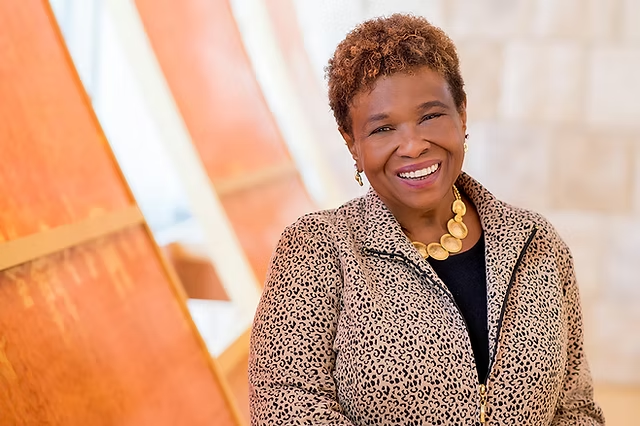
This Advent, we are remembering the activist and theologian Barbara Holmes. Over her lifetime, Dr. Holmes dedicated her prophetic voice of contemplative wisdom to call us on The Way with the Incarnate Jesus. Jesus is the one who has come, is always coming, and is ever present, transforming us into the Creator’s image and likeness.

Over the years, we have attended to Dr. Holmes’ voice crying out in the wilderness against the unspeakable suffering of human and non-human creation — suffering inflicted by human hands, heads, and hearts of warring madness. Although Dr. Holmes died earlier this year, her prophetic voice and spiritual wisdom lives on, crying out to be heard and heeded.

She writes, “When there is a crisis, it takes a village to survive” because “it is the village that enters into crisis.” In her book, Crisis Contemplation: Healing the Wounded World, Dr. Holmes explains: “Crises open portals of deeper knowing. When the crisis occurs, the only way out is through, so we take a cue from nature and relax into the stillness, depending upon one another and the breath of life!”

Continue reading “An Abiding and Rebirthing Darkness”

So Long

A blast from the past from James Boggs (November 1963).

Now I did not come here to comfort you. I came here to disturb you. I did not come here to pacify you. I came here to antagonize you. I did not come here to talk to you about love. I came here to talk to you about conflict. I say this at the outset because the American people have lived for so long under the illusion that America is an exception to the deep crises that wreck other countries – that they are totally unprepared to face the brutish realities of the present crisis and the dangers that threaten them. The American people have lived so long with the myth that the United States is a Christian, capitalist, free democratic nation that we can do no wrong, that the question of what is right and wrong completely evades us.

The Salvation of Western Interests

An excerpt from James Baldwin’s Open Letter to the Born Again (September 29, 1979).

But the state of Israel was not created for the salvation of the Jews; it was created for the salvation of the Western interests. This is what is becoming clear (I must say that it was always clear to me). The Palestinians have been paying for the British colonial policy of “divide and rule” and for Europe’s guilty Christian conscience for more than thirty years.

Choose Your Leaders

By Maria Popova, re-posted from themarginalian.com

In 1845, as the forgotten visionary Margaret Fuller was laying the foundation of modern feminism, advocating for black voting rights, and insisting that “while any one is base, none can be entirely free and noble,” she contemplated what makes a great leader and called for “no thin Idealist, no coarse Realist,” for a person “of universal sympathies, but self-possessed,” one for whom “this world is no mere spectacle or fleeting shadow, but a great, solemn game, to be played with good heed, for its stakes are of eternal value.”

But how does a nation, a society, a world concerned with more than the shadowy spectacles of the present identify and elect such leaders to shape the long future?

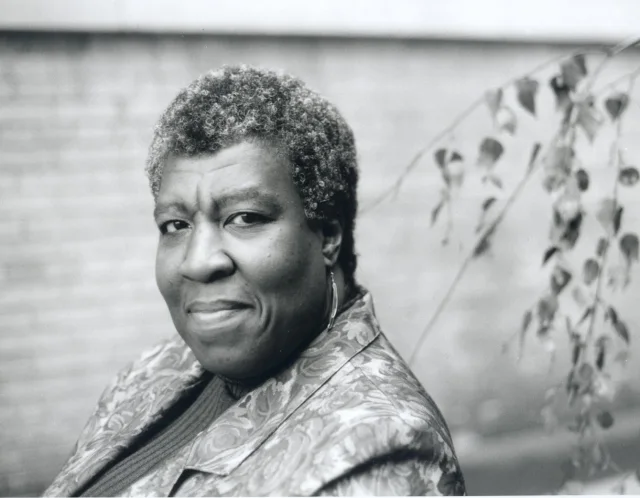
A century and a half after Fuller, Octavia Butler (June 22, 1947–February 24, 2006) — another rare visionary — offered a glimmer of guidance in her sibylline two-part series set in the 2020s: Parable of the Sower (public library) and Parable of the Talents (public library) — a set of cautionary allegories, cautionary and future-protective in their keen prescription for course-correctives, about the struggle of a twenty-first-century society, Earthseed, to survive the ecological collapse, political corruption, corporate greed, and socioeconomic inequality it has inherited from the previous generations and their heedless choices.

Like Ursula K. Le Guin, Butler straddled the timeless and the prophetic, saturating her fiction with astute philosophical and psychological insight into human nature and the superorganism of society. Also like Le Guin, Butler soared into poetry to frame and punctuate her prose. Each chapter begins with an original verse abstracting its thematic direction. She opens the eleventh chapter of the second Earthseed book with this verse:

Choose your leaders with wisdom and forethought.
To be led by a coward is to be controlled by all that the coward fears.
To be led by a fool is to be led by the opportunists who control the fool.
To be led by a thief is to offer up your most precious treasures to be stolen.
To be led by a liar is to ask to be told lies.
To be led by a tyrant is to sell yourself and those you love into slavery.

And yet our discernment in choosing wisely, Butler intimates in a chilling short verse from the first book, can so often be muddled by our panic, by our paralyzing fright and pugilist flight:

Drowning people
Sometimes die
Fighting their rescuers.

To read the rest, click here.