By Rev. Graylan Scott Hagler, Senior Advisor, The Fellowship of Reconciliation USA
We keep running in circles when it comes to addressing racial justice in the US. This means that with every advance we almost come back to the same place and must fight the battles all over again. It doesn’t mean that progress has not been made, but the progress retrogresses due to the immediate backlash that charges any advance to rectify past racial injustices as an affront to white people. At best there is an ebb and flow when it comes to rectifying the racial harms and damages of the past. Race history and the many initiatives to rectify past wrongs is more of a circle than a linear line. It may be an expanding circle considering advances, but for every victory won there is a vicious throw back. It is almost like the 1993 movie “Groundhog Day” where morning after morning we awaken to histories repeating itself, and where victories of racial justice are swept away by the courts or a change in the body politics. The struggle continues, and in many cases, we must begin again.
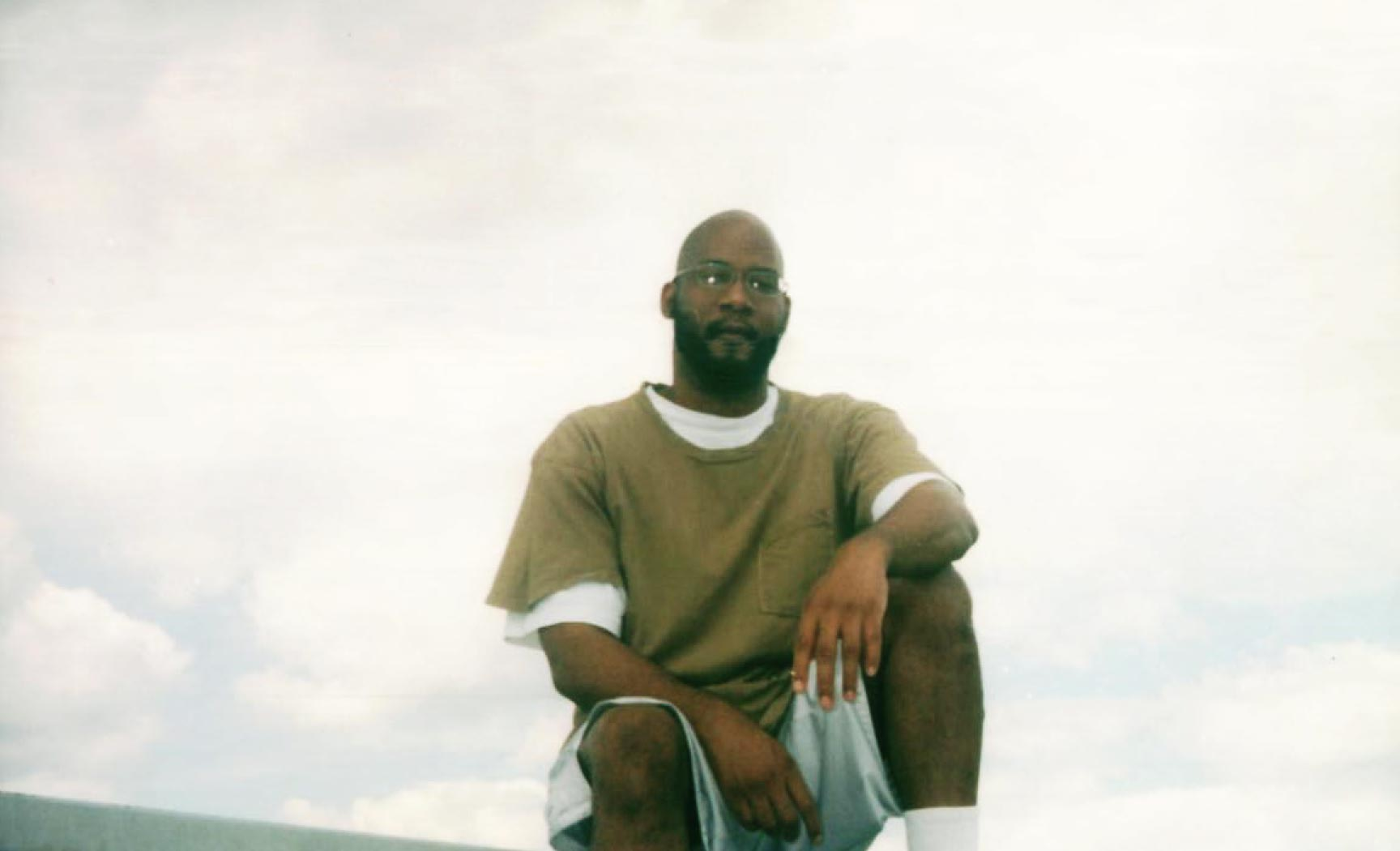
The Innocence Project put out this call yesterday to save the life of Marcellus Williams, who prosecutors now say was wrongly convicted. More details here.
With so little time until #MarcellusWilliams is set to be executed tomorrow, Sept. 24th at 6 p.m., our best tool is our voice. We must make as much noise as possible in these final hours, as public pressure can make all the difference in the moments leading up to an execution. Please, email, tweet or call Gov. Parson (@GovParsonMO) RIGHT NOW at 417-373-3400 and URGE him to step in and prevent Marcellus’ execution.
Last year, the California taskforce on reparations came out with this final report, including calculations for a variety of injustices done to Black Americans throughout the course of history. The taskforce made “an economically conservative initial assessment of what losses, at a minimum, the State of California caused or could have prevented, but did not.” Below is the taskforce’s assessment just for mass incarceration and over-policing. They also assessed for housing discrimination, unjust property takings and devaluation of African-American businesses. They also added that their list was not exhaustive and that the delay of reparations is in itself an injustice that causes more suffering.
The “War on Drugs” began in 1971. Established research shows that although people of all races use and sell illegal drugs at remarkably similar rates, the federal and state governments disproportionately target African Americans for drug-related arrests. To measure racial mass incarceration disparities in the 49 years of the War on Drugs from 1971 to 2020, the Task Force’s experts estimated the disproportionate years spent behind bars for African American compared to white non-Hispanic drug offenders, and multiplied them with what a California state employee would have earned in a year on aver age (since incarcerated persons were forced, unpaid “employees” of the state). The Task Force’s experts then added compensation for loss of freedom, comparable to Japanese American World War II prisoners, and arrive at $159,792 per year of disproportionate incarceration in 2020 dollars.
Re-posting this piece by Wes Howard-Brook from February 2019 because it is more relevant than ever. Gotta say that after five-and-a-half years, it has aged quite well.
Three, young, powerful, brash women of color have come down upon the Capitol and left the old while folks there sputtering in their wake. The most well-known—so much so that she already can be recognized by her initials, AOC—Rep. Alexandria Ocasio-Cortez (NY)—has blown the doors off Congress by daring to offer her “Green New Deal” vision. The other two are both Muslim women, Michigan Rep. Rashida Tlaib and Minnesota Rep. Ilhan Omar. Tlaib and Omar have strongly promoted the international “Boycott, Divestment, and Sanction” campaign to pressure the Israeli government to withdraw from West Bank settlements.
AOC has been allowed to thrive as a social media star, despite being treated with despicable condescension by the “senior” congresspeople and their supporters. After all, even the Democratic Party knows that climate change is real and needs immediate action.
But when it comes to criticizing Israel, Dems collectively freak out in an orgy of blatant hypocrisy that might, but probably wouldn’t, make Trump blush. Most immediate, Rep. Omar was quoted in a tweet stating that “Jewish money,” more specifically, the American Israel Public Affairs Committee, influences US policy on Israel. This claim led to instant and widespread condemnation from all sides, for promoting “anti-Jewish tropes.” Rep. Omar was forced to apologize publically.
An excerpt from James Baldwin’s letter to Angela Davis (November 1970).
The will of the people, in America, has always been at the mercy of an ignorance not merely phenomenal, but sacred, and sacredly cultivated: the better to be used by a carnivorous economy which democratically slaughters and victimizes whites and Blacks alike. But most white Americans do not dare admit this (though they suspect it) and this fact contains mortal danger for the Blacks and tragedy for the nation.
Or, to put it another way, as long as white Americans take refuge in their whiteness—for so long as they are unable to walk out of this most monstrous of traps—they will allow millions of people to be slaughtered in their name, and will be manipulated into and surrender themselves to what they will think of—and justify—as a racial war. They will never, so long as their whiteness puts so sinister a distance between themselves and their own experience and the experience of others, feel themselves sufficiently human, sufficiently worthwhile, to become responsible for themselves, their leaders, their country, their children, or their fate. They will perish (as we once put it in our black church) in their sins —that is, in their delusions. And this is happening, needless to say, already, all around us.
Only a handful of the millions of people in this vast place are aware that the fate intended for you, Sister Angela, and for George Jackson, and for the numberless prisoners in our concentration camps—for that is what they are—is a fate which is about to engulf them, too, White lives, for the forces which rule in this country, are no more sacred than Black ones, as many and many a student is discovering, as the white American corpses in Vietnam prove. If the American people are unable to contend with their elected leaders for the redemption of their own honor and the loves of their own children, we the Blacks, the most rejected of the Western children, can expect very little help at their hands; which, after all, is nothing new. What the Americans do not realize is that a war between brothers, in the same cities, on the same soil is not a racial war but a civil war. But the American delusion is not only that their brothers all are white but that the whites are all their brothers.
So be it. We cannot awaken this sleeper, and God knows we have tried. We must do what we can do, and fortify and save each other—we are not drowning in an apathetic self-contempt, we do feel ourselves sufficiently worthwhile to contend even with the inexorable forces in order to change our fate and the fate of our children and the condition of the world! We know that a man is not a thing and is not to be placed at the mercy of things. We know that air and water belong to all mankind and not merely to industrialists. We know that a baby does not come into the world merely to be the instrument of someone else’s profit. We know that a democracy does not mean the coercion of all into a deadly—and, finally, wicked— mediocrity but the liberty for all to aspire to the best that is in him, or that has ever been.
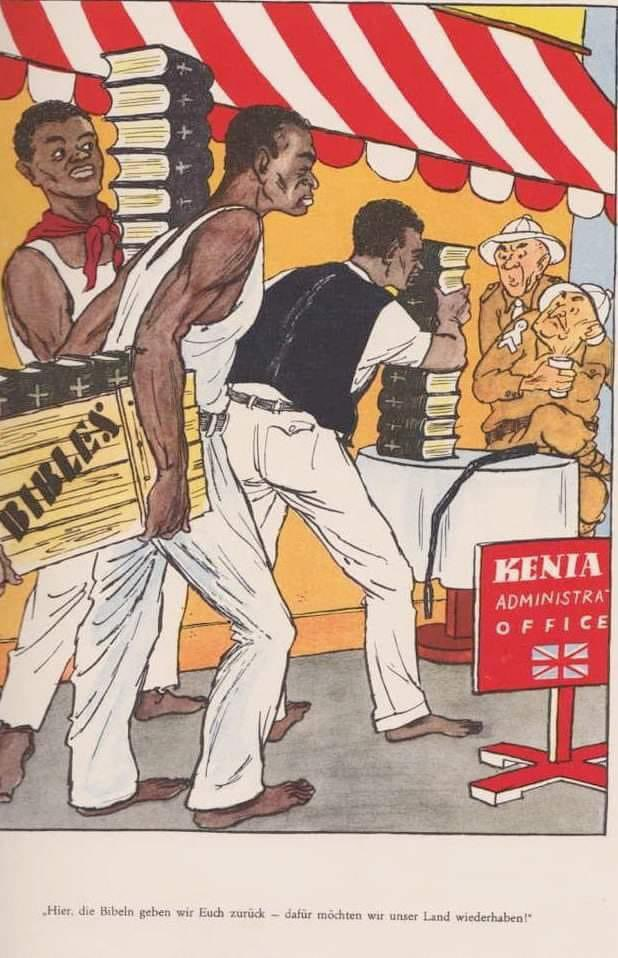
East German cartoon from 1953 showing Kenyans returning crates of Bibles to the British colonial office: ‘We are giving you your Bibles back – give us our land back!’ (thank you Joe Bassey for posting to Twitter)
“The final confrontation, when it does come about, will of course include the liberal on the side of the oppressor.”
Whenever one writes about a problem in the United States, especially concerning the racial atmosphere, the problem written about is usually black people, that they are either extremist, irresponsible, or ideologically naive.
What we want to do here is to talk about white society, and the liberal segment of white society, because we want to prove the pitfalls of liberalism, that is, the pitfalls of liberals in their political thinking…
Many people want to know why, out of the entire white segment of society, we want to criticize the liberals. We have to criticize them because they represent the liaison between both groups, between the oppressed and the oppressor. The liberal tries to become an arbitrator, but he is incapable of solving the problems. He promises the oppressor that he can keep the oppressed under control; that he will stop them from becoming illegal (in this case illegal means violent). At the same time, he promises the oppressed that he will be able to alleviate their suffering — in due time. Historically, of course, we know this is impossible, and our era will not escape history.
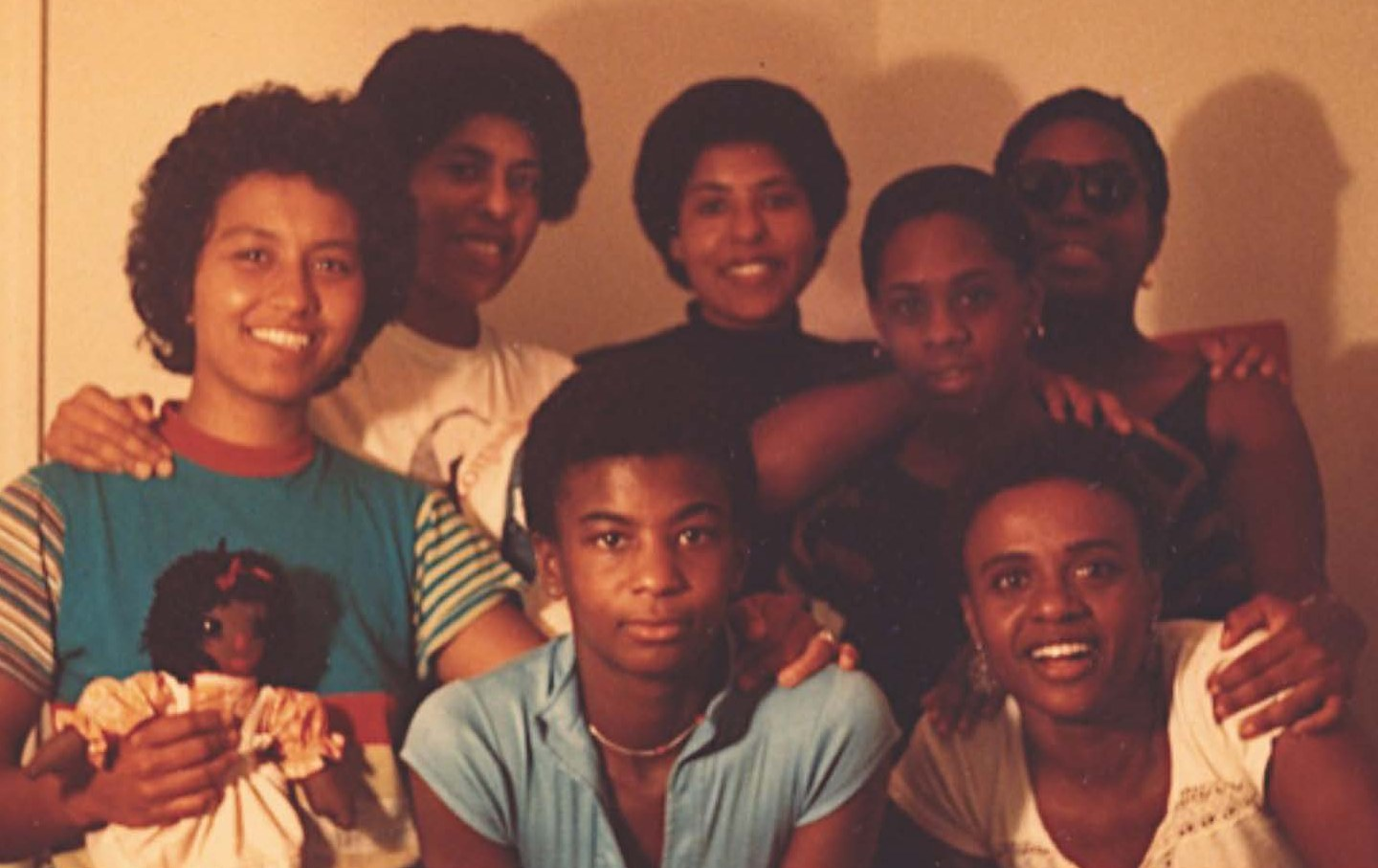
We’ll tip-off Black History Month with this excerpt from the Combahee River Collective Statement (1977). The Combahee River Collective was a group of Black feminists who met consistently for three years to define and clarify their politics while they worked in coalition with other progressive organizations and movements
We realize that the liberation of all oppressed peoples necessitates the destruction of the political-economic systems of capitalism and imperialism as well as patriarchy. We are socialists because we believe that work must be organized for the collective benefit of those who do the work and create the products, and not for the profit of the bosses. Material resources must be equally distributed among those who create these resources. We are not convinced, however, that a socialist revolution that is not also a feminist and anti-racist revolution will guarantee our liberation. We have arrived at the necessity for developing an understanding of class relationships that takes into account the specific class position of Black women who are generally marginal in the labor force, while at this particular time some of us are temporarily viewed as doubly desirable tokens at white-collar and professional levels. We need to articulate the real class situation of persons who are not merely raceless, sexless workers, but for whom racial and sexual oppression are significant determinants in their working/economic lives. Although we are in essential agreement with Marx’s theory as it applied to the very specific economic relationships he analyzed, we know that his analysis must be extended further in order for us to understand our specific economic situation as Black women.
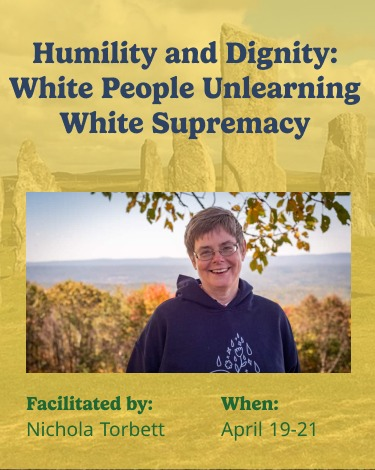
Another compelling offering from Kirkridge Retreat Center.
Are shame, fear, and anxiety limiting your participation in efforts to dismantle white supremacy as a white person? Do you feel insecure in your relationships with Black, Indigenous, and People of Color and unsure how to show up well in BIPOC-led movements? Do you sometimes find yourself stumbling over your words or remaining quiet when you feel called to speak up about racism? You are not alone! Join other like-minded white people who long for an end to white supremacy as we practice showing up with both humility and dignity. We’ll explore embodied practices, ancestral lineage healing, and spiritual tools that will help you work effectively in a multiracial coalition toward a world of equitable, collective flourishing.







 Radical Discipleship