A fifty-year-old poem of Lucille Clifton – still conspiring for our hearts in a whole new year.


A fifty-year-old poem of Lucille Clifton – still conspiring for our hearts in a whole new year.

Check out this Sojourners Magazine conversation between Josiah R. Daniels and Azmera Hammouri-Davis.
Honestly, I never thought much about Israel before college. Then, during my sophomore year, a prominent New Testament studies scholar had been invited to speak on campus; after it came to light that they were openly critical of the state of Israel, they were summarily disinvited. A few other students and I were still able to meet with the scholar, and we were shocked by the language they were using to describe the conditions in Israel for the Palestinians: “Second-class citizens,” “genocide,” and “apartheid” were the terms that struck me most.
“It can’t be as bad as what Black people have faced in the United States or what they faced in South Africa,” I remember saying to the scholar. “Go and see,” they admonished. And so, one year later, that’s exactly what I did.
In 2012, three other students and I had been invited to attend a conference at Bethlehem Bible College called Christ at the Checkpoint. The mission of this conference, which will be convening for the seventh time in May 2024, was to invite evangelicals to think about Israel and Palestine in ways that prioritized “peace, justice, and reconciliation,” while also explicitly giving voice to Palestinian Christians. And while I’m grateful that I was introduced to authors, theologians, and activists like Munther Isaac, Jonathan Kuttab, and Salim Munayer, nothing was quite as transformational as experiencing a checkpoint for myself.
I’d been stopped at police checkpoints in the United States multiple times — either alone or with friends or my dad. During those stops, humiliation, pain, or death always seemed to be a likely outcome. So when I was preparing to pass through one of the checkpoints at Israel’s apartheid wall, I imagined the Israel Defense Forces soldiers would hassle me the same as the Chicago police. But there was no hassling. I handed them my blue U.S. passport and waltzed through the checkpoint. “I feel like the scholar exaggerated a bit,” I thought to myself. But as soon as that thought crossed my mind, I turned around to see a long line of Palestinians, each of them being hassled by an IDF soldier. When I looked into the eyes of those Palestinians, I saw that they, too, felt humiliation, pain, or death was a likely outcome.
To read the interview go to Sojourners Magazine here.

A few excerpts from Ken Sehested’s recent Prayer and Politiks newsletter.
The concurrence of two calendars brings together two significant historical episodes.
The Sunday morning terrorist bombing of 16th Street Baptist Church in Birmingham, Alabama, killed four children and injured or maimed many others, on 15 September 1963. Bombs targeting the Black community in that city were common, which gave rise to the nicknaming of the city as “Bombingham.” This one, however, was especially hideous.
Though the FBI concluded that known members of Ku Klux Klan were responsible, no one was brought to trial until 1977, when the ringleader, Robert Chambliss, was convicted in the murder of one of those children. Not until 2001 were the other culprits convicted.
Can you imagine the whipsaw emotions of Dr. Martin Luther King, Jr.? Eighteen days before he had been the singular figure in the largest demonstration (to that date) in US history, the 28 August March on Washington for Jobs and Freedom. His “I Have A Dream” speech is considered by many to be the most important speech of the 20th century.
And then he had to pivot to planning funeral services for these murdered children.
Sunset on Friday, 15 September, also happens to be the beginning of Rosh Hashanah, the opening act of the 10-day High Holy Days of Judaism, ending with Yom Kippur, the holiest day in the Jewish liturgical cycle.
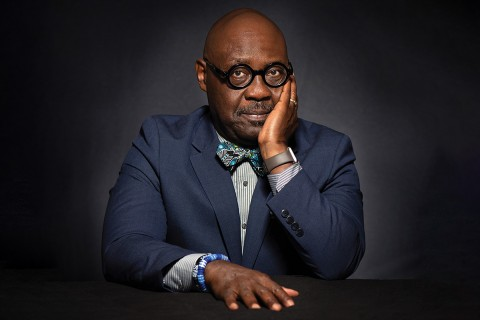
From Dr. Willie Jennings, professor of theology at Yale. This is from an interview he did with The Christian Century in 2021. He was asked what race has to do with theology (photo above from Mara Lavitt for Yale Divinity School).
The modern vision of race would not be possible without Christianity. This is a complicated statement, but I want people to think about this.
Inside the modern racial consciousness there is a Christian architecture, and also there is a racial architecture inside of modern Christian existence. There are three things we have to put on the table in order to understand how deeply race is tied to Christianity. The first brings us back to the very heart of Christianity, the very heart of the story that makes Christian life intelligible.
That story is simply this: through a particular people called Israel, God brought the redemption of the world. That people’s story becomes the means through which we understand who God is and what God has done. Christianity is inside Israel’s story. At a certain point in time, the people who began to believe that story were more than just the people of Israel, more than just Jews. And at some point in time, those new believers, the gentiles, got tired of being told that they were strangers brought into someone else’s story—that this was not their story. They began—very early and very clearly—to push Israel out from its own story. They narrated their Christian existence as if Israel were not crucial to it.
Continue reading “A Way of Perception”
By Dwight L. Wilson
I am the official historian for my maternal grandfather’s side of the family. Last week I was in Charleston, South Carolina where I was asked to give the major address to the Mack/ Kinney/ Rogers Family Reunion (Mom was born a Mack) This week, although not the official historian, I was asked to give the keynote to my maternal grandmother’s family at the Haynes Family Reunion (her mom was born a Haynes). It was held in Dayton, Ohio. Both gatherings trace their families from an enslaved couple who came to adulthood in Northeastern Georgia. I’ve counted those on the first tree. We number over 5000. There are more surnames on the second tree but I haven’t counted people. My guess is they number even more. Each time I read this psalm.
PSALM 40023
Through You we have known bright elation
where glorious victory lights the way.
Our smiles mirror Jesus on the Mount
smiling at those who dared to believe.
Lest we forget where we arrived
after the Middle Passage to a Hell
calling itself, “The land of the free”
remind us of ancestral pain.
Dear One, You delivered us into hope
that our descendants will walk on water
until they arrive at Your great mountain
and united, continue the climb.
Dwight L. Wilson is a Quaker who has held many jobs: educator, administrator, religious leader. In each role, he worked to advance equality, opportunity and understanding. He continues this work in his carefully researched historical fiction series Esi Was My Mother, which follows the lives of an enslaved black family from 18th century Africa to the American Civil War. He strives to portray triumphant examples of black stories that will make history come alive for readers. He is also author of two short story collections, The Kidnapped and The Resistors as well as a memoir centered on caring for children, Whispering to Babies and two psalms books: Modern Psalms In Search of Peace and Justice and Modern Psalms of Solace and Resistance.

An excerpt from a recent Democracy Now interview with Jonathan Eig, the author of the new book King: A Life.
I think it’s really important for us to acknowledge that our heroes have flaws, and if we expect our heroes to be perfect, nobody will ever rise to the occasion. Nobody will even try.
And King was deeply flawed. As you mentioned, he attempted suicide twice as a teenager, jumping from a second-story window of his home when he was upset about, first, an injury suffered by his grandmother and then, later, by her death. And when he won the Nobel Peace Prize, he was hospitalized at the time for what he called anxiety, but for what Coretta described as depression. He was hospitalized numerous times throughout his life because the pressure had just gotten to him so badly.
Continue reading “To Maintain the Existing Power Structure”
On Juneteenth, we open up Toni Morrison’s Beloved. This passage comes right after Indigenous people, who refused to move to the reservation, cut off the shackles of Paul D, a man who escapes slavery and stays with them in the Southern woods.
“Paul D finally woke up and, admitting his ignorance, asked how he might get North. Free North. Magical North. Welcoming, benevolent North. The Cherokee smiled and looked around. The flood rains of a month ago had turned everything to steam and blossoms.
‘That way,’ he said, pointing. ‘Follow the tree flowers,’ he said, ‘Only the tree flowers. As they go, you go. You will be where you want to be when they are gone.’
So he raced from dogwood to blossoming peach. When they thinned out he headed for the cherry blossoms, then magnolia, chinaberry, pecan, walnut and prickly pear. At last he reached a field of apple trees whose flowers were just becoming tiny knots of fruit. Spring sauntered north, but he had to run like hell to keep it as his traveling companion.”
An opening paragraph from Orisanmi Burton’s “Targeting Revolutionaries: The Birth of the Carceral Warfare Project, 1970-1978” in Radical History Review. The entire article is available for free here.


From The Howard University Graduates for Solidarity, Written Statement Regarding the Howard University Graduates’ Protest of President Joseph R. Biden Jr. at Howard University’s 155th Commencement Ceremony at Capital One Arena
The Howard University Commencement Ceremony is a joyous occasion, a celebration of achievement in the face of generational, ongoing, and systemic adversity. For Black students, graduating college is a success beyond measure. We are proud to have attended the illustrious Howard University, our historically Black University, our Mecca.
Yet, while we are excited to finish our last endeavor at Howard University, we are infinitely angered and exhausted by the many forms of ongoing white supremacist violence in the United States of America and internationally. We are exhausted by the lack of resources we had as Howard Students, struggling to keep up with increasing tuition rates and inadequate housing options amidst the corporatization of our board of trustees and the fight to renew student, faculty, and community voting representation within it, let alone the ongoing gentrification of DC at large to which Howard University and its affiliates are a party. We maintain countless grievances and will not sit silently and allow them to go unrecognized, especially in light of campaign season. On today, May 13th, 2023, our graduation day and the 38th anniversary of the MOVE bombing, we choose to advocate. When there is no justice, there should be no peace.
Continue reading “Will Not Sit Silently”
By Bettina Love, re-posted from Education Week
“The educational foundations of our society are presently being eroded by a rising tide of mediocrity that threatens our very future as a Nation and a people.” This sentence, rooted in misleading and skewed data, changed education forever. Forty years ago, starting in April 1983, this country manufactured an education crisis that effectively put targets on the backs of its children, especially Black children. U.S. Secretary of Education Terrel H. Bell, under the direction of President Ronald Reagan, released a 36-page report titled “A Nation at Risk.” It told the world that not only were American children failing academically, but “if an unfriendly foreign power had attempted to impose on America the mediocre educational performance that exists today, we might well have viewed it as an act of war.”
The authors claimed that data proved American children were lagging behind those in other industrialized nations in student achievement, citing, among other references, plummeting SAT scores and a functional illiteracy rate among minority children as high as 40 percent. The report kindled education reform as we know it. However, the National Assessment of Educational Progress, tests that are the most widely respected yardstick of student achievement nationally, reported that from the 1970s to the early 1980s, the performance of elementary and secondary pupils increased moderately on some examinations while dropping slightly on others. The report intentionally omitted such positive educational data, but why?
Click HERE to read the rest of the article.
 Radical Discipleship