White Supremacy Defined

aliciaDay 38 of our Lenten Journey continues beyond “Beyond Vietnam.”  What now?  For nine more days, we listen to voices calling us onwards, to live out the legacy of Dr. King.  Today, we ponder this “working definition of white supremacy” from Chicago-based community organizer Alicia Crosby:  
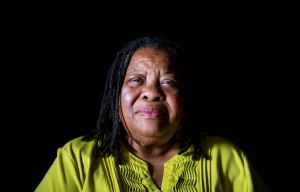
White supremacy establishes whiteness as superior to other racial identities through the elevation of the needs, wants, concerns, perspectives, feelings, and desires of white people over that of people of color. This includes the centering of the theological, rhetorical, aesthetic, and economic priorities and preferences rooted in whiteness as well as the appropriation and rebranding of cultural expressions sourced from people of color.

From Disposability to Essentiality

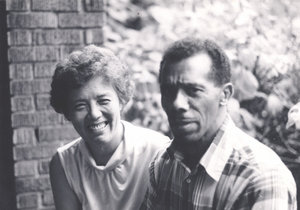
Ruby SalesDay 37 of our Lenten Journey beyond “Beyond Vietnam.  From Ruby Sales (photo right), Civil Rights veteran and long-distance runner for justice, in an interview with Krista Tippett:
I really think that one of the things that we’ve got to deal with is that how is it that we develop a theology or theologies in a 21st-century capitalist technocracy where only a few lives matter? How do we raise people up from disposability to essentiality? And this goes beyond the question of race. What is it that public theology can say to the white person in Massachusetts who’s heroin-addicted because they feel that their lives have no meaning, because of the trickle-down impact of whiteness in the world today? What do you say to someone who has been told that their whole essence is whiteness and power and domination? And when that no longer exists, then they feel as if they are dying or they get caught up in the throes of death, whether it’s heroin addiction. Continue reading “From Disposability to Essentiality”

A Revolutionary Period

Grace LeeDay 36 of our Lenten Journey continues beyond “Beyond Vietnam.”  What now?  For our final dozen days, we will listen to voices calling us onwards, to live out the legacy of Dr. King.  
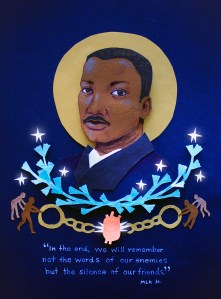
From the late Grace Lee Boggs (photo right, with husband Jimmy) in The Next American Revolution: Sustainable Activism for the 21st Century (2012)

…we need to see ourselves not as victims but as new men and women who, recognizing the sacredness in ourselves and in others, can view love and compassion, in the words of Martin Luther King, not as “some sentimental and weak response” but instead as “the key that unlocks the doors which leads to ultimate reality.” Continue reading “A Revolutionary Period”

A Creative Psalm of Peace

mlkDay 35 of our Lenten Journey through Dr. King’s “Beyond Vietnam.”

As that noble bard of yesterday, James Russell Lowell, eloquently stated:

Once to every man and nation comes a moment do decide,
In the strife of truth and Falsehood, for the good or evil side;
Some great cause, God’s new Messiah offering each the bloom or blight,
And the choice goes by forever ‘twixt that darkness and that light.
Though the cause of evil prosper, yet ‘tis truth alone is strong
Though her portions be the scaffold, and upon the throne be wrong
Yet that scaffold sways the future, and behind the dim unknown
Standeth God within the shadow, keeping watch above his own.

And if we will only make the right choice, we will be able to transform this pending cosmic elegy into a creative psalm of peace. If we will make the right choice, we will be able to transform the jangling discords of our world into a beautiful symphony of brotherhood. If we will but make the right choice, we will be able to speed up the day, all over America and all over the world, when justice will roll down like waters, and righteousness like a mighty stream.
—————-
-Today, we commemorate the 50th anniversary of Dr. King’s “Beyond Vietnam.”  Rachel Harding, Ruby Sales, Michelle Alexander and many others will be gathering tonight at Riverside Church from 7-9pm EDT.

-Listen to the original audio recording of Dr. King’s “Beyond Vietnam” speech in its entirety HERE.

-For more analysis of the speech, Dr. Vincent Harding and the history social justice movements in the U.S., check out this Iconoclast episode with Joanna Shenk, Elaine Enns and Ched Myers, recorded at the February 2017 Kinsler Institute hosted by Bartimaeus Cooperative Ministries.

The Choice is Ours

DEM 2016 ConventionDay 34 of our Lenten Journey through Dr. King’s “Beyond Vietnam” speech.

Now let us begin. Now let us rededicate ourselves to the long and bitter, but beautiful, struggle for a new world. This is the calling of the sons of God, and our brothers wait eagerly for our response. Shall we say the odds are too great? Shall we tell them the struggle is too hard? Will our message be that the forces of American life militate against their arrival as full men, and we send our deepest regrets? Or will there be another message—of longing, of hope, of solidarity with their yearnings, of commitment to their cause, whatever the cost? The choice is ours, and though we might prefer it otherwise, we must choose in this crucial moment of human history.

From Rev. William Barber II (photo above) in an interview with Religion Dispatches

Be open to the Spirit moving us in new ways. Recently I was in New York City to receive an award from a philanthropist. After I’d received the award, this 90 year-old elder’s son invited me to walk to where his dad was seated as he has some difficulty walking these days. But he insisted upon getting up and grabbed my hand with great passion. “I’m so glad to be giving my money this year to a Movement that I know is making a difference,” he said. Continue reading “The Choice is Ours”

We Must Find New Ways

ConeDay 33 of our Lenten Journey through Dr. King’s “Beyond Vietnam” speech.
We still have a choice today: nonviolent coexistence or violent co-annihilation. We must move past indecision to action. We must find new ways to speak for peace in Vietnam and justice throughout the developing world, a world that borders on our doors. If we do not act, we shall surely be dragged down the long, dark, and shameful corridors of time reserved for those who possess power without compassion, might without morality, and strength without sight.
————-
From James Cone in Martin and Malcolm and America: A Dream or a Nightmare (1991):

King’s words have been appropriated by the people who rejected him in the 1960s. So by making his birthday a national holiday, everybody claims him, even though they opposed him while he was alive. They have frozen King in 1963 with his ‘I Have a Dream’ speech. That is the one that can best be manipulated and misinterpreted. King also said, shortly after the Selma march and the riots in Watts, ‘They have turned my dream into a nightmare.’ Continue reading “We Must Find New Ways”

The Fierce Urgency of Now

MelanieDay 32 of our Lenten Journey through Dr. King’s “Beyond Vietnam” speech.
We are now faced with the fact, my friends, that tomorrow is today. We are confronted with the fierce urgency of now. In this unfolding conundrum of life and history, there is such a thing as being too late. Procrastination is still the thief of time. Life often leaves us standing bare, naked, and dejected with a lost opportunity. The tide in the affairs of men does not remain at flood—it ebbs. We may cry out desperately for time to pause in her passage, but time is adamant to every plea and rushes on. Over the bleached bones and jumbled residues of numerous civilizations are written the pathetic words, “Too late.” There is an invisible book of life that faithfully records our vigilance or our neglect. Omar Khayyam is right: “The moving finger writes, and having writ moves on.”

By Melanie Morrison (photo above), Director at Allies For Change

Fifty years ago, Dr. Martin Luther King Jr. declared in the pulpit at Riverside Church that the war in Vietnam was “a symptom of a far deeper malady within the American spirit.” Dr. King warned that America would continue to be a dangerous purveyor of oppressive, counterrevolutionary violence in distant lands if it failed to acknowledge the systemic racism that lay — as an unhealed wound — at the heart of our nation. He decried the egregious irony that young black men were being sent eight thousand miles away “to guarantee liberties in Southeast Asia which they had not found in southwest Georgia and East Harlem.” Continue reading “The Fierce Urgency of Now”

The First Hope in our Inventory

SNGDay 31 of our Lenten Journey through Dr. King’s “Beyond Vietnam” speech.

We can no longer afford to worship the god of hate or bow before the altar of retaliation. The oceans of history are made turbulent by the ever-rising tides of hate. History is cluttered with the wreckage of nations and individuals that pursued this self-defeating path of hate. As Arnold Toynbee says: “Love is the ultimate force that makes for the saving choice of life and good against the damning choice of death and evil. Therefore the first hope in our inventory must be the hope that love is going to have the last word.”

From Rev. Solveig Nilsen-Goodin (photo above, with family), Wilderness Way Community (Portland, OR)

I turn my headlamp off. A faint pulse of fear shoots through me in that split second of complete darkness before my eyes adjust. Wind whips. Salty water sprays off the crashing waves. The ocean roars. I mean, roars.

This is not a habit of mine — venturing alone to the beach at night in gale force winds. But I cannot find my place in the camaraderie and singing around the campfire. Tonight, I am overwhelmed. Overwhelmed by the turbulent oceans and ever-rising tides of hate manifesting in our country. Overwhelmed by the tidal wave of climate change already literally crashing in on our shores. Internally I flail and gasp for air, inundated by the torrential consequences of greed and corruption, sexism and homophobia, racism and classism, colonialism and violence — everywhere it seems, violence — economic and ecological, sexual and physical, psychological and spiritual. The deluge just. doesn’t. stop. Continue reading “The First Hope in our Inventory”

The Key That Unlocks the Door

NicolasDay 30 of our Lenten journey through Dr. King’s “Beyond Vietnam” speech.

This call for a worldwide fellowship that lifts neighborly concern beyond one’s tribe, race, class, and nation is in reality a call for an all-embracing and unconditional love for all mankind. This oft misunderstood, this oft misinterpreted concept, so readily dismissed by the Nietzsches of the world as a weak and cowardly force, has now become an absolute necessity for the survival of man. When I speak of love I am not speaking of some sentimental and weak response. I’m not speaking of that force which is just emotional bosh. I am speaking of that force which all of the great religions have seen as the supreme unifying principle of life. Love is somehow the key that unlocks the door which leads to ultimate reality. This Hindu-Muslim-Christian-Jewish-Buddhist belief about ultimate reality is beautifully summed up in the first epistle of Saint John: “Let us love one another (Yes), for love is God. (Yes) And every one that loveth is born of God and knoweth God. He that loveth not knoweth not God, for God is love. . . . If we love one another, God dwelleth in us and his love is perfected in us.” Let us hope that this spirit will become the order of the day.

By Elizabeth Nicolas, a Workers’ Rights Attorney at the Empire Justice Center (Rochester, NY)

In the weeks leading up to the 2016 presidential election, flyers were distributed in neighborhoods near my home in Rochester, NY that stated “Make Rochester Great Again.” The flyers directed residents to a website that promoted white supremacy. On the night of the presidential election, the home of a black family was vandalized: their windows were broken and a racial slur was spray painted across their house. The next day, two rainbow pride flags were set on fire while still attached to people’s homes. Continue reading “The Key That Unlocks the Door”

A Revolutionary Spirit

JPerkDay 29 of our Lenten Journey through Dr. King’s “Beyond Vietnam” speech.

These are revolutionary times. All over the globe men are revolting against old systems of exploitation and oppression, and out of the wounds of a frail world, new systems of justice and equality are being born. The shirtless and barefoot people of the land are rising up as never before. The people who sat in darkness have seen a great light. We in the West must support these revolutions.

It is a sad fact that because of comfort, complacency, a morbid fear of communism, and our proneness to adjust to injustice, the Western nations that initiated so much of the revolutionary spirit of the modern world have now become the arch antirevolutionaries. This has driven many to feel that only Marxism has a revolutionary spirit. Therefore, communism is a judgment against our failure to make democracy real and follow through on the revolutions that we initiated. Our only hope today lies in our ability to recapture the revolutionary spirit and go out into a sometimes hostile world declaring eternal hostility to poverty, racism, and militarism. With this powerful commitment we shall boldly challenge the status quo and unjust mores, and thereby speed the day when “every valley shall be exalted, and every mountain and hill shall be made low, the crooked shall be made straight, and the rough places plain.”

A genuine revolution of values means in the final analysis that our loyalties must become ecumenical rather than sectional. Every nation must now develop an overriding loyalty to mankind as a whole in order to preserve the best in their individual societies.

“Beyond Vietnam; Before Apocalypse” by Dr. James Parkinson (photo above), Ecumenical Theological Seminary (Detroit, MI)

Fifty years ago, Dr. Martin Luther King’s “Beyond Vietnam” speech marked a moment of decision for King and the movement he led. Speaking out to link the dropping of bombs on brown skin in Asian rice paddies with the refusal to enact policy addressing the real needs of black people in inner city America laid bare the depths of US violence. It was not enough to address civil rights alone; profound concern for the civil sphere enjoined profound concern for the military, the economy and society at large. King went to the bone with his knife, cut open putrid flesh long festering, joined the right to sit at lunch counters with whites to the question of the right to eat at all. Like Malcolm and so many others before him, once insisting the ugly triplets (militarism, materialism, and “melanism”) were in fact features of each other, King did not have long to live. And the movements he anchored or provoked—Civil Rights and Black Power alike—faced draconian repression and damnable cooptation. Fast forward. Continue reading “A Revolutionary Spirit”