Antidarkness + Black Joy

It’s March. On this site, that means that Black History month is just starting. This is an excerpt from Bettina Love’s We Want to do More than Survive: Abolitionist Teaching and the Pursuit of Educational Freedom (2019).

Antidarkness is the social disregard for dark bodies and the denial of dark people’s existence and humanity. When White students attend nearly all-White schools, intentionally removed from America’s darkness to reinforce White dominance, that is antidarkness. When dark people are present in school curriculums as unfortunate circumstances of history, that is antidarkness. When schools are filled with White faces in positions of authority and dark faces in the school’s help staff, that is antidarkness. The idea that dark people have had no impact on history or the progress of mankind is one of the foundational ideas of White supremacy. Denying dark people’s existence and contributions to human progress relegates dark folx to being takers and not cocreators of history or their lives…

…What is astonishing is that through all the suffering the dark body endures, there is joy, Black joy. I do not mean the type of fabricated and forced joy found in a Pepsi commercial. I am talking about joy that originates in resistance, joy that is discovered in making a way out of no way, joy that is uncovered when you know how to love yourself and others, joy that comes from relieving pain, joy that is generated in music and art that puts words and/or images to your life’s greatest challenges and pleasures and joy in teaching from a place of resistance, agitation, purpose, justice, love and mattering.

Unmasking a Long Crisis

By Tommy Airey, co-founder and curator of RadicalDiscipleship.net

Last Wednesday, this site propped The People’s CDC, a coalition of public health practitioners, scientists, healthcare workers, educators, advocates and people from all walks of life working to reduce the harmful impacts of COVID-19. The People’s CDC is a great resource for orgs and communities on the left committed to keeping all their people safe. Its weekly Covid “weather reports” are clear, concise and hyperlinked to back the stats. Last week, I received an email from a long-time reader who loves Radical Discipleship, but who had “great concerns” about Wednesday’s post. She referred to a recent study (Cochrane) that she claimed “summarizes that masks are not all that effective.” She was concerned that Wednesday’s post was building on a fear that is unwarranted because the “virus has gone to a much less virulent illness.”

I want to respond publicly to this email because I know that these sentiments are widespread, even on the left. Before I do, allow me to offer this full disclosure: Lindsay and I mostly work from home and we do not have children of our own. We have navigated the pandemic with unique privileges. My heart goes out to my former colleagues in the classroom, friends who are working nine to five jobs, folks I went to seminary with who are orchestrating Sunday services and parents of young children trying to make decisions about masks and gatherings in this climate of Covid denial and minimalism.

Trying to keep up with Covid-19 and make it make sense is an increasingly challenging and risky task. The problem is that ordinary people are swimming against a strong current of “open the economy” campaigns funded by white elites taking advantage of statistics that show people of color are more vulnerable to Covid-19. These stats and targeted disinformation have led white Americans to be consistently less fearful of the disease and less supportive of safety precautions for the past twenty months.

Continue reading “Unmasking a Long Crisis”

A Prayer of Freedom

An excerpt from Bill Wylie-Kellermann’s classic Seasons of Faith and Conscience (1991), on the first temptation of Jesus in the wilderness: If you are the Son of God, command these stones to become loaves of bread.

To undertake a lenten discipline, to fast or deny an appetite, is not to inflict some perverse self-punishment or to be justified by a religious act. It is a prayer of freedom: to loosen the bonds and to restore a right relation to the created order. It is so politically loaded because it breaks with the culture precisely at its main method of control.

If in his own fast Jesus is exercising a similar kind of freedom, the tempter manages to come back at a more subtle level. The temptation is to power because more than Jesus’ own needs are at issue. Can there be any doubt that in his aching need he intercedes for all those who are hungry? He bears all who suffer poverty and want. Can there be doubt that he wants justice so bad he can taste it? He hungers after righteousness.

The sharing of bread is intimately entangled with the ministry of Jesus. It is the great sign and metaphor of the kingdom. I have a friend who says if you can read the gospels without getting hungry then you’re not paying attention. The ministry reads like a gigantic floating potluck. From the opening wedding feast to to the feeding of the multitudes, by way of banquet parables or eating with tax collectors and sinners, through the last supper and the resurrection meals. Jesus can be seen with bread in his hands – blessing, breaking, offering, partaking.

The People’s CDC

Instead of working to prevent harm, so much of this era is marked by casualty management, leaving the most vulnerable to fend for themselves. Communities committed to radical mutuality are grappling with creating Covid-19 protocols that cut against the grain of conventional neoliberal wisdom. The People’s CDC is a compelling resource. Organizers are using their Safer Gatherings toolkit to convince conferences to shift their policies. The National Students for Justice in Palestine Conference featured layers of protection including KN95 masks, daily rapid tests, outdoor meals and more. The People’s CDC advised on their COVID protocol and created this poster for them to hang.

A Refusal to be Deformed

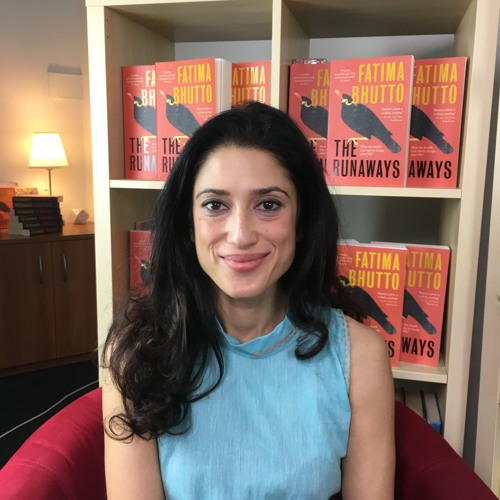
An excerpt from an interview with Pakistani author Fatima Bhutto. She was asked what comes to mind when she hears the word “violence” and how this understanding shapes her writing style.

Violence is more than just a word or even an attack. Violence is atmospheric. Like the weather, it’s a condition that covers over every choice, every human process, and is integral to how we gauge and navigate daily life. To have some consideration toward violence requires that we account for these climates of action and emotion, and I suspect that’s always been the case.

Even when I was very young, before I had so many personal encounters with violence, it still was atmospheric. It was always spoken about. It never left, even if there were sunnier or darker days, you always felt its pressure. Violence for me has always been there, on the minds of everyone in my family. I would even go so far as to say it was the biggest consideration to life. How to live in an environment where violence is ever present and has shaped who I have become.

I have of course always tried to keep a distance, and that’s part of the coping strategy. We try not to let violence in. But sometimes that’s not possible. It can seek you out like a slowly building storm.

Continue reading “A Refusal to be Deformed”

A Call to Gospel Nonviolence

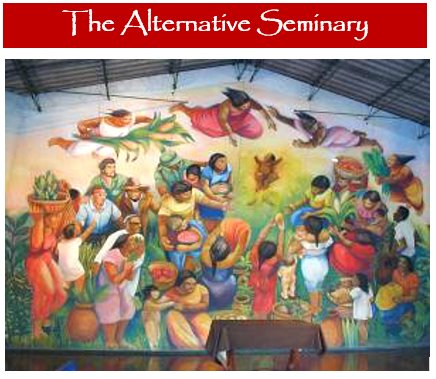
Another compelling event from Will O’Brien of the Alternative Seminary in Philly.

Dear friends, 

I am reaching out to many friends and colleagues of the Alternative Seminary with a request that you help promote our upcoming program.

We are once again doing the special Advent program, “The Cross of Christ: Justification for Redemptive Violence or a Call to Gospel Nonviolence?” on Saturday, February 25.

As those of you who have participated in the past know, the program offers a critique of how atonement theology has bred terrible suffering by offering a vision of sacred violence that justifies actual violence, especially again women and minority communities. Starting with resituating Jesus’s crucifixion in historical context, we explore how the cross can be seen as a symbol of nonviolent resistance to oppressive powers. The themes continue to be urgent, especially with the rise of Christian nationalism, in this country and around the world.

Continue reading “A Call to Gospel Nonviolence”

Meek Ain’t Weak

By Tommy Airey

I am someone who spends a lot more time casting a vision for what’s coming next than composting what’s already happened. It is both a gift – and a growth edge. I am learning that the more I slow down and process the particulars of my suburban past, the more I can subvert the sources that scripted my supremacy. One of those old sources was Gene, the father of one of my best friends. He was a passionate and playful pillar of the community. He was also a purveyor of patriarchy – and he had a profound impact on my early years.

Gene dismissed the perspectives of women with a warm smile and a witty joke. He made it clear that he believed that women were the weaker sex. Why? Because the bible says so. One time, when we were teenagers, Gene read us the passage from I Peter that says that wives must accept the authority of their husbands and that real women – biblical women – should stop obsessing over outward appearances, and instead embrace the lasting beauty of a meek and quiet spirit.

When I started studying the original languages of the bible in seminary, I learned that the word meek, in Greek, is praus, pronounced prah-ooce’. It is a divine strength soaked in gentleness, confidence, humility and open-heartedness. The irony is that Jesus used it to describe himself, not women. Jesus was a Palestinian Jewish rabbi who empowered people who were oppressed by professional religion and Roman culture. Jesus preached that God reigns not from the perches of the powerful, but from within the hearts of weary and burdened people.

The message of Jesus, according to Howard Thurman, focused on the urgency of a radical change in the inner attitude of his people. They had access to divine power and agency. It was rooted in how they responded whenever provoked by their oppressors. Thurman wrote that humility – not fear, hypocrisy or hatred – is the best defense against everything intended to humiliate. “Take my yoke upon you, and learn from me,” Jesus said, “for I am praus and humble in heart, and you will find rest for your souls.”

Continue reading “Meek Ain’t Weak”

So They Tell Us

From John (Fire) Lame Deer, Sioux Lakota (1903-1976). Thanks to Lorna Standingready for posting.

“Before our white brothers arrived to make us civilized men,
we didn’t have any kind of prison. Because of this, we had no delinquents.
Without a prison, there can be no delinquents.
We had no locks nor keys and therefore among us there were no thieves.
When someone was so poor that he couldn’t afford a horse, a tent or a blanket,
he would, in that case, receive it all as a gift.
We were too uncivilized to give great importance to private property.
We didn’t know any kind of money and consequently, the value of a human being
was not determined by his wealth.
We had no written laws laid down, no lawyers, no politicians,
therefore we were not able to cheat and swindle one another.
We were really in bad shape before the white men arrived and I don’t know
how to explain how we were able to manage without these fundamental things
that (so they tell us) are so necessary for a civilized society.”