In a new Radical Discipleship exclusive series, we are asking radical Christian leaders one question. What are the five books or authors that have seriously shaped your spiritual life? This is how Rev. Dr. Nick Peterson answered.
Belonging by bell hooks
Black Poets Lean South ed. by Nikki Finney
Parable of the Sower by Octavia Butler
How to Slowly Kill Yourself and Others in America by Kiese Laymon
The Overstory by Richard Powers
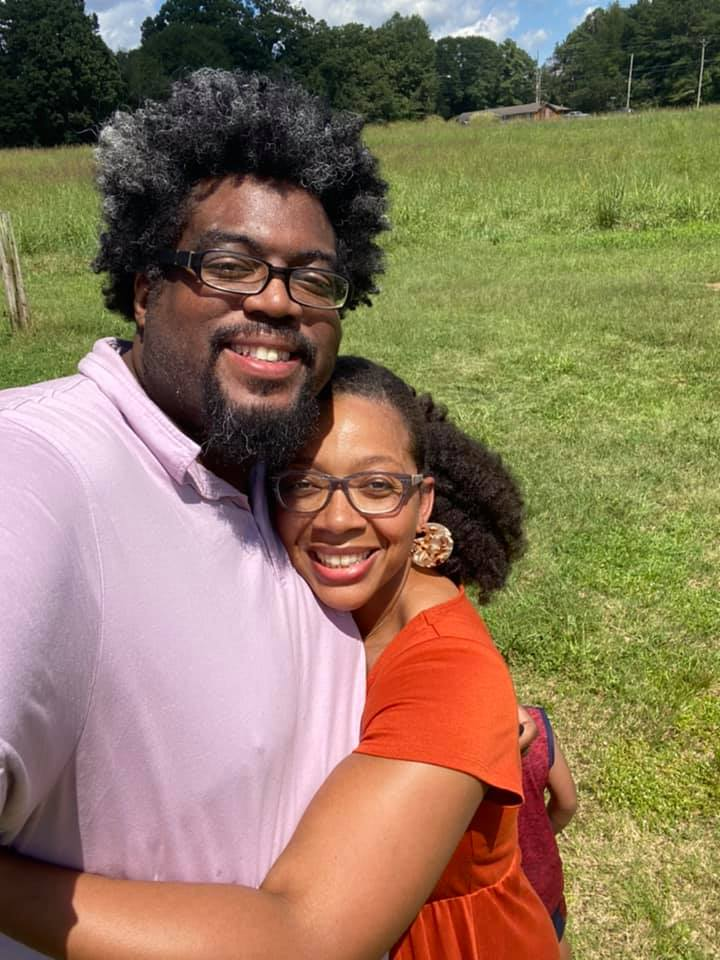
Rev. Dr. Nick Peterson is an AME pastor and professor at Emory University in Atlanta. He lives with his partner NaKisha, twin five-year-olds, his nieces, his mother-in-law Tutz and a couple precocious house cats.
When I call you mitakuyapi, “my relatives,” I am representing a Lakota worldview of kinship. Everything in creation is connected.
[Euro-]Western Christianity has a history of imposing a euro-cultural template for civilizing and Christianizing Indigenous peoples. I trusted that Jesus is Creator, Son, and Healer, but I was not an authentic fit in white church culture. I prayed for a way to follow Jesus from a faith of wholeness, rather than one of assimilation. The door opened for me to attend a seminary that included theology from an Indigenous perspective, taught by Indigenous instructors. It was liberating for me to understand that I was not having a faith crisis—I was experiencing a clash of worldviews.
I found differences between an Indigenous worldview and a euro-western culture worldview. For instance, western Christianity is shaped by a western European worldview with Hellenistic influences. One’s mind and beliefs became more important than physical experience or what one does. It confirmed my experience that theology is generally what you think or believe, not necessarily how you live every day.
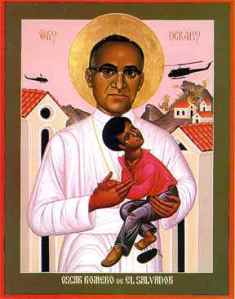
By Wes Howard-Brook & Sue Ferguson Johnson, a commentary on this weekend’s Gospel text, re-posted from November 2016
There is nothing more radical than resurrection.
From the time Daniel 12 apocalyptically announced that God raises the dead, the intellectual elite in Judea rejected it. Sophisticated skeptics have always scoffed at the notion that life extends beyond the bounds of death, because such a belief threatens to undermine the status quo from which they benefit. Consider, for example, this from Ecclesiastes, a text likely written before Daniel:
The living know that they will die, but the dead know nothing; they have no more reward, and even the memory of them is lost. Their love and their hate and their envy have already perished; never again will they have any share in all that happens under the sun. (Eccles 9.5-6)
After a thirty-month delay, I finally went in for hernia surgery last week. Lindsay hauled me over to the hospital in Grosse Pointe, Michigan – Detroit’s eastern adjacent suburb. As soon as we crossed Alter Road, everything changed. The mourning turned into mansions. Dr. King gave a speech in the high school gym in Grosse Pointe three weeks before he was assassinated. He talked about the two Americas. Those who grow up in the sunlight of opportunity – and those barely surviving in the fatigue of despair. During the speech, he was shouted down – several times – by white people who did not appreciate some outsider telling them that racism was still a real thing.
The day before my surgery, I drove to the lab in Grosse Pointe to get my pre-surgery blood screening. A Black woman was working the front desk. While I was waiting, an unmasked white man in his seventies walked in asking where to sign in. She pointed to the table and told him he needed to put on a face covering. He looked at me and shook his head, muttering that he had one in his bag. I stared him down. He didn’t sign in. When he found his seat across the room, he looked at me again. I just stared back. We both grew up in the sunlight of opportunity, but I wanted him to know that I would not be signing off on his supremacy story.
Across Jefferson Boulevard from the hospital, the yards of the mansions are lined with election signs promoting the GOP candidate for Secretary of State who got her masters degree in Christian Apologetics from BIOLA and is adamant the 2020 election was stolen. Many signs say, “Vote No on Prop 3,” the reproductive justice measure that got more signatures than any initiative in Michigan history. When we arrived at the hospital on the morning of my surgery, everything was quick and convenient. Parking spaces were abundant and free-of-charge. It was a close walk to the lobby. The surgery wing was a well-oiled machine. I did not wait long to get in.
An excerpt from Jonny Rashid’s new book JESUS TAKES A SIDE (2022). See below for details of an online event Jonny is hosting with The Alternative Seminary this Saturday!
Our church’s first love feast after Donald Trump was inaugurated as president of the United States changed me.
Our church celebrates something called the love feast, also known as an agape feast in some traditions. It is a worship meeting where we fellowship and reconcile among one another, letting our love and unity prevail. You can find references to love feasts in Jude and 1 Corinthians 1. At them, we eat together, welcome new members, and take communion. At our love feast in January 2017, our team had assigned me to offer the words of institution and the elements of communion to the assembly.
Admittedly, my mind was elsewhere. Donald Trump’s first executive action as the new president was in effect. We know it colloquially as the Muslim ban, but formally it is Executive Order 13769: Protecting the Nation from Foreign Terrorist Entry into the United States. It was a travel ban against people from a list of Middle Eastern countries and it had gone into effect that Saturday. It barred entry for anyone (with some exceptions) from Iran, Iraq, Libya, Somalia, Sudan, Syria, and Yemen. I got a notice on my phone that there were Arab immigrants in airports and they could not enter into the country because the ban was in effect.
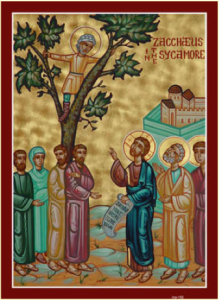
By Ched Myers, on Luke 19:1-10, re-posted from October 2016
First, as always, let’s put this Sunday’s gospel reading in its broader narrative context. The story of Zacchaeus represents the culmination of one of Luke’s important subplots: Jesus’ challenge to rich men (Gk plousios) to “turn their lives (and assets) around.” As pointed out in previous posts, this narrative strand forms the backbone of Luke’s “Special Section” (Lk 11-19), a pattern worth reiterating here (with links to my comments earlier this year):
By Bayo Akomolafe, re-posted from social media (October 18, 2022)
An obstacle is the richest, thickest, densest place in the universe. This is so because it is where things stop and often die, failing to continue on their way. It is where carcasses of hope rot into the ground, inadvertently fertilizing it. It is a place of desperation and longing and roaming ghosts.
All of this is my way of saying that I think it is not empty. This place – an obstacle – is bursting with activity, with microbial adventures, with dancing generativity, with experiments into continuity, with playful meanings and alchemical shifts, with eloquent invocations and stuttered words.
The very thing that distinguishes Indigenous peoples from settler societies is their unbroken connection to ancestral homelands. Their cultures and identities are linked to their original places in ways that define them: they are reflected in language, place names and cosmology (origin stories). In Indigenous worldviews, there is no separation between people and land, between people and other life forms, or between people and their ancient ancestors whose bones are infused in the land they inhabit and whose spirits permeate place.



 By Wes Howard-Brook & Sue Ferguson Johnson, a commentary on this weekend’s Gospel text, re-posted from November 2016

 By Ched Myers, on Luke 19:1-10, re-posted from October 2016
 For Indigenous Peoples Day, an excerpt from Dina Gilio-Whitaker’s brilliant new release
 Radical Discipleship