Gratitude

This is the first part of a long and very compelling Thanksgiving Day reflection from the author Robert Jones Jr. His newsletter is brilliant. You can sign up (free) for it here.

I don’t celebrate Thanksgiving Day.

Its genocidal, bait-and-switch origins make it, for me, heinous and not an occasion for rejoicing, to say the least. People get annoyed when I say this because they think it’s “too woke” of a perspective, which I interpret as too honest of a perspective, given the American investment in and penchant for not knowing. And since they like the traditions that have sprung up around the holiday, they don’t want to hear any critique of it, no matter how truthful.

I get it: I also like the idea of gathering with loved ones and sitting down at a banquet to laugh, love, reminisce, and be thankful. So, instead of celebrating the farce that is the colonists’ ploy, I use this time of year—as I touch upon in the video above (courtesy of BOOKCLUB: Black Like We Never Left)—to express gratitude to my Ancestors for their sacrifices and their survival so that I might be here today; to the First Nations/Indigenous/Native peoples upon whose land I live; and to the Universe for permitting me to exist in the first place.

Continue reading “Gratitude” →
We Are Literally Right Here

By Jim Bear Jacobs, re-posted from social media with permission (a reflection from 2019)

Brief moment of stepping up on my soapbox for some real talk. To my beautiful friends fighting for immigrant justice. There is a popular trope in these circles. Something along the lines of “We are all immigrants” This idea just needs to stop. We are not all immigrants. This is endemic of Indigenous erasure. I have encountered it in many social justice actions over the years. Once after we had opened an event with a drum circle, the first speaker called for immigrant justice by saying “in this country we have all come from somewhere else!” And I was like there are literally 15 Native people in the same room with you.

Today I was part of a beautiful vigil at the ICE headquarters to call for a stop of injustices committed against our immigrant neighbors. I and another Native clergyman were part of the leadership of this vigil. We opened by acknowledging that we were on Dakota land. We led a prayer to the directions. We sang a song in the Dakota language. I saw one sign that said Americans are all immigrants, and one of the speakers echoed the same sentiment. I know that it might seem overused for Native people to proclaim We Are Still Here, but in this case we were literally right here. There are three of us standing two feet behind you. The smoke from our sage is literally filling your nostrils as you speak.

My social justice friends, you are beautiful. I wholeheartedly love you. I am so grateful for your passion, your energy, your devotion to the cause. We do great work, it would take only a minimal effort to make it better. When you craft your words, when you make your signs, take a moment to make sure that your shouting does not contribute to the erasure of your indigenous hosts. We Are Still Here. We Are Literally Right Here.

Bearing Witness at the End of the World

By Ched Myers, a commentary on last Sunday’s Gospel

Today’s gospel text for the 23rd Sunday after Pentecost culminates Year C’s journey through Luke (next week’s “Reign of Christ Sunday” is a special feast day to close the liturgical year). It narrates the first half of the third gospel’s version of the “Synoptic Apocalypse” (Lk 21), which begins by portraying Jesus’ disciples, many of whom were up-country Galileans, as dazzled pilgrims encountering the grandeur of the “Holy” metropolis of Jerusalem for the first time (21:5).

Like rural folk visiting Washington DC for the first time, they were impressed (or perhaps just overwhelmed) by the imposing monuments and edifices of their nation, which conjured a visceral patriotism they assumed Jesus shared. We, too, inevitably experience moments of existential awe by our civilization, especially as powerfully represented by its built environment—whether civic, religious, industrial or military. We all dwell under the shadow cast by the self-congratulatory narrative of empire; it is so heroic and compelling that we become enamored with (or paralyzed by) the systems that rule over us, despite ourselves. “Wow!” they/we intone, “God bless America!”—then turn to Jesus to add plaintively, “right??”

Continue reading “Bearing Witness at the End of the World” →

Five Books: Nick Peterson

In a new Radical Discipleship exclusive series, we are asking radical Christian leaders one question. What are the five books or authors that have seriously shaped your spiritual life? This is how Rev. Dr. Nick Peterson answered.

  1. Belonging by bell hooks
  2. Black Poets Lean South ed. by Nikki Finney
  3. Parable of the Sower by Octavia Butler
  4. How to Slowly Kill Yourself and Others in America by Kiese Laymon
  5. The Overstory by Richard Powers

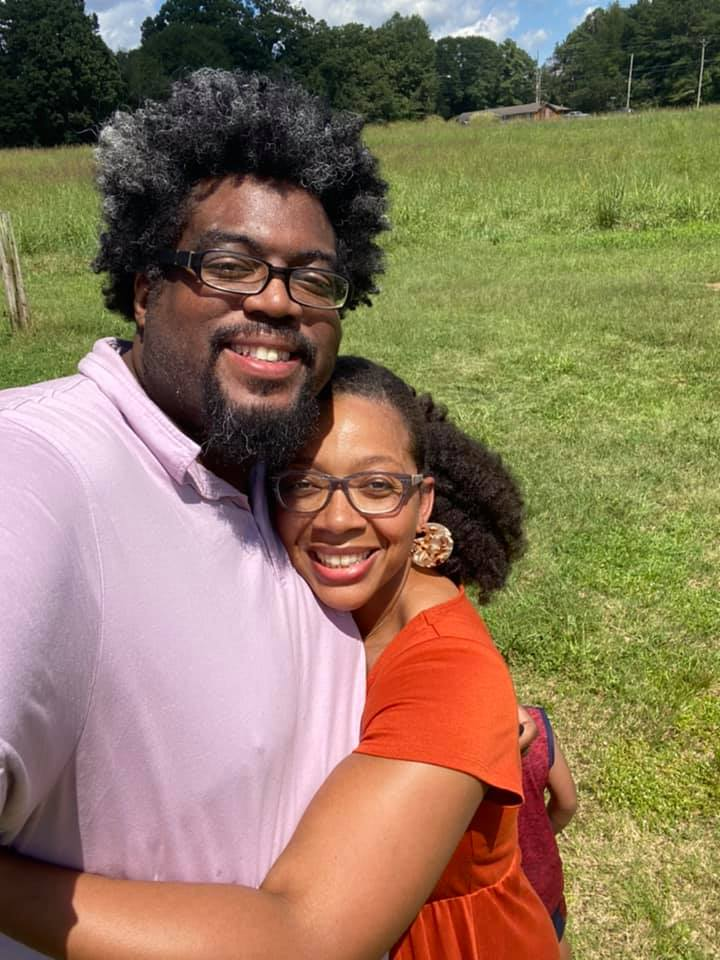
Rev. Dr. Nick Peterson is an AME pastor and professor at Emory University in Atlanta. He lives with his partner NaKisha, twin five-year-olds, his nieces, his mother-in-law Tutz and a couple precocious house cats.

Mitakuyapi

By Lenore Three Stars, excerpted from her essay “Mitakuyapi (My Relatives), What is Your Worldview?”

When I call you mitakuyapi, “my relatives,” I am representing a Lakota worldview of kinship. Everything in creation is connected. 

[Euro-]Western Christianity has a history of imposing a euro-cultural template for civilizing and Christianizing Indigenous peoples. I trusted that Jesus is Creator, Son, and Healer, but I was not an authentic fit in white church culture. I prayed for a way to follow Jesus from a faith of wholeness, rather than one of assimilation. The door opened for me to attend a seminary that included theology from an Indigenous perspective, taught by Indigenous instructors. It was liberating for me to understand that I was not having a faith crisis—I was experiencing a clash of worldviews.

I found differences between an Indigenous worldview and a euro-western culture worldview. For instance, western Christianity is shaped by a western European worldview with Hellenistic influences. One’s mind and beliefs became more important than physical experience or what one does. It confirmed my experience that theology is generally what you think or believe, not necessarily how you live every day. 

Continue reading “Mitakuyapi” →

Resurrection: The Hope That Vindicates God’s Justice

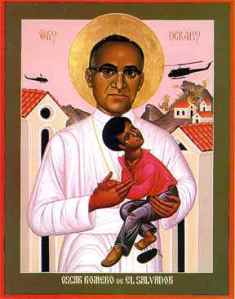
romeroBy Wes Howard-Brook & Sue Ferguson Johnson, a commentary on this weekend’s Gospel text, re-posted from November 2016
There is nothing more radical than resurrection.

From the time Daniel 12 apocalyptically announced that God raises the dead, the intellectual elite in Judea rejected it. Sophisticated skeptics have always scoffed at the notion that life extends beyond the bounds of death, because such a belief threatens to undermine the status quo from which they benefit. Consider, for example, this from Ecclesiastes, a text likely written before Daniel:

The living know that they will die, but the dead know nothing; they have no more reward, and even the memory of them is lost. Their love and their hate and their envy have already perished; never again will they have any share in all that happens under the sun. (Eccles 9.5-6)

Continue reading “Resurrection: The Hope That Vindicates God’s Justice” →

The Recovery Room

By Tommy Airey

After a thirty-month delay, I finally went in for hernia surgery last week. Lindsay hauled me over to the hospital in Grosse Pointe, Michigan – Detroit’s eastern adjacent suburb. As soon as we crossed Alter Road, everything changed. The mourning turned into mansions. Dr. King gave a speech in the high school gym in Grosse Pointe three weeks before he was assassinated. He talked about the two Americas. Those who grow up in the sunlight of opportunity – and those barely surviving in the fatigue of despair. During the speech, he was shouted down – several times – by white people who did not appreciate some outsider telling them that racism was still a real thing.

The day before my surgery, I drove to the lab in Grosse Pointe to get my pre-surgery blood screening. A Black woman was working the front desk. While I was waiting, an unmasked white man in his seventies walked in asking where to sign in. She pointed to the table and told him he needed to put on a face covering. He looked at me and shook his head, muttering that he had one in his bag. I stared him down. He didn’t sign in. When he found his seat across the room, he looked at me again. I just stared back. We both grew up in the sunlight of opportunity, but I wanted him to know that I would not be signing off on his supremacy story.

Across Jefferson Boulevard from the hospital, the yards of the mansions are lined with election signs promoting the GOP candidate for Secretary of State who got her masters degree in Christian Apologetics from BIOLA and is adamant the 2020 election was stolen. Many signs say, “Vote No on Prop 3,” the reproductive justice measure that got more signatures than any initiative in Michigan history. When we arrived at the hospital on the morning of my surgery, everything was quick and convenient. Parking spaces were abundant and free-of-charge. It was a close walk to the lobby. The surgery wing was a well-oiled machine. I did not wait long to get in.

Continue reading “The Recovery Room” →

Taking Sides

An excerpt from Jonny Rashid’s new book JESUS TAKES A SIDE (2022). See below for details of an online event Jonny is hosting with The Alternative Seminary this Saturday!

Our church’s first love feast after Donald Trump was inaugurated as president of the United States changed me.

Our church celebrates something called the love feast, also known as an agape feast in some traditions. It is a worship meeting where we fellowship and reconcile among one another, letting our love and unity prevail. You can find references to love feasts in Jude and 1 Corinthians 1. At them, we eat together, welcome new members, and take communion. At our love feast in January 2017, our team had assigned me to offer the words of institution and the elements of communion to the assembly.

Admittedly, my mind was elsewhere. Donald Trump’s first executive action as the new president was in effect. We know it colloquially as the Muslim ban, but formally it is Executive Order 13769: Protecting the Nation from Foreign Terrorist Entry into the United States. It was a travel ban against people from a list of Middle Eastern countries and it had gone into effect that Saturday. It barred entry for anyone (with some exceptions) from Iran, Iraq, Libya, Somalia, Sudan, Syria, and Yemen. I got a notice on my phone that there were Arab immigrants in airports and they could not enter into the country because the ban was in effect.

Continue reading “Taking Sides” →