This Genocidal Process

An excerpt from Friday’s Democracy Now interview with Nick Estes,  author of the book Our History Is the Future: Standing Rock Versus the Dakota Access Pipeline, and the Long Tradition of Indigenous Resistance. The interview was conducted in the wake of the new Interior Dept report documenting the deaths of 500 Indigenous children at Indian boarding schools run or supported by the federal government in the United States.

…this is a very emotional experience for a lot of Indigenous people in this country. And it should be an emotional experience for non-Indigenous people in this country. This is quite a historic moment in time. Although it’s not new news to Indigenous people, it might be new news to those who are hearing this horrific genocidal process that has taken place.

I think, you know, there’s a reason why the forcibly transferring of children from one group to another group is an international legal definition of genocide. That’s what we’re talking about, because taking children, or the process of Indian child removal, has been one strategy for terrorizing Native families for centuries, from the mass removal of Native children from their communities into boarding schools, as this new report lays out, from their communities into their widespread adoption and fostering out to mostly white families, which happened primarily in the 20th century.

Continue reading “This Genocidal Process” →

The Land is not Empty

An excerpt of Rev. TJ Smith’s response to Sarah Augustine’s book The Land is not Empty: Following Jesus in Dismantling the Doctrine of Discovery. This is re-posted from the book forum hosted by Anabaptist Witness.

As I work with younger First Nation and First Alaskan, my hope and prayer is for them to know they are wonderfully made as they are. I think of a young First Alaskan who asked me with tears rolling down her face, “You mean it is okay to follow God and speak my language, live my culture?” To help them understand that the community where they come from is more important than the idea of “conformed individuality.”

To think of the next generation of you Indigenous leaders that will be free from; you are invisible, you are nothing more than a merciless savage, to you are my daughter or son who I created…. How freeing and empowering could that be for them, for the generations to come? How do we, can we help free them from the bondage that we have carried?

Continue reading “The Land is not Empty” →

The Radical Bible

By Wes Howard-Brook

“Keep these words that I am commanding you today in your heart. Recite them to your children and talk about them when you are at home and when you are away, when you lie down and when you rise.” (Deuteronomy 6.6-7)

What “words” do we keep in our hearts this day? What stories do we tell our children to give them hope and joy amid a world overflowing with violence and suffering?

Winter quarter was my final time teaching the Bible to college students at Seattle University after two decades. One might imagine that folks enrolled at a Jesuit Catholic university might start with some basic biblical literacy, or at least perhaps some curiosity about the stories that are supposed to be foundational for all Christian traditions. Yet I found almost the opposite to be true: most students were not Catholic or Christian in anything more than inherited label, and few had the slightest interest in engaging biblical narratives. I found my experience was common in many places.

Continue reading “The Radical Bible” →

Easter as Mystical/Material Abundance

By Ched Myers, comments on John 21 for May 1, 2022

I’ve long been fascinated with today’s gospel reading. The story is roughly parallel to Luke 5:1-11, and notably Luke places his version at the beginning of his narrative of Jesus’ ministry (in place of Mark’s call of the fishermen), while John puts it at the end of his gospel.  This tradition must have been strong in the early church, and seems to signal a restoration of divine abundance in place of the scarcity of the exploited fishery in defiance of official regulations. 

John brackets this story (21:1,14) with assertions that this was a “revelation /manifestation” (phaneroō, 6 times in John, e.g. 3:21); this is the final revelation. John places it at the “Sea of Tiberias,” a name only he uses in the N.T. for the Sea of Galilee” (see 6:1), which seems to emphasize the imperial renaming of the lake. In C.E. 14, Caesar Augustus died and Tiberius eventually became Emperor. To cultivate the new emperor’s favor, in C.E. 19 Herod Antipas began building a new capital city, which he named Tiberias in a bald demonstration of fealty. Right on the Sea of Galilee, this city was part of a new wave of Roman economic colonization.  Its primary function was to regulate the fishing industry around the Sea, the most prosperous segment of ancient Galilee’s economy, putting it firmly under the control of Roman and Herodian elites, who endeavored to control the industry for export markets. 

Continue reading “Easter as Mystical/Material Abundance” →

Rivers Such as This

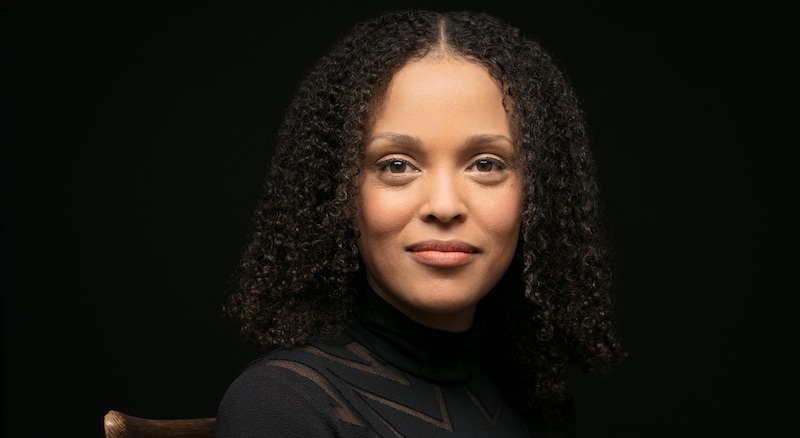
An excerpt from Jesmyn Ward’s September 2020 Vanity Fair piece “On Witness and Repair: A Personal Tragedy Followed by Pandemic.” It is a classic that deserves revisiting over and over again.

In the days after my conversation with my cousin, I woke to people in the streets. I woke to Minneapolis burning. I woke to protests in America’s heartland, Black people blocking the highways. I woke to people doing the haka in New Zealand. I woke to hoodie-wearing teens, to John Boyega raising a fist in the air in London, even as he was afraid he would sink his career, but still, he raised his fist. I woke to droves of people, masses of people in Paris, sidewalk to sidewalk, moving like a river down the boulevards. I knew the Mississippi. I knew the plantations on its shores, the movement of enslaved and cotton up and down its eddies. The people marched, and I had never known that there could be rivers such as this, and as protesters chanted and stomped, as they grimaced and shouted and groaned, tears burned my eyes. They glazed my face.

Continue reading “Rivers Such as This” →

A New Song

By Tommy Airey, reposted from Easy Yolk

“What I do know is that love reckons with the past and evil reminds us to look to the future. Evil loves tomorrow because peddling in possibility is what abusers do.”—Kiese Laymon

“Oh, sing to the Lord a new song.”—Psalm 96:1

Thirty years ago, four white cops caught on video beating Rodney King fifty-six times were acquitted in Simi Valley by a jury made up of ten white folks, one Latino and one Asian. In the aftermath, a righteous rage fueled the L.A. Riots. At the time, I was fifty miles south, getting ready for senior prom. Six weeks earlier, our high school basketball team won the CIF sectional championship at the Sports Arena, where the Clippers used to play back in the day. We beat Lynwood, an all-Black squad from south L.A. In our all-white minds, we were getting revenge.

When I was a freshman, we got manhandled by all-Black Manual Arts High School in the state playoffs. They brought a cadre of students and parents down to South Orange County, the metro region with the lowest Black population in the US. Their crowd was small but persistently on point. When they scored or made a stop, everyone in their section of the bleachers would extend their arms out like an alligator and chant in rapid succession, “We love it. We love it. We love it.” As they clapped together, the alligators chomped together. Black excellence completely obliterated our home court advantage.

Continue reading “A New Song” →

A Whole Range of Oppressions

An excerpt from the 45-year-old Combahee River Collective.

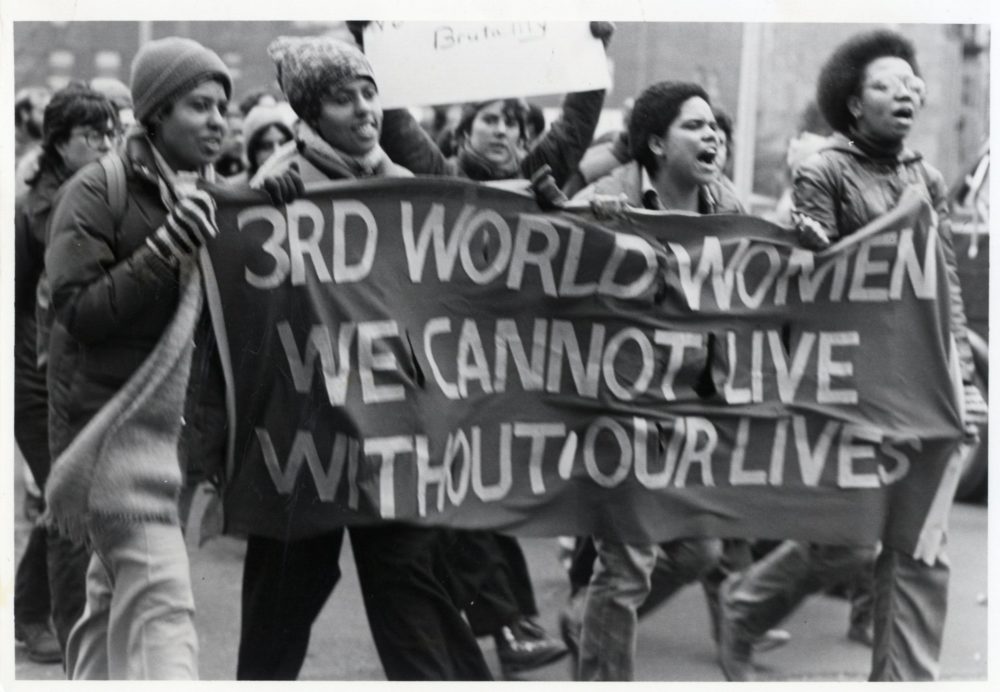
The major source of difficulty in our political work is that we are not just trying to fight oppression on one front or even two, but instead to address a whole range of oppressions. We do not have racial, sexual, heterosexual, or class privilege to rely upon, nor do we have even the minimal access to resources and power that groups who possess anyone of these types of privilege have.

The psychological toll of being a Black woman and the difficulties this presents in reaching political consciousness and doing political work can never be underestimated. There is a very low value placed upon Black women’s psyches in this society, which is both racist and sexist. As an early group member once said, “We are all damaged people merely by virtue of being Black women.” We are dispossessed psychologically and on every other level, and yet we feel the necessity to struggle to change the condition of all Black women. In “A Black Feminist’s Search for Sisterhood,” Michele Wallace arrives at this conclusion:

Continue reading “A Whole Range of Oppressions” →

Memory and Mandate: A Meditation on Maundy Thursday

By Ken Sehested

Under the sway of Easter bunnies, chocolate binges, and spring fashion sales, Holy Week and Resurrection Morning observances have shed almost all connections to the volatile political events in Jerusalem leading up to Jesus’ “triumphal entry” into the city.

The season of Jesus’ final visit to Jerusalem was the fevered occasion of Passover. Passover was the story of the Hebrews’ miraculous escape from Egyptian bondage. Passover’s observance in first century Palestine was like President’s Day, Armed Forces Day, Memorial Day, Flag Day, and Independence Day all rolled up into one. Judea was again in bondage, this time subjugated by Roman occupation. Jews from around the countryside streamed into Jerusalem for reasons of piety mixed with nationalist fervor. Rome ramped up its troop level every year at this time.

Continue reading “Memory and Mandate: A Meditation on Maundy Thursday” →

Challenging Power and Privilege: Is Good News for the poor Bad News for many of us in North America?

By Will O’Brien, coordinator of The Alternative Seminary

Our Western scholarship and church teaching have communicated to us the notion that the four Gospels convey “objective truth,” and we read them to discern their objective and universal meaning. But such an approach to Scripture, bred in the Western / European church, has functioned to uphold social power systems of domination. What is “objective” and what is “universal” have been adjudicated conveniently by church hierarchy and monarchs to serve the needs of Empire, muting the prophetic and liberating voices of scripture.

In recent decades, the Western church has had its safe objectivity subverted by the powerful and insistent voices from the global south, who have forced us to reckon with the social contexts of scripture – both in its historical origins and in our contemporary world. They have exposed the lie behind the phony neutrality of Western biblical scholarship and challenged our concepts of universal meaning by reading the gospels in contexts of real-life suffering, oppression, and unjust social systems.

Continue reading “Challenging Power and Privilege: Is Good News for the poor Bad News for many of us in North America?” →