White Evangelical Racism

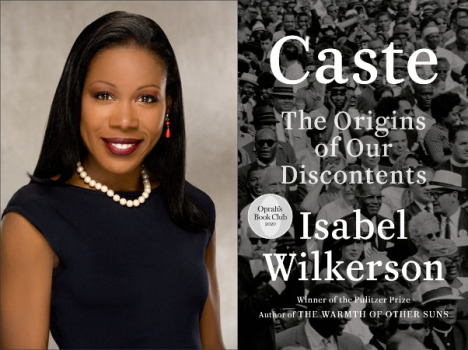
An excerpt from an interview with Anthea Butler, the author of the new release White Evangelical Racism. The full interview with Eric Miller at Religion and Politics can be read here.

I chose this title because I wanted to set certain parameters for the book. I specified white evangelicals to show that I’m using the term in the way that it is used colloquially by the media and the political pundits, rather than in some academic sense. That popular understanding of evangelical can be traced to self-identification, to the demographic of white, Christian conservatives who consider themselves evangelical. And I included racism because it is a very particular type of racism that I am discussing. That is, the racism that hides behind “moral” issues.

I address these questions at some length in the book, exploring how the meaning of evangelicalism has changed over time, and recognizing that there are a lot of people out there who don’t realize they’re in this thing because their self-concept leans heavily on theological considerations, allowing them to pretend that they’re not political. But nobody cares about your commitment to the Bebbington Quadrilateral when you’re arguing about the Supreme Court or judges or abortion. They care about how your belief informs your politics, which candidates you vote for, and what they stand for. So I wanted to pull evangelicals out of this safe little realm in which they’ve placed themselves and press them to confront how other people see them.

Binding the Strong Man: Jesus’ Master Metaphor

By Ched Myers, for the 2nd Sunday of Pentecost (Mk 3:20-35)

Note: This is re-posted from a series of Ched’s brief comments in 2015 on the Markan gospel readings from the Revised Common Lectionary during year B.

The first major narrative cycle in Mark’s gospel (1:16-3:6) ends with Jesus’ rejection by the authorities in a Capernaum synagogue. The following episodes serve to regenerate the story by a withdrawal and summary scene (3:7-12) and then by a reconsolidation moment (3:13-19a). The latter mountaintop scene boldly re-contextualizes two of the most revered traditions of Israel: God’s covenant with Moses on Sinai, and Moses’ founding of the free tribal confederacy in the wilderness. Jesus, who has taken the torch from the prophets, prepares to pass it on to twelve disciples he has called, named, and commissioned to proclaim, heal and exorcize (3:14f). Shortly they will be sent out to practice this charge – a second regenerative episode that follows upon another synagogue rejection (6:1-13).

Continue reading “Binding the Strong Man: Jesus’ Master Metaphor”

The Womanist Theology of Rev. Dr. Katie Geneva Cannon

An excerpt from a reflection on the life of Rev. Dr. Katie Geneva Cannon by Angela D. Sims. Re-posted from Religion and Politics, February 2019.


In every generation, a “remnant” of scholars emerges that challenges status quo perspectives. Their critiques of normative constructs serve as models for subsequent scholars who learn how to work not only to eat but also to work in a manner that enables others to eat. The Rev. Dr. Katie Geneva Cannon was indeed such a person. She loved life, loved people, loved laughter, loved food, loved imagining the not yet, loved calling things into existence. The progenitor of womanist theological ethics, Cannon was a brilliant scholar, a mentor extraordinaire who possessed an ability to discern what was most needed, and generous (almost to a fault) in the sharing of her time and resources…

…Born January 3, 1950, in Kannapolis, North Carolina, Cannon became the first black woman to be ordained in the United Presbyterian Church, a precursor to the Presbyterian Church (U.S.A). After earning her doctorate at Union Theological Seminary in New York City—the first African American woman to do so—Cannon laid the foundation for womanist ethics in her 1985 essay, “The Emergence of Black Feminist Consciousness.” Many black women in theological disciplines, including Cannon, have gravitated to the use of author Alice Walker’s term “womanist” as both a challenge to and a confessional statement for our own work. Womanist, as defined in Walker’s In Search of Our Mothers’ Gardens: Womanist Prose, contains elements of tradition, community, self, and a critique of white feminist thought and provides a fertile ground for religious reflection and practical application.

Continue reading “The Womanist Theology of Rev. Dr. Katie Geneva Cannon”

An Alternative Version

By Tommy Airey

A year ago, police responded to a call from a convenience store employee who accused George Floyd of paying for cigarettes with a counterfeit $20 bill. Before every single one of us witnessed this Black man forty days younger than me face down on the street pavement calling for his mother while a white man in uniform with his left hand in his pocket took his life by kneeling on his neck, the Minneapolis Police Department issued a press release describing what happened:

Two officers arrived and located the suspect, a male believed to be in his 40s, in his car. He was ordered to step from his car. After he got out, he physically resisted officers. Officers were able to get the suspect into handcuffs and noted he appeared to be suffering medical distress. Officers called for an ambulance. He was transported to Hennepin County Medical Center by ambulance where he died a short time later. At no time were weapons of any type used by anyone involved in this incident.

This ordering of facts was the official account.  

Continue reading “An Alternative Version”

Holiness Entered Suffering

A recent social media re-post from Mark Van Steenwyk, the executive director of The Center for Prophetic Imagination.

At its best, Christianity isn’t about redemptive suffering. Suffering isn’t sacred. This is the classic mistake. That, somehow, enduring suffering is, in and of itself, something holy. This sort of thinking leads to the horrid idea that a soldier’s death renders their service holy. It is a lie that empires spin.

Rather, the way of Jesus tells us that holiness *enters* suffering. On the cross, God suffered. Holiness entered suffering, not to glorify suffering, but to be with those who suffer.

It is life that is sacred. In our suffering, God is present.

This is the powerful insight of liberation theology. God is uniqely present with the oppressed.

Continue reading “Holiness Entered Suffering”

But When it Comes to Palestine

An excerpt from a recent Democracy Now interview with Marc Lamont Hill, the co-author of Except for Palestine: The Limits of Progressive Politics (2021).

…all the issues that are coming up right now really speak to the various ways that Palestinians have been made the exception to many of our progressive values and politics and actions, if you think about — or, rather, in activist circles. I’ll start there, in activist circles. You know, we have this person we call the ”PEP” — right? — the person who’s progressive except for Palestine. This is the person that’s outraged at Trump for his actions at the border, who’s disgusted by children in cages, who can’t stand to think about the erosion of civil liberties. But when it comes to Palestine, somehow, they don’t engage those same ideas in the same way.

And so, in our book, what we attempt to do is lay out the kind of policy groundwork. We lay out the frontier on which these battles are fought. We want people to understand not just the contradictions of the so-called left, but also to understand how those contradictions emerged. So, whether it’s questions about the right to exist, whether it’s questions about BDS, the Boycott, Divestment and Sanctions movement, or whether it’s the attempt to make Trump the exception rather than part of a more aggressive articulation of the American rule, we are attempting to show that the American left — those who identify as progressive, radical, liberal, what have you — have not held up the bargain in terms of matching their own ideals and values on this question of Israel and Palestine. And that’s something that we want to raise.

Continue reading “But When it Comes to Palestine”

Of the Empire

A prose poem of Mary Oliver, passed along to us from movement elder Clancy Dunigan.

We will be known as a culture that feared death and adored power, that tried to vanquish insecurity for the few and cared little for the penury of the many. We will be known as a culture that taught and rewarded the amassing of things, that spoke little if at all about the quality of life for people (other people), for dogs, for rivers. All the world, in our eyes, they will say, was a commodity. And they will say that this structure was held together politically, which it was, and they will say also that our politics was no more than an apparatus to accommodate the feelings of the heart, and that the heart, in those days, was small, and hard, and full of meanness

Zionism, Christian Zionism and White Supremacy

By Rev. Graylan Scott Hagler, Senior Minister, Plymouth Congregational United Church of Christ, Washington, DC

People who are interested in the bible are tempted to read it literally and seek to follow its every word. This has been the conditioning of fundamentalism.  Fundamentalists have taught that every word in the scripture is true and the bible is inerrant. This point of view has permeated believing constituencies and have generally not been challenged as preachers and teachers choose to leave well enough alone; not want to rock the theological boat, or to roil up their followers. 

This means that scriptures are not questioned, and blanks are filled in where there seems to be glaring inconsistencies in the text or where the prophecy is yet unfulfilled. This has resulted in Christians believing that Jews are God’s chosen people, gentiles are grafted into the promise of God, and the land of Israel belongs to the Jews as promised to them by God. Furthermore, it is argued that not only does the land belong to the Jews, but Jews must be repatriated for Jesus to return, and then Jesus will judge the righteous and unrighteous, and Jews must recognize Jesus as the Christ so that the promise of the reign of God can be fulfilled.  In general, this is known as Christian Zionism, and Christian Zionism is a distortion of scripture used for advancing a colonial Zionist state in Palestine.

Continue reading “Zionism, Christian Zionism and White Supremacy”

Earthy Stories with Heavy Meanings

An excerpt from William Herzog’s Parables as Subversive Speech: Jesus as Pedagogue of the Oppressed (1994).

…the parables were not earthly stories with heavenly meanings but earthy stories with heavy meanings, weighted down by an awareness of the workings of exploitations in the world of their hearers. The focus of the parables was not on a vision of the glory of the reign of God, but on the gory details of how oppression served the interests of a ruling class. Instead of reiterating the promise of God’s intervention in human affairs, they explored how human beings could respond to break the spiral of violence and cycle of poverty created by exploitation and oppression. The parable was a form of social analysis every bit as much as it was a form of theological reflection.