An Eternal Quality

By Matthew Wheelock

At the beginning of March of 2020, just before the nation and the world began shutting down due to the pandemic, I was able to realize a long held desire to visit the Abbey of Gethsemani in Trappist, KY. My wife and I had planned to visit the Abbey one afternoon and the Thomas Merton Center at Bellarmine University the next day. While our visits to each were brief, they made a lasting impression and especially informed the direction I saw myself going with creative projects. 

My spiritual and creative journeys seem to have been closely intertwined throughout my life. I had gone from chanting with the devotees of the Hare Krishna movement as a teenager to sitting silently with the Quakers, as well as entering into the deep quiet of the Liturgy of the Eastern Orthodox church. I grew attached to certain images and themes in all of these paths: the two headed clay drum called a mridanga, used in the Krishna Bhatki tradition; the rhythms of the liturgical calendar, prayer ropes and the veneration of icons in the Orthodox church; from Quaker spirituality and later Centering Prayer, a love of silence in many forms. I began experimenting with drawing and touching on some of these themes, especially ideas of rhythm and repetition, back in 2015. Using a kind of spontaneous process, I connected lines on the page. Patterns emerged, but also nods to experience. More recently, I’ve committed to a series of ‘prayer rope’ drawings. While these pieces do have a visual beginning and end, I’ve also understood them to have an eternal quality. Seeing that kind of changed everything about how and what I do as an artist.

Continue reading “An Eternal Quality”
In Spite Of

By Ric Hudgens, a sermon for North Suburban Mennonite Church in Libertyville, Illinois

During this quarantine, I’ve been listening to music from an earlier period of my life. I’ve been going through my music collection and replaying songs from a time that was not bound by seclusion, confinement, vulnerability. My daughter observed that it’s been good medicine for me.

Last night I was listening to an old album by the Canadian folk singer Bruce Cockburn with the line “got to kick at the darkness till it bleeds daylight.” This is an image of Easter “in spite of.”

When a martial artist wants to break a board, they envision punching through the board. The target is not the board itself but a spot just past the board. If you target the board you will pull your punch. To break the board, you have to punch through the board.

Continue reading “In Spite Of”

NO MORE STATE-SPONSORED CRUCIFIXIONS IN THE NAME OF “SAFETY”

StephonA Holy Week Declaration From First Congregational Church of Oakland.
Issued on Good Friday, March 30, 2018. More relevant than ever. 

As followers of Jesus, we recognize:

That Lent is a season of spiritual searching and wilderness wandering when we recommit ourselves to following the way of Jesus Christ.  

That we face temptations that threaten to make us complicit with violence against our neighbors and ourselves, including the temptation to try to secure our own safety, survival, and comfort at the expense of other human beings and the planet. Continue reading “NO MORE STATE-SPONSORED CRUCIFIXIONS IN THE NAME OF “SAFETY””

Land Day

A Holy Week check-in from Ched Myers, movement elder, author and activist.

Holy Tuesday was Land Day in Israel/Palestine, always the occasion for protests and police violence (see here). Almost a decade ago, in 2012, I had the privilege of being on the streets with Sabeel Ecumenical Liberation Theology Center staff Omar Haramy (pictured) during Land Day demonstrations in east Jerusalem. It was a poignant catechism in what our friends are up against (see my blog from that memorable day at https://chedmyers.org/…/blog-2012-03-31-friday-reality…/). Please keep Sabeel folks and all Palestinians organizing for justice especially in your prayers this week.

The Sandbox Revolution

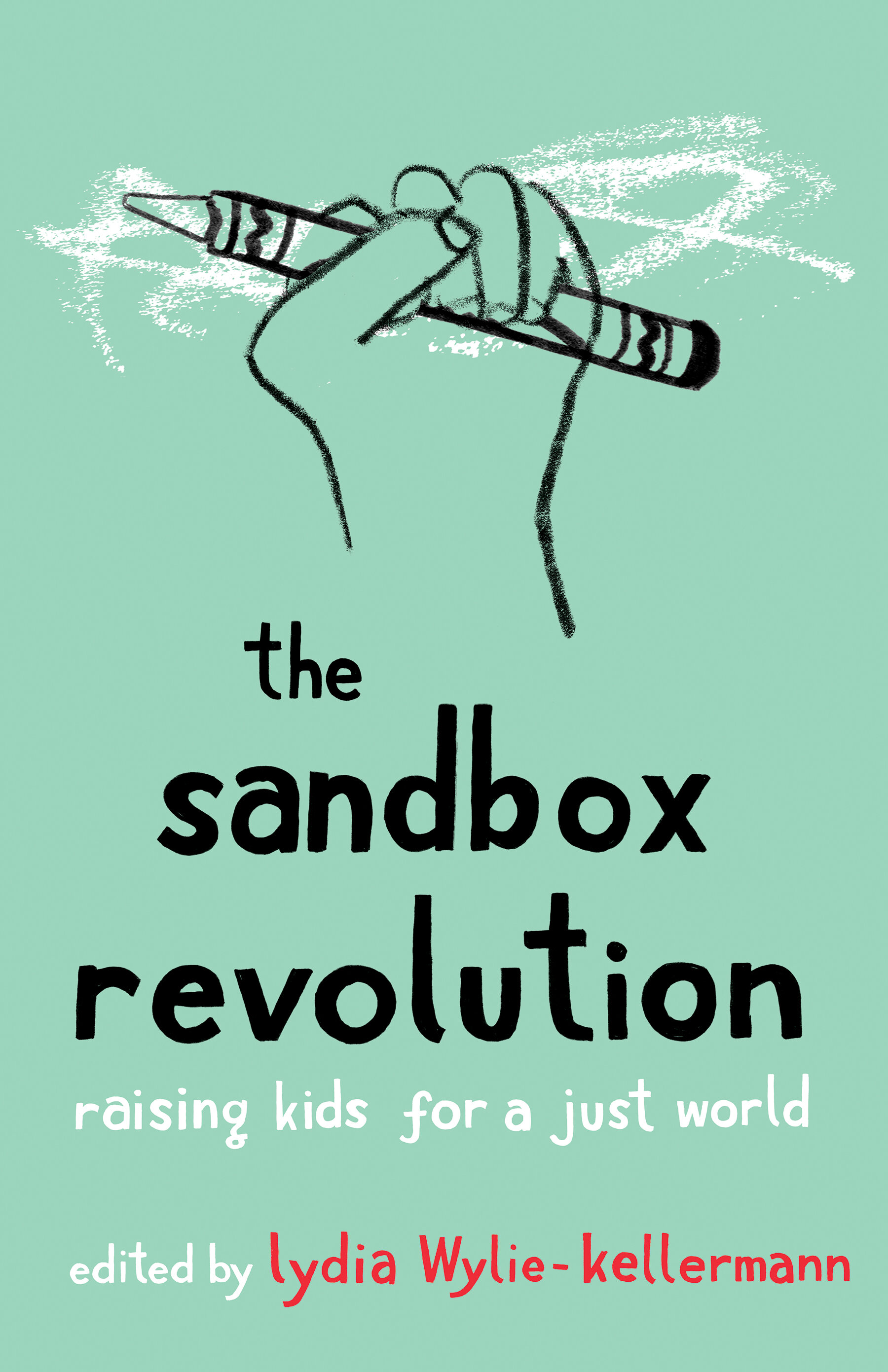
Today, we celebrate the release of The Sandbox Revolution: Raising Kids for a Just World, a beautiful anthology of collective wisdom for those whose lives are wrapped up with children and who are hungering for a more just world. This collection is edited by our very own Lydia Wylie-Kellermann, co-founder of RadicalDiscipleship.net.

You can purchase the book through Broadleaf Books, IndieboundBarnes and Nobles, or Amazon. You can also find additional resources on the website including a Study Guide and a list of recommended children books. Please reach out to me if there is a way I can connect with your communities or help spread the word on the book. We are available for podcasts, writing, sermons, talks, etc.

It is a complex time to be a parent. Our climate is in crisis, and economic inequality is deepening. Racialized violence is spreading, and school shootings are escalating. How do we, as parents, cultivate in our children a love of the earth, a cry for justice, and a commitment to nonviolence? Where do we place our bodies so we teach our kids that resistance is crucial and change is possible? What practices do we hold as a family to encourage them to work with their hands, honor their hearts, and nurture their spirits?

The Sandbox Revolution calls upon our collective wisdom to wrestle with the questions, navigate the challenges, offer concrete practices, and remind parents of the sacredness of the work. Written by parents who are also writers, pastors, teachers, organizers, artists, gardeners, and activists, this anthology offers a diversity of voices and experiences on topics that include education, money, anti-racism, resistance, spirituality, disability justice, and earth care.

Contributors include Frida Berrigan, Leona Brown, Jennifer Castro, Laurel Dykstra, Janice Fialka, Kate Foran, Jennifer Harvey, Sarah and Nathan Holst, Michelle Martinez, Nick Peterson, Dee Dee Risher, en sawyer and Marcia Lee, Susan Taylor, Randy Woodley, and Bill Wylie-Kellermann.

March Madness and the Other America

By Tommy Airey

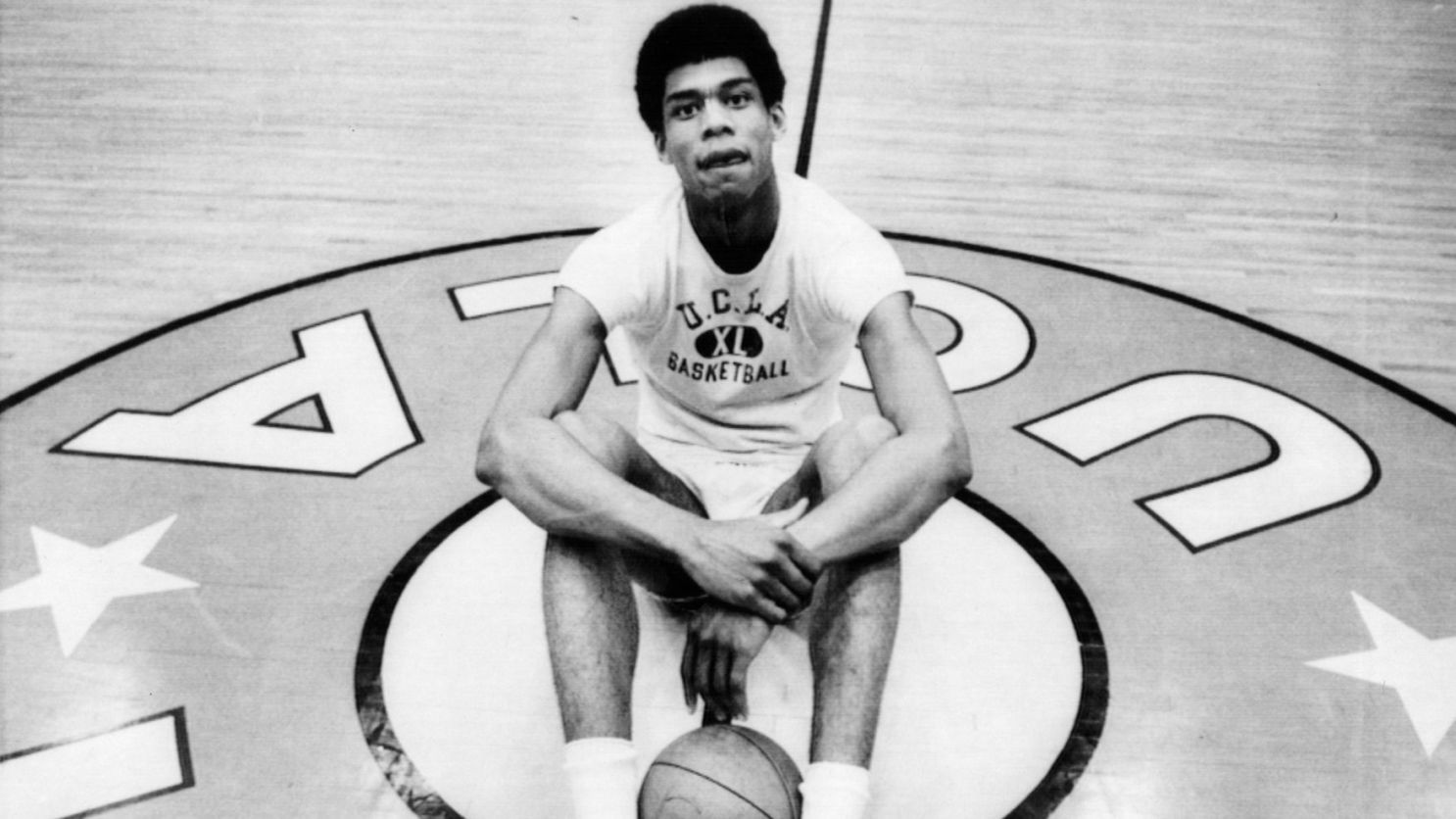
March Madness is back. The men’s and women’s NCAA basketball tournaments caught the coronavirus last season right when my Kansas Jayhawks were ranked number one. That was before police murdered George Floyd and Breonna Taylor, before the NBA bubble almost burst after police shot Jacob Blake seven times in the back. This year, I couldn’t bring myself to fill out a bracket, but I have watched a lot of basketball. This year, more than ever, I have embraced the tension between sports and social analysis—a glorious tension released by a sabbath-jubilee Spirit soaked in a trifecta of Hebrew words: hesed (steadfast love), mispat (justice) and sedekah (faithfulness to the most vulnerable). My wife-partner Lindsay, a licensed marriage and family therapist, says that my devotion to the game is not about escaping the real world, but integrating it.  

This year, my mind is penetrating past Magic Johnson and pivoting towards Lyndon Baines Johnson, the last Democratic Presidential candidate to get a majority of the white vote. In 1967, in the wake of anti-racist uprisings in Detroit, Chicago, Los Angeles and Newark, LBJ commissioned a congressional investigation. He wanted to know what happened, why it happened and what could be done to prevent it from happening again. The so-called Kerner Commission released its findings seven months later, on the last day of February 1968. The scary thing is that the results of the investigation are still ruthlessly relevant today: Our nation is moving toward two societies, one black, one white—separate and unequal.

Continue reading “March Madness and the Other America”

We Are Seeds

By Ric Hudgens

I am thinking about people who live their lives as if they were seed.

The Greek poet Dinos Christianopoulos (1931-2020) wrote in 1978: “what didn’t you do to bury me / but you forgot that I was a seed.” (translated by Nicholas Kostis).

Young Mexican activists started a movement using a similar phrase in 2013 after 43 students disappeared in Iguala, Mexico: “They tried to bury us, they didn’t know we were seeds.” (see the blog entry with the same title, An Xio, Hyperallergic, July 3, 2018).

Even Jesus of Nazareth had said something similar 2,000 years ago: “unless a grain of wheat falls into the earth and dies, it remains alone; but if it dies, it bears much fruit.” (John 12:24).

We often think in metaphors about human life and the living of our own lives. Kirstie Pursie offers seven that are common: climbing a mountain, taking a journey, tending a garden, building a house, a race, a battle, a prison. (Kirstie Pursie, “7 Metaphors for Life: Which One Better Describes You and What Does It Mean”, Learning Mind, March 20, 2019). All of these are illuminating. There is probably a metaphor (or several) hidden in your life.

Continue reading “We Are Seeds”

A Dual Project

An excerpt from a recent DemocracyNow interview with Mariam Kaba. #LentenAbolition

I always tell people that when we talk about prison-industrial complex abolition, we’re talking about a dual project. We’re talking about, on the one hand, a project that is about dismantling death-making institutions, like policing and prisons and surveillance, and creating life-affirming ones, putting resources and investing in the things we know do keep people safe — housing, healthcare, schooling, all kinds of other things, you know, living wages…

In terms of the people on the ground, I do want to point out — you had a conversation earlier with Congressman Jones about the George Floyd Justice Act. And I think if you talk to people who have been on the streets all last year, basically, half the year, and continue to be struggling now in their communities, they would tell you that that bill, which is really just a set of procedural reforms, is woefully, woefully insufficient. And I also keep thinking about the cruel irony of naming a bill after — a police reform, supposedly, bill, after someone who was killed by the police, and then to include a whole set of so-called procedural reforms that would not have prevented that person’s death. So, you know, this particular offering that they’re making, supposedly, in Congress wouldn’t have kept George Floyd alive. And I think that’s just cruel irony. And I really recommend that people take a look at Derecka Purnell’s yesterday great column that she wrote about this very issue.

Continue reading “A Dual Project”

Depression as Political Resistance

Dr. Bruce Rogers-Vaughn speaks at Mental Health Counseling Conference at Belmont University campus in Nashville, Tennessee, September 21, 2018.

By Dr. Bruce Rogers-Vaughn, an excerpt from his article “Blessed are those Who Mourn: Depression as Political Resistance” (2013). You can find more of Bruce’s work here.

What can it mean to proclaim “those who mourn,” the gathering of the depressed, to be “blessed” (Matt. 5:4)? In normative New Testament scholarship, and certainly within Christian popular piety, this text is usually employed to address the private sufferings of individuals. According to Carter (2005), such an emphasis “says much about . . . contemporary individualism that conceives of religion as a private matter isolated from sociopolitical matters” (p. 150). Postcolonial readings, however, take a different turn. This approach focuses on “retrieving silenced voices” and “foregrounding the political” in biblical texts. Particular attention is given to “challenging dominant scholarship by foregrounding empire and related issues in texts and interpretations” (Segovia 2009, p. 207). In this spirit, Carter contends that Roman imperialism provides the context for interpreting the gospel of Matthew. According to Carter (2005), Matthew’s audience suffered under the conditions of imperial Rome, a world marked by: (a) “vast societal inequalities, economic exploitation, and political oppression,” (b) “tensions between the rich . . . and poor,” (c) “pervasive displays of Roman power and control, including military presence,” (d) “no separation of religious institutions and personnel from socioeconomic and political commitments,” (e) “imperial theology or propaganda,” and (f) “obvious signs, sounds and smells of the destructive impact of the imperial sociopolitical order structured for the elite’s benefit: poverty, poor sanitation, disease, malnutrition, overwork . . . and social instability” (pp. 150–151).

Continue reading “Depression as Political Resistance”

Dreaming of Worlds to Come: A Letter to Young Activists

From the National Council of Elders (NCOE), founded by iconic civil right leaders, Rev. James Lawson, Dr. Dolores Huerta, Dr. Vincent Harding, Rev. Phil Lawson and Dr. Grace Lee Boggs, to bring together leaders of the 20th century movements for peace, freedom and justice to share their experiences with young activists in the 21st century. A re-post from roarmag.org.

The escalation of all forms of violence in our country over the last four years, the rise of anti-democratic forces demonstrated at the US Congress building on January 6 and the occupation of Washington, D.C. for President Biden’s inauguration add up to what may be among the most dangerous times in US history.

We elders, members of the National Council of Elders, invite you to pause and contextualize these events within a culture of violence that shapes America.

We know the US began with violence against Indigenous and African peoples. Through the centuries, the triple evils of racism, materialism and militarism have marked our country. At the same time, people have resisted these forces, organizing for freedom and justice.

Continue reading “Dreaming of Worlds to Come: A Letter to Young Activists”